Where Do Expats Live in Amsterdam? A Neighborhood Guide for Newcomers
Amsterdam has spent years appearing near the top of lists ranking the best cities for expats, remote workers, and international professionals. The city combines strong salaries, excellent public transport, a highly international workforce, and a quality of life that many larger European capitals struggle to match.
At the same time, Amsterdam is not the same city it was a decade ago. Housing shortages have pushed rents higher, competition for apartments has intensified, and many newcomers discover that choosing the wrong neighborhood can dramatically affect their experience. Recent data on housing affordability in the Netherlands reflects many of the pressures that have affected major Dutch cities, including Amsterdam.
When people ask where do expats live in Amsterdam, they are usually asking a deeper question. They are not simply looking for a place to rent. They want to know where they can build a social life, work comfortably, meet people, and feel at home in a city that often feels both welcoming and overcrowded at the same time.
The answer depends heavily on lifestyle, age, budget, and expectations. Some expats prefer lively neighborhoods filled with cafés and nightlife. Others prioritise family-friendly streets, parks, and international schools. Remote workers often look for a completely different set of factors, including coworking spaces, quiet cafés, and good transport connections. These practical advantages are also part of the reason the Netherlands has such a strong travel culture, making international trips feel like a normal extension of everyday life rather than a major event.
Understanding how different neighborhoods actually feel day to day is far more useful than simply looking at rental prices on a map.
Where Do Most Expats Live in Amsterdam?
If somebody asks where do most expats live in Amsterdam, several neighborhoods appear repeatedly.
The most popular areas include:
• De Pijp
• Jordaan
• Oud-West
• Amsterdam Zuid
• Amsterdam Oost
• Amsterdam Noord
• Amstelveen
Each attracts a slightly different type of international resident.
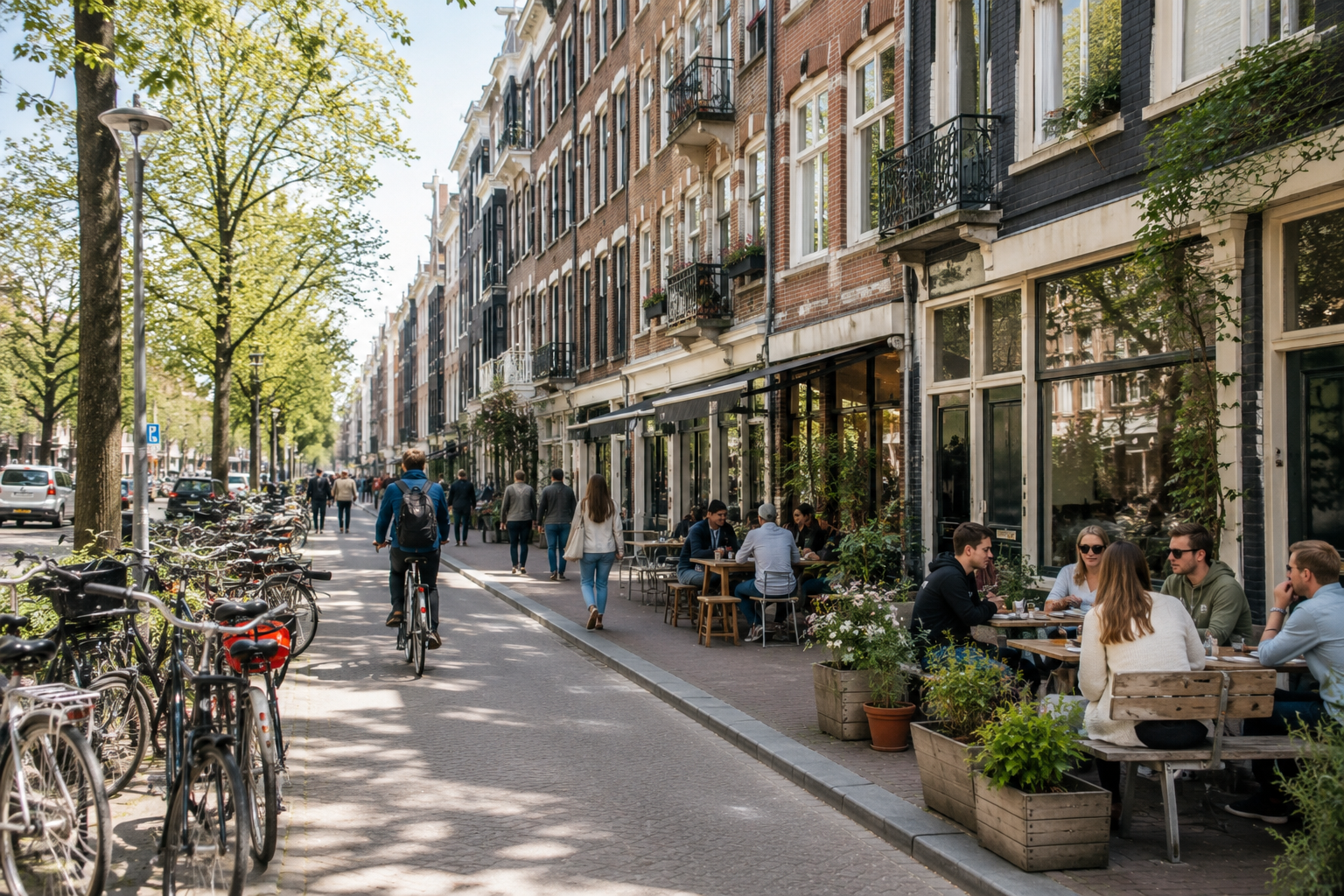
De Pijp has become one of Amsterdam’s most recognisable expat districts. Its cafés, restaurants, international atmosphere, and central location attract young professionals from across Europe and beyond.
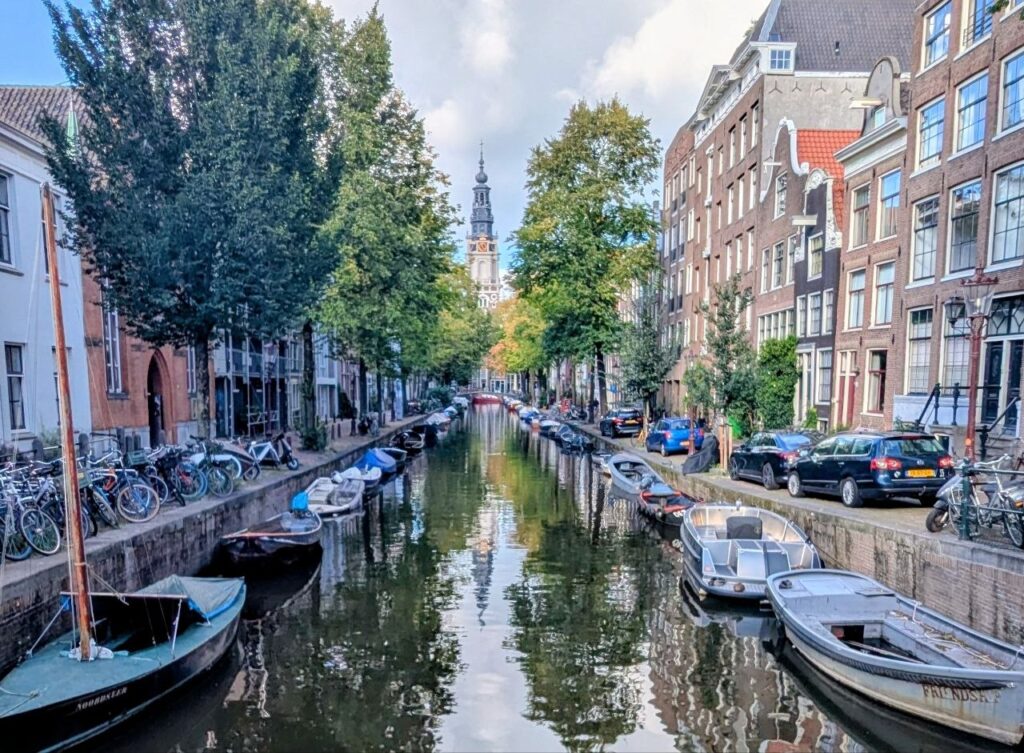
Jordaan offers a different experience. While tourists know it for picturesque canals and historic streets, many long-term residents appreciate its quieter atmosphere and village-like feel within the city centre.
Oud-West has grown increasingly popular among internationals who want a balance between local life and convenience. It feels less crowded than the city centre while still providing easy access to everything Amsterdam offers.
Amsterdam Zuid attracts professionals working for multinational companies as well as families seeking larger homes and access to international schools.
Amsterdam Oost has become popular with younger residents looking for more affordable alternatives to central neighborhoods.
Meanwhile, Amsterdam Noord has transformed dramatically during the past decade. What was once considered a distant industrial area now attracts creatives, entrepreneurs, and remote workers who appreciate more space and a different pace of life.
Many expat families eventually move beyond Amsterdam itself and settle in nearby Amstelveen, where housing tends to be larger and family infrastructure is particularly strong.
The interesting thing is that no single neighborhood dominates. Amsterdam’s international population is spread across the city, and each area tends to attract people at different stages of life. According to official Amsterdam population statistics, the city is home to residents from hundreds of nationalities, which helps explain why expat communities have developed across multiple neighborhoods rather than concentrating in a single district.
De Pijp vs Jordaan for Expats
The debate around De Pijp vs Jordaan for expats appears constantly in relocation forums because both neighborhoods are highly desirable but offer very different lifestyles.
At first glance they may seem similar. Both are central, walkable, attractive, and filled with cafés. However, daily life feels noticeably different.
De Pijp is energetic.
The neighborhood revolves around busy streets, restaurants, bars, markets, and constant activity. Walking through De Pijp often feels like walking through a city that never entirely slows down. English is heard almost as frequently as Dutch, and it is often one of the first neighborhoods newcomers encounter when moving to Amsterdam.
For young professionals arriving from London, Berlin, Paris, or Barcelona, De Pijp often feels immediately familiar.
Jordaan feels calmer.
Despite its central location, the neighborhood maintains a more residential atmosphere. The streets are narrower, traffic is lighter, and daily life moves at a slower pace. Long-term residents often describe Jordaan as feeling more local despite its popularity with visitors.
Housing costs are high in both areas, although competition can be particularly intense in Jordaan due to limited housing stock.
Socially, De Pijp generally offers more opportunities to meet people spontaneously. New restaurants open constantly, social events are frequent, and the area’s international population makes networking relatively easy.
For newcomers still learning how to build a social circle abroad, location can make a significant difference. Articles like how to make friends in a new city as an adult become particularly relevant in a city where many residents arrive without existing social networks.
If your priority is energy, nightlife, and an international atmosphere, De Pijp usually wins.
If your priority is charm, quieter streets, and a stronger neighborhood feeling, Jordaan often becomes the preferred choice.
Best Neighborhoods in Amsterdam for Young Expats
The best neighborhoods in Amsterdam for young expats tend to share several characteristics.
People in their twenties and early thirties usually prioritise:
• Social opportunities
• Nightlife
• Walkability
• Cafés
• Coworking spaces
• Public transport
• Access to other internationals
This is why De Pijp consistently remains one of the most popular choices.
The neighborhood makes it easy to build a routine around cafés, restaurants, fitness studios, markets, and social events. Many newcomers discover that they spend far less time commuting and far more time participating in city life.
Oud-West has become another favourite.
Compared to De Pijp, it feels slightly more relaxed while still offering a vibrant social scene. The area around Foodhallen, in particular, attracts a mix of locals, expats, freelancers, and young professionals.
Amsterdam Oost has gained popularity because it often feels more affordable while still remaining connected to the rest of the city. The neighborhood has a younger energy, a growing food scene, and a more local character than some of Amsterdam’s more famous districts.
Amsterdam Noord attracts a different type of young expat.
Rather than choosing Noord because it is central, people often choose it because it offers space and creativity. Former industrial buildings now house creative studios, startups, cultural venues, and coworking spaces. While commuting requires a ferry or metro connection, many residents consider the trade-off worthwhile.
The choice often depends on personality.
Some people thrive in busy central neighborhoods.
Others quickly become overwhelmed and prefer quieter areas with more breathing room.
The same debate appears in many cities and often resembles the broader question explored in small town vs big town living. The right answer depends less on the city itself and more on how you prefer to live.
Amsterdam offers enough variety that most expats eventually find a neighborhood matching their lifestyle. The challenge is that housing competition frequently forces people to compromise, especially during their first year in the city.
Best Neighborhoods in Amsterdam for Remote Workers
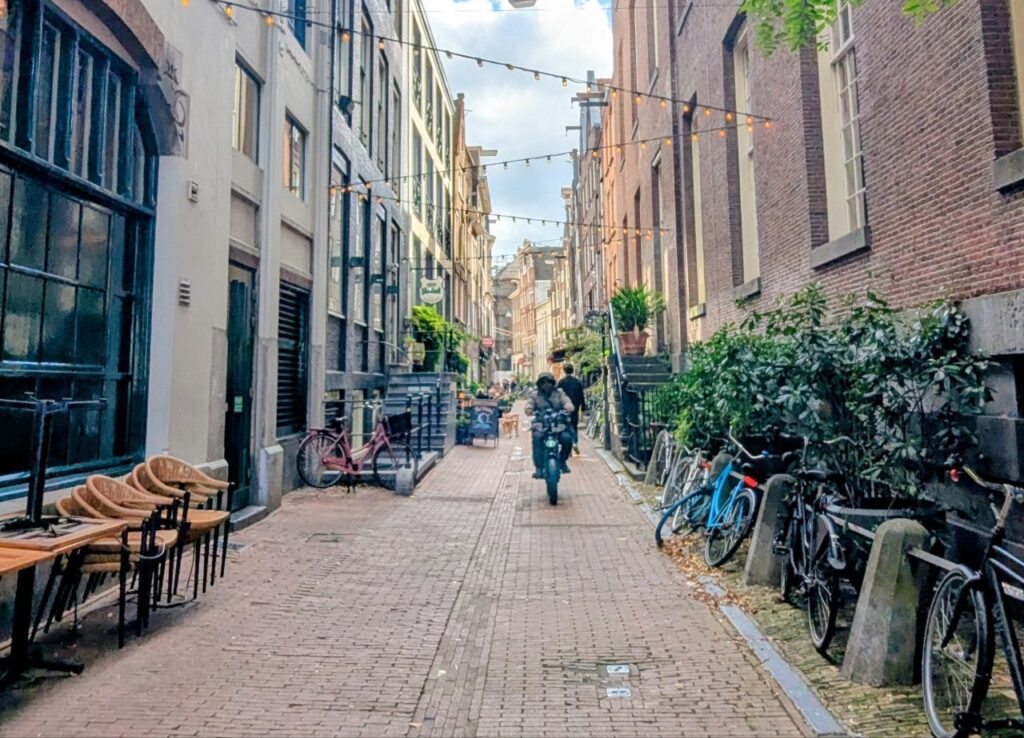
Remote workers often evaluate neighborhoods differently from traditional office employees.
Commute times matter less. Reliable internet, cafés, coworking spaces, and overall atmosphere matter more.
As a result, the best neighborhoods in Amsterdam for remote workers are not always the same neighborhoods that appeal to commuters.
Amsterdam Noord has become particularly popular among freelancers, startup founders, and remote professionals. The area’s transformation over the last decade has been remarkable. Former industrial buildings have been converted into creative offices, cultural venues, and shared workspaces. While some newcomers initially hesitate because Noord sits across the IJ river, many residents quickly discover that the ferry connection makes the city centre surprisingly accessible.
For people who spend most of their day working online, having slightly more space often becomes more important than living in the absolute centre.
Oud-West is another strong choice.
The neighborhood combines residential streets with an impressive number of cafés suitable for working. Unlike some tourist-heavy areas, many venues cater to residents rather than short-term visitors. The result is a more sustainable environment for people who regularly work from laptops.
Amsterdam Oost also deserves consideration. Over the years it has developed a reputation for attracting younger professionals, entrepreneurs, and creatives. The combination of relatively lower housing costs, diverse cafés, and good transport connections makes it attractive for remote workers trying to balance quality of life with affordability.
One challenge many remote workers discover after relocating is that freedom does not automatically solve loneliness. In fact, spending long hours working alone in a foreign city can create its own challenges. Many expats eventually recognise experiences similar to those described in feeling isolated while working from home, especially during their first months abroad.
For this reason, neighborhoods with active communities often become more valuable than slightly cheaper apartments.
Amsterdam Noord for Expats
Few areas in Amsterdam have changed their reputation as dramatically as Noord.
For years, many newcomers barely considered it. Today, Amsterdam Noord for expats is one of the most common topics discussed in relocation groups.
Part of the appeal comes from space.
Compared to many central neighborhoods, apartments in Noord often feel larger and less constrained by Amsterdam’s historic architecture. Streets are wider, housing developments are newer, and the atmosphere feels noticeably different from the canal districts.
Creative professionals are particularly drawn to the area. Former warehouses, industrial spaces, and cultural hubs have helped create an environment that feels more experimental than traditional Amsterdam.
However, Noord is not for everyone.
People who want to step outside their apartment directly into the heart of city life often prefer central neighborhoods. Those who value space, quieter surroundings, and a slightly less hectic pace frequently fall in love with Noord.
In many ways, Noord appeals to expats who want access to Amsterdam without feeling completely consumed by it.
Oud-West Amsterdam Expat Life
When discussing Oud-West Amsterdam expat life, one word appears repeatedly: balance.
The neighborhood sits close enough to central Amsterdam to remain convenient while avoiding some of the intensity associated with the busiest tourist districts.
This balance helps explain why so many internationals eventually settle there.
Daily life in Oud-West revolves less around landmarks and more around routines. Residents spend time in neighborhood cafés, local restaurants, parks, markets, and small independent businesses. It feels like a place where people actually live rather than simply pass through.
The area around Foodhallen has become particularly popular among younger internationals. Restaurants, bars, and cultural events create natural opportunities for social interaction without requiring residents to travel across the city.
Transport connections are also excellent. Trams, cycling routes, and walkability make it easy to reach most parts of Amsterdam.
What many expats appreciate most is that Oud-West feels international without feeling disconnected from local culture.
You can easily navigate daily life in English while still experiencing a neighborhood that retains a strong Dutch identity.
For people planning a longer stay rather than a temporary relocation, that balance often becomes increasingly important.
Amsterdam Zuid for International Families
While younger expats often gravitate toward De Pijp or Oud-West, family priorities usually look very different.
This is why Amsterdam Zuid for international families remains one of the most desirable parts of the city.
Amsterdam Zuid is particularly attractive because it offers:
• Larger housing options
• International schools
• Green spaces and parks
• Family-oriented infrastructure
• Lower levels of nightlife-related noise
Amsterdam Zuid feels noticeably more spacious than many central districts. Wide streets, parks, playgrounds, and residential buildings create an environment that supports long-term family life.
The area’s proximity to several international schools also plays a major role. Families relocating from abroad often prioritise educational options long before they think about restaurants or nightlife.
Safety is another factor frequently mentioned by residents.
While Amsterdam generally enjoys a strong reputation for safety, many parents appreciate Zuid’s quieter residential atmosphere.
For these reasons, Zuid consistently ranks among the best areas in Amsterdam for expat families.
The trade-off is cost.
Housing in Zuid can be expensive, and competition remains intense. However, many families view the additional expense as worthwhile because of the lifestyle benefits.
Nearby Amstelveen often serves as an alternative for families seeking larger homes and slightly lower housing costs while maintaining access to Amsterdam’s international community.
Where to Live in Amsterdam Without Speaking Dutch
One concern many newcomers have is language.
The good news is that Amsterdam remains one of the easiest cities in Europe for internationals who do not speak the local language.
When asking where to live in Amsterdam without speaking Dutch, the honest answer is that almost every expat-friendly neighborhood works.
English proficiency is extremely high throughout the city. In many workplaces, English functions as the primary language. Restaurants, cafés, coworking spaces, and service providers routinely operate in English without difficulty.
That said, some neighborhoods feel particularly international.
De Pijp, Oud-West, Amsterdam Zuid, and parts of Oost have large international populations. In these areas it is entirely possible to manage daily life in English.
Many newcomers arrive planning to learn Dutch immediately. Some succeed.
Others discover that Amsterdam’s international environment makes learning Dutch less urgent than expected because English works almost everywhere.
However, language still influences integration.
People who remain exclusively within expat circles sometimes find themselves living in Amsterdam for years while feeling disconnected from Dutch society.
The challenge is not practical survival.
The challenge is belonging.
This becomes particularly important after the initial excitement of relocation fades. Finding community, building friendships, and developing a sense of home often matter far more than simply navigating supermarkets or public transport.
The neighborhood you choose can either support that process or make it significantly more difficult.
Amsterdam’s most successful expat experiences often happen when people find a balance between international convenience and local connection.
Is Amsterdam Good for Expats in 2026?
The short answer is yes.
The longer answer is that Amsterdam remains an excellent city for many expats, but it is no longer the easy relocation destination it once appeared to be.
For years, Amsterdam attracted international professionals with a combination of strong salaries, progressive culture, excellent infrastructure, and a highly international workforce. Most of those advantages still exist in 2026.
Public transport remains reliable.
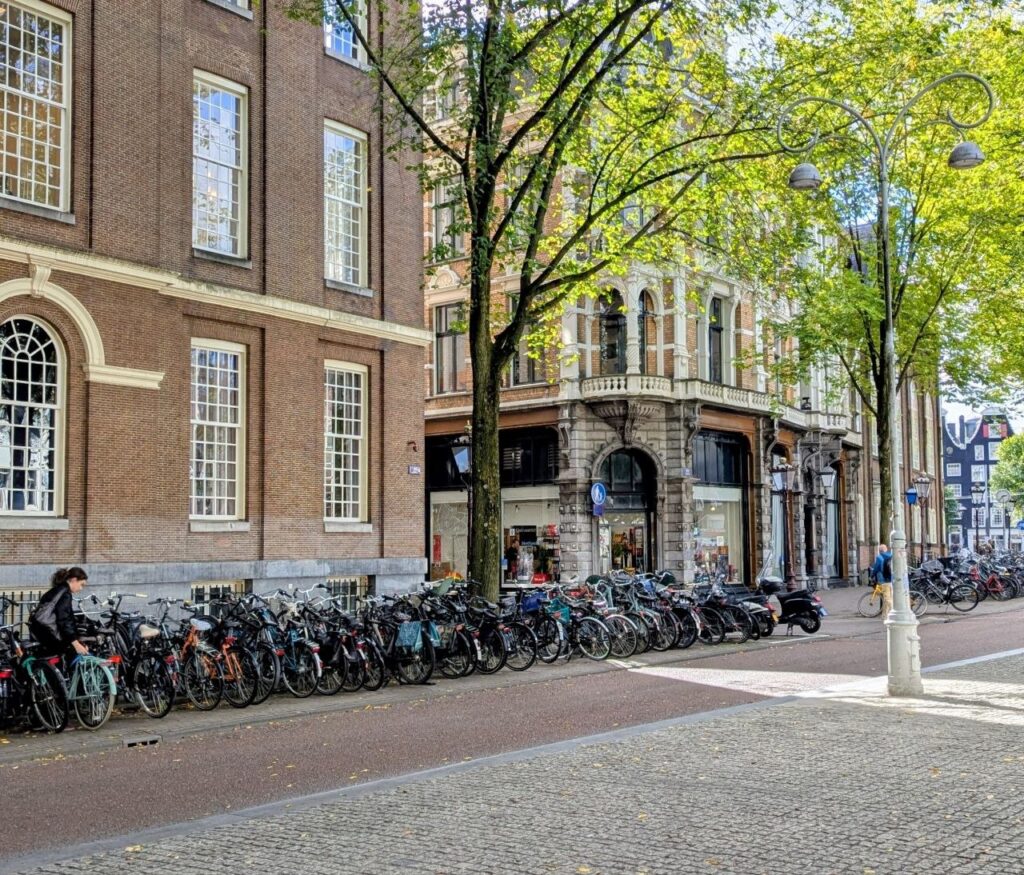
Cycling infrastructure is among the best in the world.
English is widely spoken.
Work-life balance is generally healthier than in many major cities.
The city also offers something many global financial centres struggle to provide: a feeling that life exists outside work.
However, newcomers face challenges that are difficult to ignore.
The housing crisis dominates almost every conversation about Amsterdam. Finding an apartment can take months. Competition is intense. Rental prices continue to rise, particularly in the neighborhoods most expats want to live in.
As a result, relocation often requires more flexibility than people expect.
Someone arriving with expectations based on YouTube videos from five years ago may experience significant sticker shock.
This is particularly true for digital nomads and remote workers arriving with lower incomes. Amsterdam offers exceptional quality of life, but it is very different from destinations featured in guides about the cheapest places to nomad in 2026. The city is not cheap, and living comfortably usually requires a stable income.
People sometimes ask whether they could survive in Amsterdam on a limited remote salary. Technically, it may be possible under certain circumstances, but the reality is very different from lower-cost countries. Articles such as living abroad on $1000 a month as a remote worker illustrate just how dramatically cost of living can vary between destinations.
The city’s popularity creates another challenge.
Amsterdam can feel crowded.
Tourists, students, remote workers, expats, and locals all compete for the same space. Some people thrive in that energy. Others eventually decide they prefer smaller cities after experiencing the reality of daily life.
Yet despite these challenges, Amsterdam continues to attract talented professionals from around the world.
That alone says something important.
People rarely remain in expensive cities unless those cities offer something valuable in return.
The Neighborhood Matters More Than Most People Expect
Many relocation guides focus heavily on practical details such as rent, transport, or apartment size.
Those factors matter.
But long-term expat experiences are often shaped by less obvious things.
The café where you become a regular.
The park you walk through every morning.
The neighbours you greet repeatedly.
The cycling route you take to work.
The area where you eventually feel comfortable enough to stop feeling like a visitor.
Two people can move to Amsterdam at the same time and have completely different experiences simply because they chose different neighborhoods.
One person may spend months feeling disconnected.
Another may quickly develop friendships, routines, and a sense of belonging.
Location influences much more than convenience.
It influences daily life.
For some newcomers, temporary accommodation becomes part of that adjustment period. People increasingly experiment with flexible housing options before committing to long-term rentals, including approaches similar to living in a hotel full time while searching for the right neighborhood.
Amsterdam rewards patience.
Few people find their perfect neighborhood immediately.
Many arrive in one area and eventually relocate once they better understand the city.
The important thing is recognising that Amsterdam is not a single experience.
De Pijp feels different from Noord.
Jordaan feels different from Oost.
Zuid feels different from Amstelveen.
Finding the right match often matters more than finding the most famous address.
Which Amsterdam neighborhood feels most international?
De Pijp, Oud-West, Amsterdam Zuid, and parts of Oost tend to have the largest international populations. These neighborhoods often feel particularly welcoming for newcomers and expats.
The interesting thing about Amsterdam is that newcomers rarely fall in love with the city itself first. More often, they fall in love with a particular neighborhood. Years later, when people talk about their life in Amsterdam, they usually remember the local café, the street they cycled through every day, the market they visited on weekends, or the community they built around them. The city matters, but the neighborhood often determines whether Amsterdam feels like a temporary stop or a place that genuinely becomes home.
FAQ
Where do most expats live in Amsterdam?
Most expats live in De Pijp, Jordaan, Oud-West, Amsterdam Zuid, Amsterdam Oost, Amsterdam Noord, and nearby Amstelveen. The best choice depends on budget, lifestyle, and whether you prioritise nightlife, family life, or remote work.
What is the best neighborhood in Amsterdam for young expats?
De Pijp, Oud-West, Oost, and Noord are often considered the best neighborhoods in Amsterdam for young expats because they combine social opportunities, cafés, restaurants, good transport connections, and active international communities.
Is Amsterdam Noord good for expats?
Yes. Amsterdam Noord has become increasingly popular among expats, remote workers, entrepreneurs, and creative professionals. It offers more space than many central neighborhoods while maintaining strong connections to the city centre.
What are the best areas in Amsterdam for expat families?
Amsterdam Zuid and Amstelveen are generally considered the best areas in Amsterdam for expat families due to international schools, parks, larger housing options, and family-friendly infrastructure.
Can you live in Amsterdam without speaking Dutch?
Yes. Amsterdam is one of the easiest European cities for English speakers. Most residents speak English fluently, and many workplaces operate primarily in English. However, learning some Dutch can help build deeper connections with local communities.
Is Amsterdam good for remote workers?
Amsterdam remains attractive for remote workers because of its infrastructure, coworking spaces, café culture, international community, and strong transport network. However, housing costs can be challenging compared to many digital nomad destinations.
Is Amsterdam still worth moving to in 2026?
For many professionals, yes. Although housing has become more expensive and competition for apartments is intense, Amsterdam continues to offer excellent quality of life, strong career opportunities, international communities, and a healthy work-life balance.
Explore the Expat Life Hub
Discover more practical guides about moving abroad, finding the right neighbourhood, adapting to a new country and building a life as an expat around the world.
Explore the Expat Life Hub →This article combines independent editorial research, conversations with expats living in Amsterdam, personal observations from visiting international cities, and research into how different Amsterdam neighborhoods attract different types of residents.
Research sources included:
- Personal observations and research into city life, relocation trends, and international communities.
- Experiences shared by friends and expat contacts who have relocated to Amsterdam and lived in different neighborhoods across the city.
- Community discussions and first-hand experiences shared on Reddit expat, relocation, and Amsterdam-focused communities.
- Housing, affordability, and urban development research published by the OECD (Organisation for Economic Co-operation and Development).
- Population, demographic, and city research data published by Onderzoek en Statistiek Amsterdam (onderzoek.amsterdam.nl).
- Research into Amsterdam’s housing market, international population, quality of life, and neighborhood development trends.
The goal is to help readers understand where expats actually live in Amsterdam, how different neighborhoods compare in everyday life, and which areas may be best suited for young professionals, remote workers, families, and international newcomers planning a move to the Dutch capital.

Founder & Editor
Founder of The City Theory, writing about digital nomad lifestyle, modern city culture, remote work, travel experiences, psychology and human behaviour around the world.