Why People Are Addicted to TikTok — Even When They Hate It
There is a strange contradiction at the center of modern internet culture: millions of people openly admit that TikTok wastes their time, destroys their attention span, ruins their sleep, and fills their brain with meaningless content — yet they still cannot stop opening the app.
That contradiction is exactly why people are addicted to TikTok and why TikTok obsession is so popular now.
The addiction is not necessarily about loving the content itself. In many cases, it is about what the app makes people feel: distracted, stimulated, emotionally connected, entertained for a few seconds, and temporarily disconnected from stress, loneliness, or boredom. According to research on dopamine and reward systems, short bursts of unpredictable stimulation can strongly affect human behavior and attention patterns.
For years, I was never interested in TikTok. I never understood the obsession with short videos, viral dances, or random internet personalities talking into a camera. I preferred long-form content, documentaries, podcasts, music, articles, and real conversations. TikTok looked chaotic and pointless from the outside.
Then I installed it out of curiosity.
At first, nothing happened. The videos felt random and stupid. But slowly, without noticing it, the app became part of my routine.
Now it feels almost automatic.
I take a shower, get into bed, and think:
“I’ll just watch TikTok for 10 minutes to relax my brain.”
And somehow those 10 minutes become an hour.
The strange part is that it never feels like an hour. Time disappears completely. One video blends into another until the entire experience feels almost hypnotic. The people on the screen begin to feel oddly familiar — not like celebrities, but like people you somehow know. The app creates the illusion of constant company. Even alone in a dark room, scrolling through endless videos, there is this subtle feeling of connection to the outside world.
That may be one of TikTok’s most powerful psychological tricks.
It does not simply entertain people. It removes silence.
Why People Are Addicted to TikTok
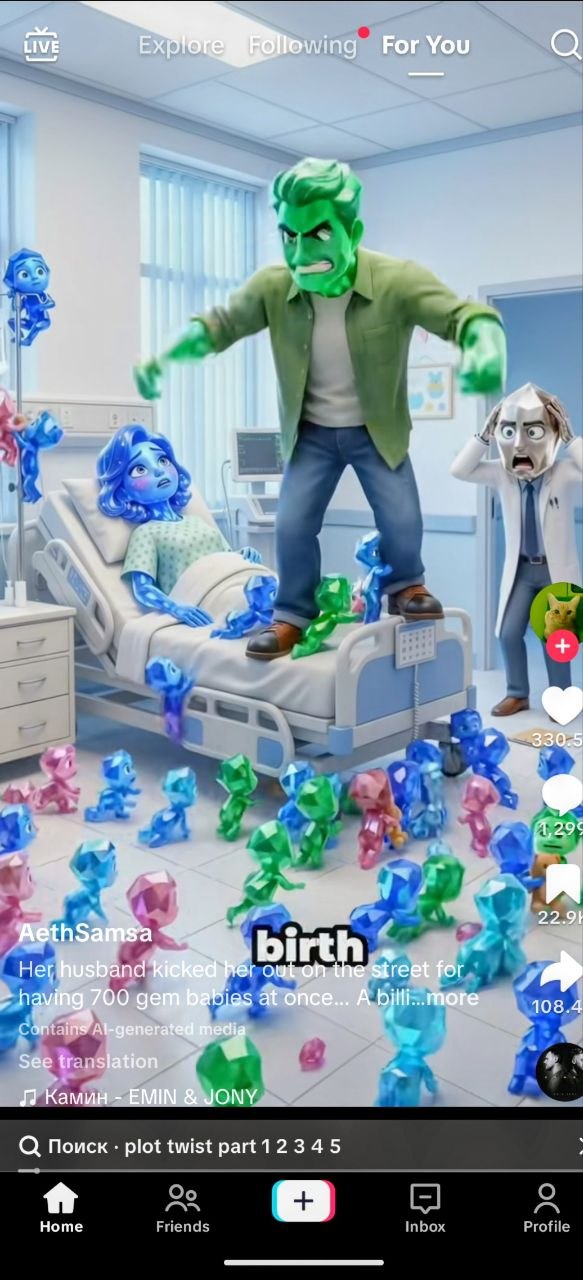
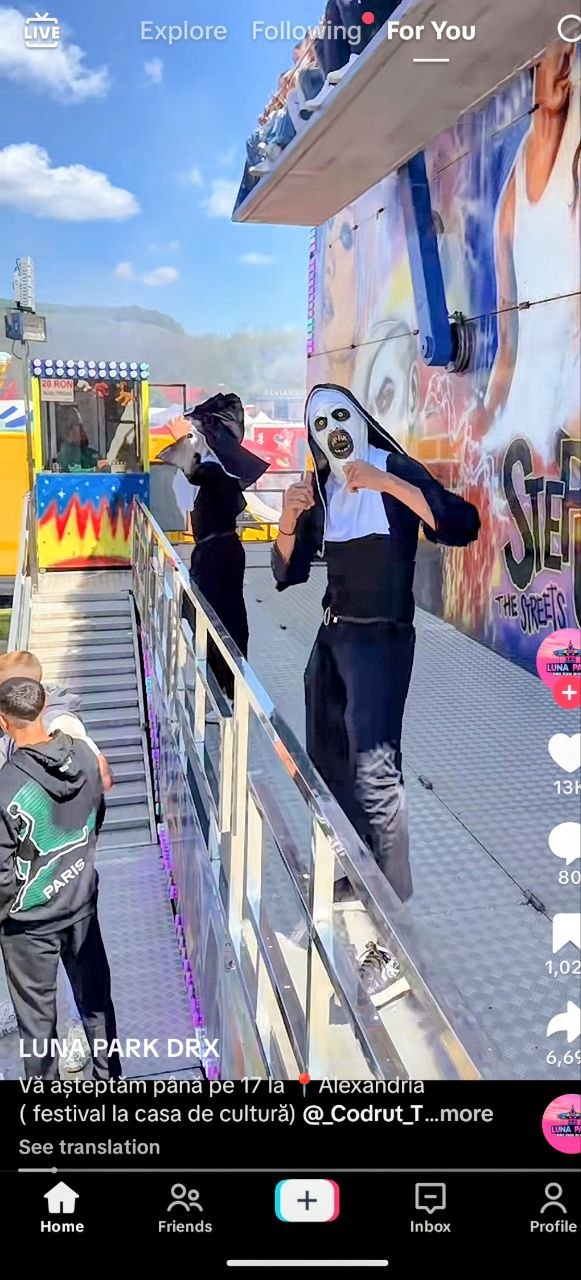
TikTok is often described as a social media platform, but in reality it functions more like an emotional stimulation machine.
The app is designed around one core principle:
never allow the brain to become bored.
Every swipe introduces something new:
a joke,
a confession,
an argument,
a beautiful person,
a life hack,
a dramatic story,
a shocking opinion,
a relaxing sound,
a cute animal,
a strange livestream,
or a piece of rage bait designed to trigger emotion instantly.
The brain never fully settles because it is constantly waiting for the next emotional reward.
Psychologists describe this as “variable reward reinforcement,” the same mechanism used in casinos and slot machines. The user never knows when the next satisfying moment will arrive, so they keep scrolling in anticipation.
Most TikTok videos are forgettable. Many are objectively bad. But every once in a while, the algorithm delivers something emotionally stimulating enough to keep the cycle going.
And eventually, the brain begins craving the anticipation itself.
The Algorithm Knows People Better Than They Know Themselves
One reason TikTok feels more addictive than older social media platforms is the terrifying precision of its algorithm.
Most people do not train the algorithm consciously. The algorithm trains itself around them.
At first, TikTok feels chaotic. Then suddenly it begins serving videos that feel weirdly personal. It learns moods, insecurities, humor preferences, political opinions, aesthetic tastes, relationship anxieties, and emotional triggers.
The feed slowly transforms into a personalized stream of stimulation engineered specifically for one individual brain.
That is why so many people describe TikTok as impossible to put down compared to traditional entertainment.
A film demands patience.
TikTok adapts instantly.
The Death of Attention Span
One of the most disturbing side effects of constant short-form scrolling is how quickly it changes the way people consume everything else.
After months on TikTok, many people notice they can no longer sit through slower content comfortably. Watching a film without checking a phone becomes difficult. Long podcasts feel too quiet. Reading books requires effort. Even conversations become harder to stay fully present in.
The brain begins expecting stimulation every few seconds.
Silence starts feeling uncomfortable.
TikTok conditions people to chase novelty constantly. Every pause becomes an opportunity to scroll. Every moment of boredom becomes something that needs to be filled immediately.
The result is a generation that struggles to simply sit still with their own thoughts.
TikTok Creates the Illusion of Companionship
Perhaps the most overlooked reason people are addicted to TikTok is emotional loneliness.
Many users are not actually searching for content. They are searching for presence.
TikTok creators speak directly into the camera in intimate, casual ways:
while lying in bed,
driving,
cooking,
crying,
ranting,
joking,
or sharing tiny moments of everyday life.
After enough exposure, viewers begin recognizing faces instantly. Certain creators become part of daily routines. The app starts feeling less like media consumption and more like entering a familiar social environment.
For people living alone, working remotely, struggling emotionally, or feeling disconnected, TikTok can simulate companionship surprisingly effectively.
The user may technically be alone in bed at midnight — but emotionally it no longer feels completely silent.
That illusion is powerful.
And addictive.
The psychological effect of adult TikTok addiction and endless scrolling has become so widespread that even researchers and media creators are now exploring how short-form content changes the brain and attention span:
The Most Dangerous Part: It Does Not Feel Harmful
Unlike alcohol, gambling, or drugs, TikTok addiction rarely looks dramatic from the outside.
People are not collapsing in public. They are lying in bed scrolling.
Watching videos while eating.
Checking clips during work breaks.
Opening the app automatically without thinking.
Losing hours while believing only minutes passed.
That subtlety makes the habit difficult to recognize.
The app slowly inserts itself into ordinary routines until it becomes emotionally tied to relaxation, comfort, sleep, boredom relief, and stress management.
At that point, people are no longer opening TikTok because they are interested.
They open it because their brain expects it.
The Business Model Behind Endless Scrolling


TikTok’s addictive design is not accidental.
The platform makes money by maximizing attention. The longer people stay inside the app, the more advertisements they see, the more data they generate, and the more valuable they become to the platform. This business model is often described as part of the attention economy, where digital platforms compete to capture and monetize human attention for as long as possible.
That means the app is constantly optimized to keep users engaged for as long as possible.
The app does not ask people what they want.
It predicts what will keep them watching.
And often, those are not the same thing.
Why So Many People Eventually Delete It
A growing number of users eventually reach the same realization:
they are spending huge portions of their lives consuming content they barely even remember.
Hours disappear with almost no emotional payoff afterward.
Many people describe feeling mentally drained rather than entertained after long scrolling sessions. Others realize their sleep patterns, productivity, relationships, and attention spans are deteriorating.
The frightening part is how quickly the habit forms.
Someone installs TikTok casually “just to try it,” and months later they cannot fall asleep without watching it.
That story is becoming increasingly common.
Because TikTok is not competing against other apps anymore.
It is competing against boredom itself.
And in modern life, boredom is becoming one of the last things people no longer know how to tolerate.
FAQ
Why is TikTok so addictive?
TikTok is designed around short videos, personalized recommendations, and endless scrolling. The app constantly delivers new content based on your behavior, making it difficult for the brain to predict what comes next. That uncertainty keeps many users watching far longer than they originally intended.
Is TikTok addiction real?
While TikTok addiction is not an official medical diagnosis, researchers and mental health professionals increasingly discuss problematic TikTok use. Many people report losing track of time, struggling to stop scrolling, and repeatedly returning to the app despite wanting to spend less time on it.
Why can’t I stop scrolling TikTok?
Many users describe opening TikTok automatically without making a conscious decision. The combination of personalized content, instant entertainment, and endless scrolling creates a habit loop that can be difficult to break, especially during moments of boredom, stress, or loneliness.
Why do I hate TikTok but still use it?
This is one of the most common experiences reported by users. People often recognize that TikTok wastes their time or negatively affects their mood, yet continue using it because the app provides quick bursts of entertainment, distraction, and novelty. Knowing something is unhealthy does not automatically remove the habit.
How does TikTok affect dopamine?
TikTok delivers a constant stream of unpredictable rewards. Every swipe brings the possibility of something funny, surprising, emotional, or interesting. This reward pattern can encourage repeated use because the brain begins anticipating the next piece of content.
What is TikTok brain?
“TikTok brain” is an informal term used to describe shorter attention spans, difficulty focusing on longer content, and a growing need for constant stimulation. While not a medical diagnosis, many users report struggling to concentrate on books, films, or deep work after spending large amounts of time on short-form video platforms.
Does TikTok affect attention span?
Some researchers believe excessive exposure to fast-paced short-form content may make it harder to maintain focus on longer tasks. Many users report finding it more difficult to read, study, work deeply, or watch long videos after regularly consuming short-form content.
Why do people open TikTok without thinking?
Habit formation plays a major role. Over time, opening TikTok can become an automatic response to boredom, waiting in line, taking a break, or avoiding difficult tasks. Many users describe reaching for the app almost instinctively throughout the day.
Why does TikTok make me feel bad but I keep watching?
TikTok can provide temporary entertainment while simultaneously creating feelings of guilt, comparison, overstimulation, or wasted time. This conflict is one reason many people say they enjoy the app in the moment but feel worse after spending hours scrolling.
How do I stop wasting time on TikTok?
Reducing TikTok use often starts with understanding why you open the app in the first place. Many people find it helpful to remove notifications, set screen-time limits, replace scrolling with offline activities, and identify the emotional triggers that lead them back to the platform.
Can TikTok make loneliness worse?
For some people, yes. Although TikTok can create a sense of connection, it can also replace real-world social interaction. Spending hours consuming content passively may leave some users feeling more isolated, especially if scrolling becomes a substitute for meaningful relationships or community.
Why does TikTok know exactly what I want to watch?
TikTok’s recommendation system constantly analyzes user behavior, including watch time, likes, shares, comments, rewatches, and scrolling patterns. This allows the algorithm to build an extremely personalized feed that often feels surprisingly accurate.
Explore the Culture & Society Hub
Discover more stories about language, identity, traditions, social habits and the cultural details that shape everyday life around the world.
Explore the Culture & Society Hub →This article combines personal observations of social media use, independent editorial research, and discussions from people reflecting on screen time, attention spans, and digital habits in the age of short-form content.
Research sources included:
- Personal observations related to social media usage, digital behaviour, and online culture.
- Community discussions and first-hand experiences shared on Reddit regarding TikTok, social media habits, and digital addiction.
- Psychological research and expert commentary published by Psychology Today.
- Background information on TikTok, recommendation algorithms, and social media platforms from Wikipedia.
The goal is to explore why TikTok can be so difficult to stop using, how short-form content influences attention and behaviour, and what this trend reveals about modern digital culture.

Founder & Editor
Founder of The City Theory, writing about digital nomad lifestyle, modern city culture, remote work, travel experiences, psychology and human behaviour around the world.