Why Is Morocco So Good at Football? The Culture and System Behind Its Success
Morocco is good at football because it has built a system where widespread grassroots participation, street football, organised scouting, long-term investment, modern academies, European-trained diaspora players and stronger federation management reinforce each other. The country’s rise is the result of reforms that have been developing for well over a decade, not a sudden breakthrough.
For many people outside Africa, Morocco seemed to appear out of nowhere during the 2022 FIFA World Cup. One tournament later, people were asking the same question: why is Morocco so good at football?
The short answer is that it didn’t become good overnight. The World Cup simply introduced a much larger audience to a football culture that had existed for generations and to a development system that had been quietly improving since the late 2000s.
If you look only at the senior national team, it’s easy to miss the bigger picture. Morocco’s success starts much earlier—with children playing in neighbourhood streets, local clubs competing every weekend, scouts watching youth tournaments, better federation planning, and thousands of talented players growing up both inside Morocco and across Europe. This follows the kind of long-term player development pathway promoted by FIFA, where grassroots participation, talent identification and elite coaching work together instead of relying on one exceptional generation. Instead of relying on one miracle generation, Morocco has created a pipeline that continually feeds the national team with technically capable, tactically disciplined players.
That pipeline is what makes Morocco different.
Morocco Was a Football Country Long Before the 2022 World Cup
One reason people ask when did Morocco become good at football is that many first watched the Atlas Lions during Qatar 2022. In reality, Morocco had been respected in African football long before reaching the World Cup semi-final. The country’s breakthrough came in 1986, when the Atlas Lions became the first African side to reach the tournament’s knockout stage, a milestone covered in The Guardian’s account of Morocco’s earlier World Cup generation.
Morocco became the first African nation to reach the knockout stage of a FIFA World Cup in 1986. It has won the Africa Cup of Nations, regularly qualified for continental tournaments and produced clubs that have enjoyed success across Africa. Teams such as Raja Casablanca and Wydad Casablanca have built international reputations that extend far beyond Morocco.
That doesn’t mean Morocco has always been among the world’s elite. There were long periods when the national team struggled with inconsistency, administrative problems and disappointing tournament performances. Talent existed, but it wasn’t always supported by stable long-term planning.
So was Morocco always good at football? The more accurate answer is that Morocco has always been a serious football nation, but not always a consistently successful one. Its football culture never disappeared, yet the structures around that culture improved dramatically over time.
Today, if someone asks is Morocco actually a strong football nation, the evidence says yes. That strength is visible not only in senior men’s football but also in youth development, women’s football, futsal and club competitions. The World Cup simply revealed what many African football followers had already recognised.
What Changed in Moroccan Football After 2008?
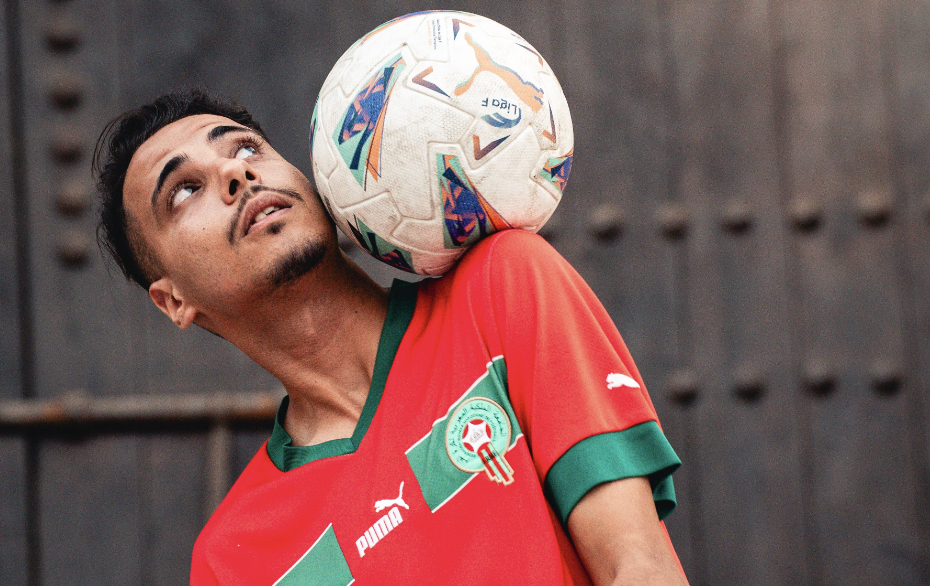
If there is one period that explains what changed in Moroccan football after 2008, it is the gradual shift from reacting to short-term results toward building long-term infrastructure.
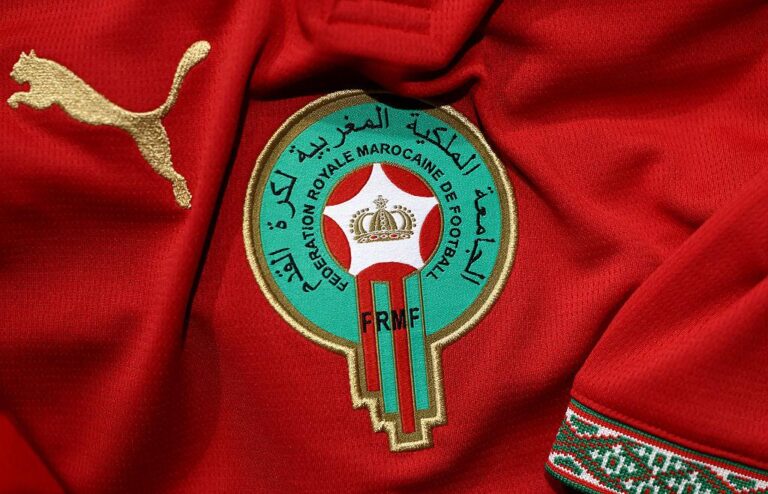
The Royal Moroccan Football Federation (FRMF) began investing more heavily in youth development, coaching education, scouting networks and modern facilities. Rather than focusing only on the senior national team, the federation increasingly viewed football as an interconnected system stretching from children playing locally to professionals representing the country at international tournaments.
This wasn’t a single reform or one ambitious construction project. It was a collection of decisions that reinforced each other.
Modern training centres improved player development. Coaching standards became more consistent. Scouts expanded their search across Morocco while maintaining stronger relationships with Moroccan communities abroad. Youth national teams received greater attention, giving promising players international experience before reaching senior level.
The opening of the Mohammed VI Football Academy and later the Mohammed VI Football Complex symbolised this broader strategy rather than creating it on their own. These facilities became important pieces of a much larger network that already included local clubs, regional competitions and federation programmes.
That gradual approach helps answer two common questions: how did Morocco improve its national football team and how did Morocco become a football powerhouse.
The senior team improved because every stage beneath it became stronger. Better coaching produced better players. Better scouting identified more talent. Better facilities allowed players to develop more consistently. Better administration connected those pieces into one system instead of leaving them isolated.
Countries often try to copy successful national teams by hiring a famous coach or investing heavily for a few years. Morocco’s experience shows that sustainable success usually comes from improving dozens of smaller parts at the same time.
Football Starts in Streets, Schools and Neighbourhood Pitches
One of the easiest mistakes people make is romanticising street football. You’ll often hear that great players simply emerge from playing barefoot in narrow streets. Reality is more interesting than that.
How street football shapes Moroccan players has less to do with mythology and more to do with repetition.
Across many Moroccan cities and towns, children play football almost anywhere space allows. Small neighbourhood pitches, schoolyards, apartment courtyards, local parks and informal games create an environment where young players touch the ball hundreds of times every week outside organised training.
Because these spaces are often small, players have very little time to think. They learn to receive the ball under pressure, protect possession, change direction quickly and make decisions within seconds. Close control becomes practical rather than decorative because losing the ball usually means immediately defending against nearby opponents.
Small-sided games also encourage creativity. A child who spends years playing five-a-side or futsal naturally becomes comfortable in tight spaces where technical ability matters more than physical size.
Of course, street football alone does not produce international players. Many countries have children playing informally without producing elite national teams. The difference is what happens afterwards.
In Morocco, talented youngsters increasingly move from neighbourhood games into school competitions, local clubs, regional academies or federation scouting programmes. Instead of replacing informal football, organised coaching builds upon the technical habits children have already developed.
This progression forms the beginning of Morocco’s player-development pipeline:
| Where Morocco’s Football Strength Comes From | What It Contributes | Why It Matters |
|---|---|---|
| Street & neighbourhood football | Constant ball contact, quick decision-making and creativity | Builds technical confidence from an early age |
| Local clubs | Regular competition and structured coaching | Identifies promising young players |
| Mohammed VI Football Academy | Elite development, education and sports science | Helps outstanding talent reach professional football |
| European academies | High-level tactical and physical training | Produces players accustomed to elite competition |
| Diaspora scouting | Expands the available talent pool | Connects eligible players with Morocco |
| Federation investment | Modern facilities, coaching and organisation | Creates consistency across the development system |
| Tactical coaching | Team structure, discipline and match preparation | Turns talented individuals into a cohesive team |
| Fan & national culture | Motivation, identity and public support | Keeps football deeply rooted in Moroccan society |
Looking at the system this way makes it easier to understand why Morocco continues producing competitive teams. Each part supports the next rather than operating independently.
Why Is Football So Popular in Morocco?
To understand why is football so popular in Morocco, you have to look beyond stadiums.
Football is one of the few activities that requires almost no equipment. A ball, a few friends and an open space are enough to start playing. That accessibility matters in a country where families come from very different economic backgrounds. Children don’t need expensive memberships or specialised facilities before developing a love for the game.
The sport also fits naturally into everyday social life. Cafés fill with supporters during important matches, especially when the national team plays. Families gather around televisions. Conversations at work, in schools and in neighbourhood shops often return to football because almost everyone has watched the same match.
This helps explain why do Moroccans love football so much. Football creates common reference points across generations, regions and social classes. Someone from Tangier can immediately discuss a national team performance with someone from Agadir or Oujda. Club loyalties may differ, but the language of football is shared.
Another important factor is visibility. Successful players become examples of what disciplined training and persistence can achieve. For many young Moroccans, football represents one of the clearest paths to professional recognition, whether inside Morocco or abroad. That ambition encourages participation from an early age, increasing competition for places in youth teams.
So what role does football play in Moroccan culture?
Rather than existing separately from daily life, football intersects with family traditions, neighbourhood identity, school friendships and national celebrations. Victories by the Atlas Lions become shared public experiences because millions of people feel personally connected to the team.
This is also why many people describe football as central to Moroccan society. Asking how important is football to Moroccan society is really asking how communities express collective identity. Football provides one of the country’s largest common cultural spaces, where regional differences temporarily become less important than representing Morocco itself.
That popularity also answers another common question: is football the most popular sport in Morocco? While Moroccans enjoy athletics, martial arts, basketball and many other sports, football remains by far the country’s most widely followed and widely played game.
In the next part, we’ll look at why Casablanca occupies such a unique place in Moroccan football culture, how the Mohammed VI Football Academy strengthened the development pipeline, how diaspora players fit into the national system, and why Morocco’s tactical organisation has made it one of Africa’s strongest international teams.
Casablanca Explains a Lot About Moroccan Football Culture
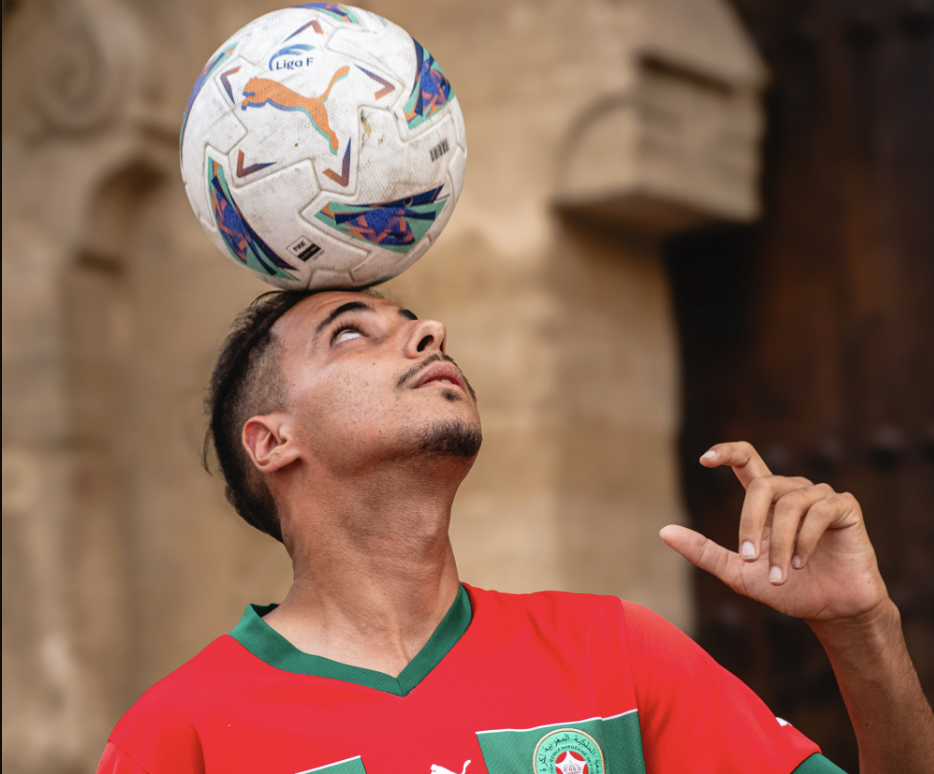
If you want to understand why Casablanca is famous for football, don’t start with trophies. Start with the city itself.
Casablanca is Morocco’s largest city, its economic centre and home to two of Africa’s biggest football clubs: Raja Casablanca and Wydad Casablanca. For generations, football has been woven into the city’s identity. Entire neighbourhoods grow up supporting one club or the other, and that loyalty is often passed from parents to children. Choosing a club isn’t simply about watching matches—it’s part of belonging to a community.
The Casablanca derby between Raja and Wydad is widely regarded as one of the most intense football rivalries in Africa. Tens of thousands of supporters fill the stadium, while millions more watch across the country. The atmosphere comes from months of preparation rather than spontaneous emotion. Supporters organise elaborate choreographies, banners, chants and coordinated displays that require significant planning and cooperation.
This is also where Morocco football ultras culture becomes important. Moroccan ultras groups are among the most organised on the continent. Their influence extends beyond football through music, visual art and youth culture. Songs first heard in stadiums often spread across social media and become part of everyday life.
At the same time, it’s important not to romanticise everything associated with ultras culture. Like supporter movements in many countries, some groups have experienced clashes with rivals or security forces over the years. Those incidents receive media attention, but they don’t define the broader culture. What makes Moroccan supporter groups remarkable is their creativity, organisation and commitment to supporting their clubs, not isolated episodes of disorder.
For young players growing up in Casablanca, football is impossible to ignore. Local heroes become role models, derby matches become shared memories and professional football feels close enough to imagine rather than something happening only on television.
The Mohammed VI Academy Made the Talent Pipeline More Organised
When people ask what is the secret behind Morocco football success, the Mohammed VI Football Academy is often the first answer they hear. It is certainly one of the most important institutions in Moroccan football today, but it is not the whole story.
The academy was created to identify gifted young players from across the country and provide them with an environment that many local clubs could not always offer. Young footballers receive professional coaching alongside their education, accommodation, medical care, nutrition, physical preparation and tactical development.
What makes the academy especially valuable is that it widens opportunity. A talented child from a modest family has a pathway into elite training without depending entirely on personal finances or local connections. That doesn’t mean every promising Moroccan player attends the academy, but it significantly strengthens the national development system.
Several professional players have benefited from its programmes, while many others have emerged through traditional club academies. That balance is important because Morocco has never relied on one institution alone. The academy complements local clubs instead of replacing them.
The nearby Mohammed VI Football Complex has also become one of Africa’s most advanced football centres. National teams across different age groups regularly train there, allowing youth players to become familiar with the standards expected at senior international level.
Perhaps the academy’s biggest contribution is consistency. Instead of hoping exceptional players appear by chance, Morocco has created an organised environment where talent can be identified, developed and supported over many years.
The Diaspora Gives Morocco Access to Several Football Systems
One of Morocco’s greatest strengths is that its talent pool extends well beyond its borders.
Large Moroccan communities have lived in France, Belgium, the Netherlands and Spain for decades. Migration, family ties and historical relationships mean that many children with Moroccan heritage grow up in European cities while remaining closely connected to their parents’ or grandparents’ homeland.
That history is closely connected to the lasting French influence on Moroccan society and migration patterns between the two countries, which also help explain why French remains widely spoken in Morocco
For football, this creates a unique advantage.
A child born in Amsterdam, Brussels or Paris may train at one of Europe’s best professional academies while remaining eligible to represent Morocco internationally. These players benefit from high-level coaching, excellent facilities and regular competition against elite youth teams.
At the same time, they often grow up visiting relatives in Morocco, speaking Arabic, French or Amazigh at home, and maintaining strong emotional ties with the country. Representing Morocco is therefore not simply a sporting calculation for many players—it is also a personal and family decision.
This explains why Morocco’s national team combines footballers developed in different systems. Some learned their game in Casablanca, Rabat or Agadir. Others came through academies in France, Belgium or the Netherlands. Instead of competing with each other, these backgrounds complement one another.
Locally trained players often bring a deep understanding of Moroccan football culture and domestic competition. Diaspora players contribute experience gained in some of Europe’s strongest development systems. Together they give the coaching staff more tactical options and greater squad depth.
This combination is one of the clearest answers to how did Morocco become a football powerhouse. The country doesn’t depend solely on domestic academies or solely on European development—it successfully connects both.
Morocco Does Not Simply Wait for Diaspora Players to Choose Them
An easy misconception is that Morocco simply hopes talented dual nationals decide to play for the Atlas Lions. In reality, the process is much more organised.
The FRMF actively monitors eligible players across Europe, following their progress from youth football onwards. Federation staff maintain relationships with players, families and clubs while inviting promising youngsters to youth national teams whenever possible.
These early experiences matter. A player who feels welcomed by the federation at under-17 or under-20 level is more likely to develop a lasting connection with the national programme.
Identity also plays a significant role. Many dual-national players describe representing Morocco as a way of honouring their families and cultural heritage rather than rejecting the country where they were born.
The federation’s professionalism has become increasingly important in this process. Clear communication, long-term planning and stable management help build trust with players who often have multiple international options.
Morocco therefore succeeds not because it persuades players at the last minute, but because it develops relationships over many years.
Tactical Discipline Turns Good Players Into a Good Team
Even with talented footballers, international tournaments are rarely won through individual ability alone.
One reason why does Morocco perform well at the World Cup is tactical organisation. During the 2022 tournament, Morocco consistently defended with a compact shape that left very little space between defenders and midfielders. Opponents often controlled possession but struggled to create clear chances.
When Morocco recovered the ball, transitions were quick rather than rushed. Fast wingers, technically gifted full-backs and disciplined midfielders allowed the team to attack efficiently without abandoning its defensive structure.
Emotional control was equally important. Tournament football rewards teams that remain organised under pressure. Morocco rarely appeared panicked, even against technically superior opponents.
This helps explain how did Morocco reach the World Cup semi final. The achievement wasn’t based on luck or one extraordinary player. It resulted from a squad that understood its tactical responsibilities, trusted its defensive organisation and maximised opportunities on the counterattack.
These qualities also explain why is Morocco one of the best football teams in Africa today. Across African football, Morocco combines technical quality with one of the continent’s strongest organisational structures. That combination allows talented individuals to perform as a cohesive team instead of relying on moments of brilliance.
Why Morocco’s Success Is Not as Sudden as It Looks
Many people still ask why is Morocco suddenly good at football, but the question itself is slightly misleading.
Morocco didn’t suddenly become a football nation in 2022. What changed was global attention.
For years, improvements had been taking place beneath the surface: investment in infrastructure, stronger youth programmes, better coaching education, improved scouting, closer relationships with diaspora players and more stable federation leadership.
The World Cup acted as a spotlight rather than a starting point.
That’s why why has Morocco become so good at football cannot be answered with one explanation. There is no single academy, coach or generation responsible for the country’s rise.
Instead, Morocco has gradually built a sustainable football structure. Success at youth level, improvements in women’s football, achievements in futsal and stronger national teams all point to the same conclusion: the system is producing results across multiple levels, not only in one exceptional tournament.
This distinction matters because a golden generation eventually retires. A functioning development system continues producing new players.
What the MAR Code Says About Morocco’s Football Identity
International viewers often notice that Morocco appears as MAR on television scoreboards instead of MOR.
The abbreviation comes from “Maroc,” the country’s French name, and follows the coding systems used by international sporting organisations. It isn’t unique to football, although many fans first encounter it during FIFA or Olympic competitions.
International viewers often notice that Morocco is listed as MAR during World Cup matches. That abbreviation comes from the French name Maroc, not from an English shortening of Morocco. Understanding why FIFA uses MAR for Morocco helps explain why the code appears across international competitions.
In the final part, we’ll examine whether Moroccans are naturally better at football, what Morocco must do to remain a football powerhouse, answer the most common reader questions, and conclude by bringing the entire player-development pipeline together into one clear explanation of why is Morocco so good at football.
Are Moroccans Naturally Better at Football?
No. Treating national football ability as something biological or ethnic is misleading because it ignores how players are actually developed.
Moroccan footballers become technically strong through repetition, access to informal games, competition for places, organised coaching and the social importance attached to the sport. A child who plays several times a week in a street, schoolyard or small-sided pitch accumulates far more experience than a child who rarely touches a ball. When the strongest players then enter local clubs, academies or European youth systems, that early experience is refined through tactical training, fitness work and professional competition.
Morocco also benefits from having access to two development environments at once. Locally trained players come through Moroccan clubs and academies, while many dual nationals are educated in professional systems in France, Belgium, Spain or the Netherlands. Structured scouting allows the national team to draw from both groups.
The explanation is therefore social and institutional, not genetic. Participation creates a larger talent pool, competition improves standards, and investment makes it more likely that promising players receive serious training instead of being lost before reaching professional football.
Can Morocco Remain a Football Powerhouse?
Morocco has built a stronger system, but no football nation remains successful automatically. Maintaining that position will require continuous investment rather than assuming the 2022 World Cup changed everything permanently.
Youth development must continue outside a small number of elite institutions. The Mohammed VI Football Academy is valuable, but local clubs, regional centres and school-level competitions still need enough qualified coaches and suitable facilities. Stronger domestic clubs would also give locally trained players more opportunities to develop without leaving the country too early.
The federation will need to preserve its relationships with diaspora players while avoiding overdependence on them. European-trained dual nationals increase the quality of the squad, but a sustainable national system must also keep producing goalkeepers, defenders, midfielders and forwards inside Morocco.
Coaching education is equally important. Facilities can identify talented players, but coaches determine whether those players learn how to read matches, defend collectively and adapt to different tactical demands. Morocco’s future will depend less on finding another exceptional generation than on keeping the entire pipeline functional.
FAQ
Why is Morocco so good at football?
Morocco combines widespread participation, street and neighbourhood football, professional academies, diaspora scouting, federation investment and disciplined tactical coaching. Its strongest players come through both Moroccan and European systems before meeting inside the national team.
Why has Morocco become so good at football?
The improvement reflects reforms developed since the late 2000s. Morocco invested in infrastructure, youth scouting, coaching, national training facilities and better management while building stronger connections with eligible players raised abroad.
Was Morocco always good at football?
Morocco has had a strong football culture for decades and became the first African team to reach a World Cup knockout round in 1986. However, its results were not always consistent, and its modern development system is more organised than it was in earlier periods.
What changed in Moroccan football after 2008?
The country began treating football development as a long-term system rather than concentrating mainly on the senior team. Investment expanded into academies, training centres, youth teams, coaching education, scouting and federation infrastructure.
Why are so many Moroccan players raised in Europe?
Large Moroccan communities have lived in France, Belgium, the Netherlands and Spain for generations. Their children often enter European football academies while retaining family, cultural and emotional ties to Morocco, making them eligible and willing to represent the Atlas Lions.
Why is football so popular in Morocco?
Football is affordable, widely accessible and deeply embedded in everyday social life. People play it in neighbourhoods, follow clubs through family traditions and watch major matches together in homes and cafés.
How did Morocco reach the World Cup semi final?
Morocco reached the 2022 semi-final through compact defending, disciplined midfield work, fast counterattacks, technically strong wide players and excellent tournament preparation. The team defeated Spain and Portugal after advancing from a difficult group.
Is Morocco one of the best football teams in Africa?
Yes. Morocco combines strong international results with modern facilities, competitive clubs, youth development, diaspora recruitment and one of the continent’s deepest player pools. Remaining among Africa’s strongest teams will depend on sustaining those structures.
This article combines independent editorial research with football history, reporting on Morocco’s national team, and analysis of the cultural and institutional factors that have shaped the country’s success in football.
Research sources included:
- Official information, tournament records, development programmes, and historical material published by FIFA.
- Reporting and long-form football coverage from The Guardian, including analysis of Morocco’s earlier World Cup generations and the country’s international football development.
- Discussions and first-hand perspectives shared by Moroccan football supporters and international fans on Reddit, used to understand common questions, cultural observations, and how supporters describe football’s role in everyday Moroccan life.
- Independent editorial research on the Royal Moroccan Football Federation, the Mohammed VI Football Academy, the Mohammed VI Football Complex, youth development, diaspora scouting, domestic clubs, and Morocco’s 2022 World Cup performance.
- Comparative analysis of locally trained players and Moroccan diaspora players developed in football academies in France, Belgium, the Netherlands, Spain, and other European countries.
The goal of this article is to explain why Morocco has become one of Africa’s strongest football nations without reducing its success to one academy, one generation, or a few European-born players. It examines how street football, local clubs, organised scouting, modern infrastructure, diaspora networks, federation planning, supporter culture, and tactical discipline work together as one development system.

Written by
Anna
Founder of The City Theory — writing about digital nomad lifestyle, modern city culture, remote work, travel experiences, psychology, and human behavior around the world.