Why Moroccans Speak French: The Real Story Behind Morocco’s Languages
Yes, French is widely spoken in Morocco, especially in cities, business and education, mainly because of the French Protectorate from 1912 to 1956 and its lasting role in administration, banking and medicine afterwards. It is not an official language: Arabic and Amazigh are, while French continues to work as an important everyday and professional languageю.
It usually starts at the airport. The immigration signs include French. The customs officer speaks French to the person in front of you. The taxi driver answers a phone call in Darija, then switches to French while discussing a payment with someone else. By the time you check into your hotel, you’ve heard three different languages in less than an hour.
That’s why so many visitors end up asking why Moroccans speak French. Morocco is an Arab country, so hearing French in cafés, universities, banks and shopping malls can feel confusing at first.
The short answer is that French never disappeared after the French Protectorate ended in 1956. But that explanation alone doesn’t tell you much about modern Morocco. The real reason French remains so visible has less to do with colonial history and much more to do with how the country functions today.
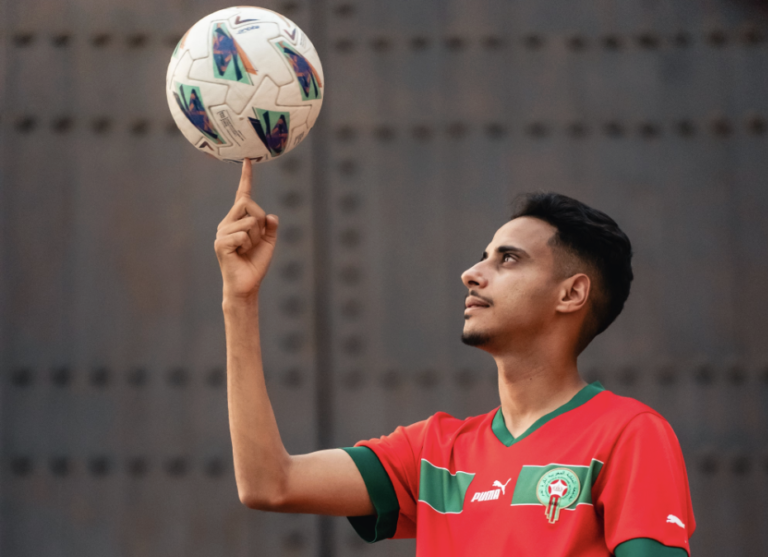
French became deeply embedded in education, business, medicine, banking and administration. Those systems continued operating in French after independence because changing everything overnight would have been enormously complicated. Over time, French stopped feeling like a foreign language for many Moroccans and instead became one of the tools people use depending on the situation. That legacy even affects how Morocco is identified in international sporting events.
That is also why you’ll hear someone speaking Darija with their family, French during a work meeting, Modern Standard Arabic when watching the evening news, and perhaps English while chatting with international clients online. Morocco isn’t switching from one language to another. It’s using several at the same time.
Do Moroccans Speak French?
Yes, many Moroccans speak French, particularly in larger cities and among people working in business, education, medicine, banking and government-related professions. However, not every Moroccan speaks French fluently, and French is not the country’s official language. Darija, or Moroccan Arabic, is much more common in everyday conversation, while Amazigh languages are widely spoken in many parts of the country.
Morocco Isn’t Actually a French-Speaking Country
This is probably the biggest misconception visitors have.
Many people assume Morocco is officially French-speaking because French appears almost everywhere tourists go. Others think Arabic isn’t widely spoken because they hear French in Casablanca restaurants or Rabat shopping centers. Neither assumption is correct.
French is not the official language of Morocco.
Arabic and Amazigh hold official status under the constitution. If you’ve ever wondered is French an official language in Morocco, the answer is no. Yet French still functions as one of the country’s most important working languages, particularly in major urban centers. This becomes even more noticeable when looking at where foreigners actually settle in Morocco, since cities such as Casablanca, Rabat and Marrakech have very different international communities and everyday language environments.
That’s the important distinction.
Official languages define the legal status of a language. Working languages describe what people actually use every day to run institutions, businesses and universities.
Imagine walking into a government office. The official documents may exist in Arabic, but the software employees use, internal communication between departments or technical manuals might still be written partly in French. The same thing happens inside hospitals, engineering companies and banks.
Tourists also tend to spend most of their time in larger cities, where French is much more visible than in rural communities. The difference between Casablanca and a small mountain village is enormous, much like the contrast between urban versus rural lifestyle that people notice in many countries. That’s one reason language habits change depending on where you are.
So when people ask why is Morocco French speaking, they’re really observing how French functions in public life—not its official legal status.
The French Protectorate (1912–1956)
To understand why did France influence Morocco, you only need a brief look at history.
Technically, was Morocco a French colony? Not exactly. Morocco became a French Protectorate in 1912, meaning the Moroccan monarchy continued to exist while France controlled administration, education and much of the country’s economic development.
During those decades, French became the language used by government officials, engineers, architects, doctors and large companies. Schools teaching modern sciences increasingly relied on French textbooks, while French-language education in Morocco expanded and legal systems and public administration adopted French terminology.
When Morocco gained independence in 1956, the political relationship ended. The language, however, had already become deeply integrated into institutions.
That’s the reason many people asking why do Moroccans speak French after independence are surprised by the answer. It wasn’t simply a cultural preference. Entire professional systems had already been built around it.
Morocco gradually strengthened Arabic in education and public life, but replacing decades of technical vocabulary, university materials and professional training proved far more complicated than changing road signs or rewriting official speeches.
So although many people still ask whether Morocco colonized by France explains everything, history is only the beginning of the story. The much more interesting question is why French remains practical today.
Why French Never Disappeared
If French survived only because of history, it probably wouldn’t still be so widespread decades later.
Languages remain useful when people continue finding reasons to use them.
That’s exactly what happened in Morocco.
Administration
Walk into a municipal office to register a business or deal with property paperwork and you’ll often notice French appearing alongside Arabic.
Many administrative employees comfortably work in both languages because decades of legal terminology, software systems and documentation developed that way. Someone applying for permits may hear the conversation move naturally between Darija and French depending on which technical terms are involved.
This doesn’t mean every government office operates primarily in French. It means French continues acting as a practical working language in many administrative environments.
Education
One reason people ask why is French used in schools in Morocco is because children experience an interesting transition as they grow older.
In primary school, much of the instruction happens in Arabic. Later, students entering scientific subjects frequently encounter French textbooks, French terminology and teachers switching languages during explanations.
For many teenagers, the challenge isn’t learning chemistry itself.
It’s learning chemistry through French.
That transition can feel difficult, especially for students from smaller towns where French isn’t used as frequently outside the classroom.
Universities
Another common question is why is university in Morocco taught in French.
The answer is surprisingly practical.
Fields such as engineering, medicine, architecture, pharmacy and many scientific disciplines rely heavily on French because academic resources, professional vocabulary and historical curricula developed that way.
Imagine a first-year engineering student.
The professor explains thermodynamics in French.
The textbook is written in French.
The laboratory manual is in French.
Later that evening, the student discusses the lecture with friends in Darija.
Switching languages becomes completely normal.
Medicine
Hospitals provide another good example.
Doctors may greet patients in Darija.
Medical records often include French terminology.
Specialists discuss diagnoses using French medical vocabulary because that’s how they were trained.
Patients rarely notice the transition unless they understand both languages.
A conversation might begin with everyday Arabic before shifting into French when discussing technical details.
Business
If you’ve ever wondered why do Moroccans speak French in business, spend one morning inside an international company in Casablanca.
Emails may arrive in French.
Meetings often happen in French.
Contracts are drafted in French.
Employees chat casually in Darija during coffee breaks before returning to French once presentations begin.
French remains especially common in finance, consulting, telecommunications, manufacturing and multinational corporations with historical connections to Europe.
What Language Do Moroccans Actually Speak at Home?
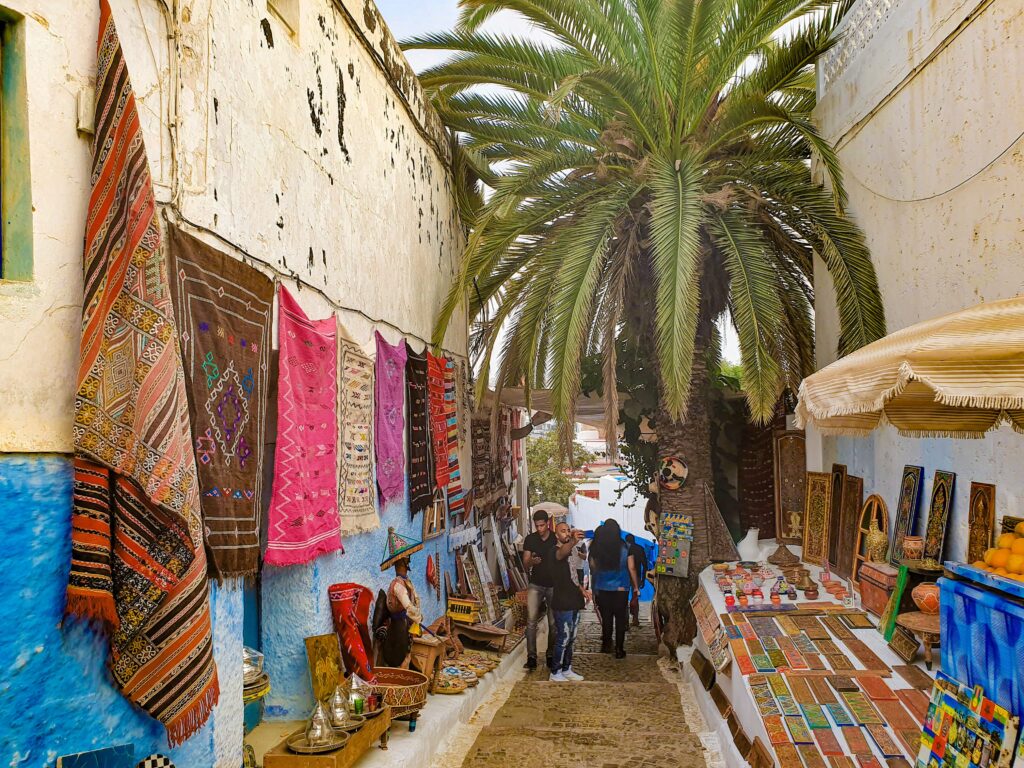
If you spend a week in Morocco, you’ll probably hear four or five languages every day. That often leaves visitors asking what language do Moroccans speak because there doesn’t seem to be one obvious answer.
The simplest answer is this: most people speak different languages depending on who they’re talking to and what they’re doing.
A university student in Rabat might speak Darija with friends, answer a professor in French, watch the evening news in Modern Standard Arabic and browse YouTube almost entirely in English. None of those choices feels unusual. They’re simply different tools for different situations.
This kind of multilingualism exists in other countries too, although the history behind it can be very different. Ukraine is an interesting example: many Ukrainians grew up speaking Russian at home while also understanding and speaking Ukrainian fluently, which is why language and national identity do not always match as neatly as outsiders expect.
Darija: The Language of Everyday Life
If you’re standing in line at a bakery, listening to teenagers joke in a café or hearing a family argue about dinner, you’re almost certainly listening to Darija.
Darija is Moroccan Arabic, but it isn’t the same as the Modern Standard Arabic taught in schools or heard on international news channels. It has developed over centuries and contains influences from Amazigh languages, French, Spanish and even Portuguese.
For most Moroccans, Darija is the language of daily life. Parents speak it to their children. Friends use it with each other. Taxi drivers negotiate fares in it. Street vendors call out to customers in it.
That’s why visitors who spent years learning formal Arabic are often surprised when they arrive. They recognize some words but struggle to follow conversations because Darija has its own vocabulary, pronunciation and expressions.
Modern Standard Arabic
Modern Standard Arabic serves a completely different purpose.
You’ll see it in official government announcements, newspapers, religious contexts, school textbooks and television news. Students learn it throughout their education, and it’s one of Morocco’s official languages.
Most Moroccans understand it well, but they don’t necessarily use it while chatting with friends over coffee. Speaking Modern Standard Arabic in an everyday conversation can sound unusually formal, a bit like reading a legal document aloud during lunch.
Amazigh
Another important piece of Morocco’s linguistic identity is Amazigh.
Millions of Moroccans, particularly in the Rif Mountains, the Atlas Mountains and parts of southern Morocco, speak one of several Amazigh languages as their first language. Amazigh also has official status alongside Arabic, reflecting the country’s indigenous heritage.
Someone growing up in an Amazigh-speaking family may use Amazigh at home, Darija with neighbors, Arabic at school and French at work. Multilingualism is normal rather than exceptional.
French
French occupies an interesting position because very few people grow up speaking only French at home.
Instead, it often becomes the language of education, professional life and certain urban social circles. In cities like Casablanca and Rabat, it’s common to hear parents occasionally switch into French with their children, particularly when discussing homework or technical topics.
Generational differences matter too. Older professionals who built careers in banking, engineering or medicine often feel extremely comfortable using French every day. Younger Moroccans still learn French, but many increasingly divide their attention between French and English.
This helps answer another common question: why do Moroccans speak French and Arabic? The answer isn’t that they choose one over the other. They use whichever language best fits the situation.
English
Over the last decade, English has become much more visible.
Young Moroccans spend hours on YouTube, TikTok and Instagram, where English dominates much of the content they consume. Remote workers communicate with international clients in English. Software developers read documentation almost exclusively in English. Online courses, AI tools and technology platforms have made English increasingly valuable.
Someone working for a multinational startup may spend an entire workday communicating in English, then switch to Darija while meeting friends after work, and later help a family member understand a French document from the bank.
That kind of multilingual flexibility is remarkably common.
Why Do Moroccans Switch Between French and Arabic?
One of the most fascinating things visitors notice isn’t simply that French exists.
It’s how quickly conversations move between languages.
If you’ve ever wondered why do Moroccans mix French and Arabic, you’re describing something linguists call code-switching. In Morocco, however, it often feels so natural that people don’t even realize they’re doing it.
Imagine two colleagues arriving at work.
Half the sentence is Darija.
The other half contains French.
Nobody pauses to think about it.
The same thing happens while shopping.
A customer walks into a clothing store.
Students do something similar.
A university group might discuss an engineering assignment almost entirely in Darija before switching into French whenever they mention scientific concepts because that’s how they learned them in class.
Even WhatsApp conversations can look like a mixture of three languages.
Someone might start in Darija, insert a French verb halfway through a sentence and finish with an English meme or GIF caption.
To outsiders, it can sound chaotic.
To Moroccans, it feels completely ordinary.
This isn’t about showing off language skills.
It’s usually about convenience. Some concepts simply come to mind more naturally in one language than another.
Why Is English Replacing French in Morocco?
If French remains so influential, why does everyone keep talking about English?
Because something genuinely is changing.
That doesn’t mean French is disappearing. It means English is becoming increasingly valuable in areas that didn’t exist twenty years ago.
Remote work has played a huge role.
A software developer in Casablanca working for a company in Berlin almost certainly communicates in English. A graphic designer freelancing for American clients also relies on English every day. The same applies to content creators, marketers, startup founders and people working in artificial intelligence.
Social media accelerated this shift.
Young Moroccans spend countless hours watching English-language creators on YouTube and TikTok. They learn expressions, technical vocabulary and internet culture long before they ever use English professionally.
Universities have also begun introducing more English-language programs, recognizing that international research increasingly happens in English.
So when people ask why is English replacing French in Morocco, the answer is that it isn’t replacing it everywhere.
Instead, English is expanding into new sectors while French continues dominating others.
A lawyer handling commercial contracts still needs French.
A doctor studying medical literature often needs French.
An engineer may need both French and English depending on the company.
Rather than replacing French overnight, English is gradually becoming another essential language alongside it.
This shift also explains why do Moroccans speak French instead of English in many professional settings today. Institutions, legal systems and education were built around French long before English became the global business language, something remote workers may also notice when looking for free places to work remotely.
Changing an entire country’s professional vocabulary doesn’t happen quickly.
Why French Is More Common in Cities Than Rural Areas
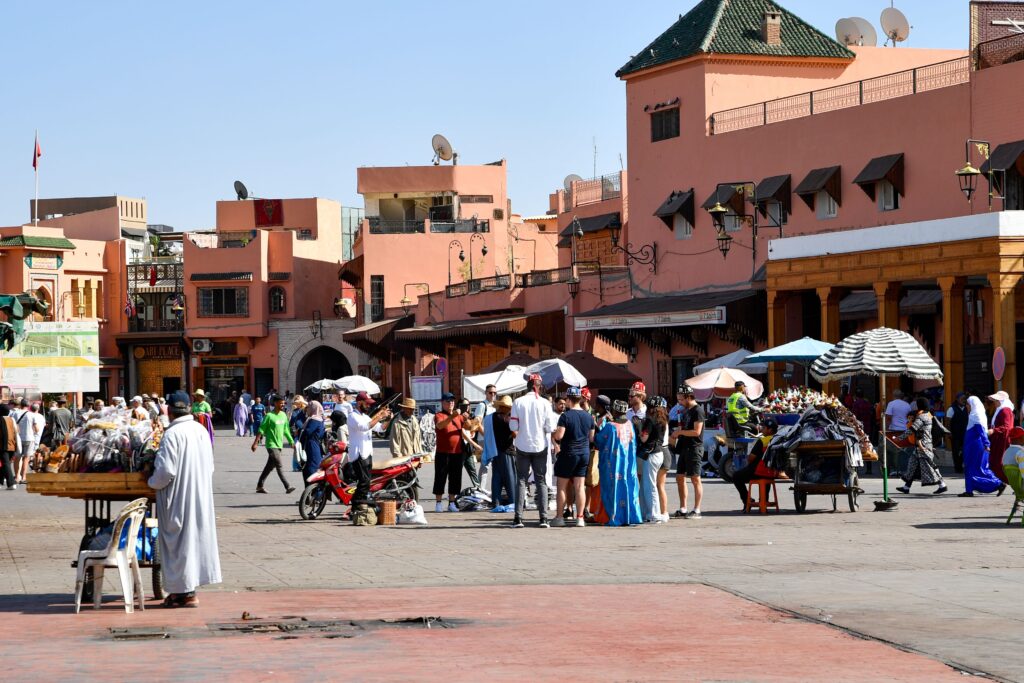
Visitors often leave Marrakech believing everyone speaks French fluently.
Someone else spends time in a mountain village and reaches the opposite conclusion.
Both experiences can be true.
Large cities like Casablanca, Rabat and parts of Marrakech naturally expose people to international tourism, multinational companies and universities where French remains common.
Smaller towns usually rely much more heavily on Darija or Amazigh in everyday life.
A farmer selling vegetables at a weekly market may have little reason to use French regularly.
A banker processing international business loans in Casablanca probably uses it all day.
That’s why language in Morocco often reflects lifestyle more than geography alone.
It also mirrors broader contemporary cultural shifts in the Middle East and North Africa, where younger generations increasingly combine local traditions with global influences through education, technology and work.
Is French an Official Language in Morocco?
This question appears constantly in Google searches because Morocco doesn’t fit neatly into the categories people expect.
The answer is straightforward.
No, French is not an official language in Morocco.
Arabic and Amazigh are the country’s official languages under the Moroccan Constitution. That means they’re the languages recognized by law for national identity, public institutions and official state functions.
French occupies a different position.
You could think of it as Morocco’s most important working language.
That distinction explains almost everything tourists find confusing.
Imagine opening a bank account in Casablanca. The employee greets you in Darija. Your identification documents are issued in Arabic. The banking software runs in French. The loan agreement may contain extensive French terminology. If you later visit a multinational company for a job interview, the interview itself could be entirely in French despite neither participant being French.
Legally, French isn’t official.
Practically, it remains deeply integrated into everyday professional life.
Many countries have similar situations. English is widely used in international business across Scandinavia despite not replacing national languages. India uses English extensively in government and higher education alongside Hindi and many regional languages. Morocco simply developed its own multilingual version of that reality.
Should Tourists Learn French Before Visiting Morocco?
The answer depends entirely on where you’re going.
If you’re asking should I speak French in Morocco, learning a few basic phrases is definitely helpful, but it’s not essential for most visitors.
Let’s break it down by destination.
Casablanca
Casablanca is Morocco’s economic center.
French is highly visible here because many businesses, banks, universities and international companies use it daily. Hotel staff, restaurant employees and professionals often switch comfortably between French, Arabic and increasingly English.
If you know French, you’ll probably notice conversations becoming smoother.
If you only speak English, you can still travel successfully, especially in tourist-oriented businesses.
Rabat
The capital feels similarly multilingual.
Government institutions, universities and diplomatic organizations contribute to the widespread use of French, while younger professionals increasingly speak English as well.
Visitors rarely struggle communicating in hotels or restaurants.
Marrakech
Marrakech receives millions of international tourists every year.
As a result, English has become much more common than many people expect.
Restaurant menus frequently appear in several languages.
Tour guides often speak three or four languages.
Hotel receptionists communicate comfortably in English.
French remains useful, but it’s certainly not required.
Small Towns and Mountain Villages
This is where things begin changing.
Outside major cities, English becomes less common.
Many people speak Darija, Amazigh and varying levels of French depending on their education and profession.
Learning a few French expressions can make interactions easier, especially with older generations.
Simple greetings and polite phrases are often appreciated even if the conversation quickly shifts elsewhere.
Markets
Traditional markets are an interesting case.
Negotiations usually happen in Darija.
Tourists often communicate using gestures, calculators and a handful of French or English words.
Language rarely becomes a serious barrier because buying and selling follows familiar routines.
Hotels and Restaurants
In tourist destinations, English usually works perfectly well.
In smaller guesthouses or family-run restaurants, French may be slightly more useful.
The important thing is flexibility rather than fluency.
So, is French useful in Morocco?
Absolutely.
Do you need it?
Usually not.
Can You Visit Morocco With English?
One of the most practical questions people ask is can I visit Morocco with English.
For short trips, the answer is almost always yes.
Tourism has grown enormously over the past two decades, and English has become increasingly common among younger workers in hospitality, transportation and tourism.
If you’re visiting Casablanca, Rabat, Marrakech, Essaouira, Tangier or Agadir, you’ll probably manage your entire trip using English.
Ordering food.
Checking into hotels.
Booking tours.
Taking taxis.
Asking for directions.
All of those situations are generally manageable.
The experience changes slightly once you leave the major tourist areas.
In smaller towns, English becomes less widespread.
French becomes more useful.
Darija dominates everyday conversations.
None of that should discourage visitors.
Moroccans are generally patient communicators.
Even when you don’t share a common language, people often find creative ways to help using gestures, translation apps or simply slowing the conversation down.
That’s one reason so many travelers describe Morocco as welcoming despite its linguistic complexity.
Myth vs Reality
Comparison: When Each Language Is Used
One Thing Visitors Usually Don’t Notice
Something interesting happens after you’ve spent a few weeks in Morocco.
At first, the constant language switching seems confusing.
Eventually, your brain stops noticing it.
You’ll hear someone order coffee mostly in Darija before saying sans sucre instead of “without sugar.” You’ll overhear university students discussing an assignment in Arabic before switching into French whenever they mention engineering concepts. You’ll watch friends exchange WhatsApp messages that contain Arabic words written with Latin letters, several French expressions and an English emoji caption.
Nobody pauses to think about which language they’re using.
They simply communicate.
That’s probably the biggest difference between Morocco and countries where languages remain more clearly separated.
Language here is fluid.
People choose whichever words feel most natural at that moment.
That flexibility also makes it easier for newcomers who eventually settle in Morocco. Many expats discover that meeting locals in a new place becomes easier once they stop worrying about speaking perfect French or perfect Arabic and instead appreciate that most Moroccans themselves move comfortably between multiple languages during everyday life.
FAQ
Why do Moroccans speak French if Morocco is an Arab country?
This is the question that surprises most visitors. Why do Moroccans speak French? The reason is that French remained deeply integrated into education, business, healthcare, banking and public administration after Morocco gained independence in 1956. While Arabic and Amazigh are the country’s official languages, French continues to function as an important working language in many professional environments. This linguistic connection also helps explain Morocco’s strong ties with France and the wider diaspora, which have influenced areas ranging from migration to the development of Moroccan football
Why is French popular in Morocco?
If you’re wondering why is French popular in Morocco, the answer is largely practical rather than political. Generations of students studied science and engineering in French, businesses adopted French terminology, and multinational companies continued using it after independence. Speaking French also opens career opportunities in Morocco and other French-speaking countries.
Why does Morocco use French today?
People often ask why does Morocco use French even though it isn’t an official language. French remains common because many institutions already operated in French before independence. Universities, banks, hospitals and large companies continued using it, making it part of everyday professional life rather than simply a historical legacy.
Why do Moroccans learn French?
Most students begin learning French at school because it remains important for higher education and many careers. Why do Moroccans learn French? Someone hoping to become a doctor, engineer, pharmacist or banker will probably need French throughout their studies and professional life. Even outside those fields, many employers consider French an important skill.
Does Morocco still use French today?
Yes. If you’ve searched Morocco still use French today, the answer is definitely yes, although the way it’s used depends on where you are. French is especially common in cities like Casablanca and Rabat, while Darija dominates daily conversations at home and in many rural communities. Morocco’s experience is often compared with the evolution of French in Lebanon, although the two countries developed their multilingual identities through different historical and educational paths.
Why do Moroccans speak French instead of English?
Historically, French became established decades before English grew into the world’s dominant business language. That’s why why do Moroccans speak French instead of English has a simple explanation: universities, government institutions and businesses were already functioning in French. Today, however, English is growing rapidly among younger professionals, remote workers and technology companies.
Is English enough in Morocco?
For most tourists, is English enough in Morocco? Yes. In Marrakech, Casablanca, Rabat, Tangier and other popular destinations, you’ll usually manage with English. Outside the main tourist areas, French becomes more useful, while in smaller villages many conversations happen primarily in Darija or Amazigh.
Should tourists learn French before visiting Morocco?
Many travelers ask should tourists learn French before visiting Morocco. You certainly don’t need to become fluent, but learning basic greetings, numbers and polite expressions can make your trip easier, especially outside the major cities. Even a simple “Bonjour” or “Merci” is often appreciated.
Why do Moroccans speak French in business?
French remains the dominant language in many corporate environments because that’s how Morocco’s professional systems developed. Contracts, banking, insurance, engineering and consulting often rely heavily on French terminology. Although English is becoming more common in international companies, why do Moroccans speak French in business is still answered by decades of institutional continuity and regional economic ties.
Why do Moroccans speak French and Arabic in the same conversation?
This is called code-switching. Why do Moroccans speak French and Arabic at the same time? Usually because each language feels more natural for different topics. Someone may discuss family matters in Darija, switch to French for technical vocabulary and then finish the conversation with an English phrase they picked up online. For multilingual Moroccans, changing languages often happens without conscious thought.
Explore the Culture & Society Hub
Discover more stories about language, identity, traditions, social habits and the cultural details that shape everyday life around the world.
Explore the Culture & Society Hub →This article combines personal travel experience in Morocco, conversations with Moroccan locals, independent editorial research, and discussions exploring how language is used in everyday life across different regions of the country.
Research sources included:
- Personal observations from traveling in Morocco and experiencing everyday communication in different cities.
- Conversations with Moroccan residents about language use in education, business, and daily life.
- Community discussions and first-hand experiences shared on Reddit by travelers, expats, and Moroccans.
- Historical research on Morocco’s French Protectorate and language policies published by the Harvard International Review.
- Historical and cultural background published by Encyclopaedia Britannica.
The goal is to explain why French remains widely used in Morocco today by focusing on everyday reality, education, business, and culture rather than simply repeating historical facts.

Founder & Editor
Founder of The City Theory, writing about digital nomad lifestyle, modern city culture, remote work, travel experiences, psychology and human behaviour around the world.