Why Is Dubai Gold So Yellow? The Real Reason It Looks Different
If you have ever walked past a jewellery shop in Dubai and wondered why is Dubai gold so yellow, the simplest answer is that a lot of jewellery sold here is made from higher-purity gold, particularly 21K and 22K, while people from Europe and North America are often more familiar with 14K or 18K jewellery. The closer the metal gets to pure 24K gold, the deeper and more saturated its natural yellow colour becomes. But that is only part of the explanation, because the metals mixed with gold also affect its final colour, which is why two pieces stamped with the same karat can still look slightly different.
I noticed this long before I knew anything about karats or gold alloys. Gold is one of those visual details that immediately makes Dubai feel different, just like the city’s climate and the way everyday life has adapted to its extreme summer heat. You don’t have to be interested in jewellery to notice it. Walk through a shopping mall and the gold in some of the windows seems much yellower than what you would normally see in jewellery shops in Europe. Go to Deira and the difference becomes impossible to ignore.
The First Time I Saw Dubai’s Gold Souk
My first proper encounter with Dubai gold was at the Gold Souk in Deira. I knew what the place was before going there, of course, but knowing that you are visiting a gold market and actually seeing those windows for the first time are two completely different things.
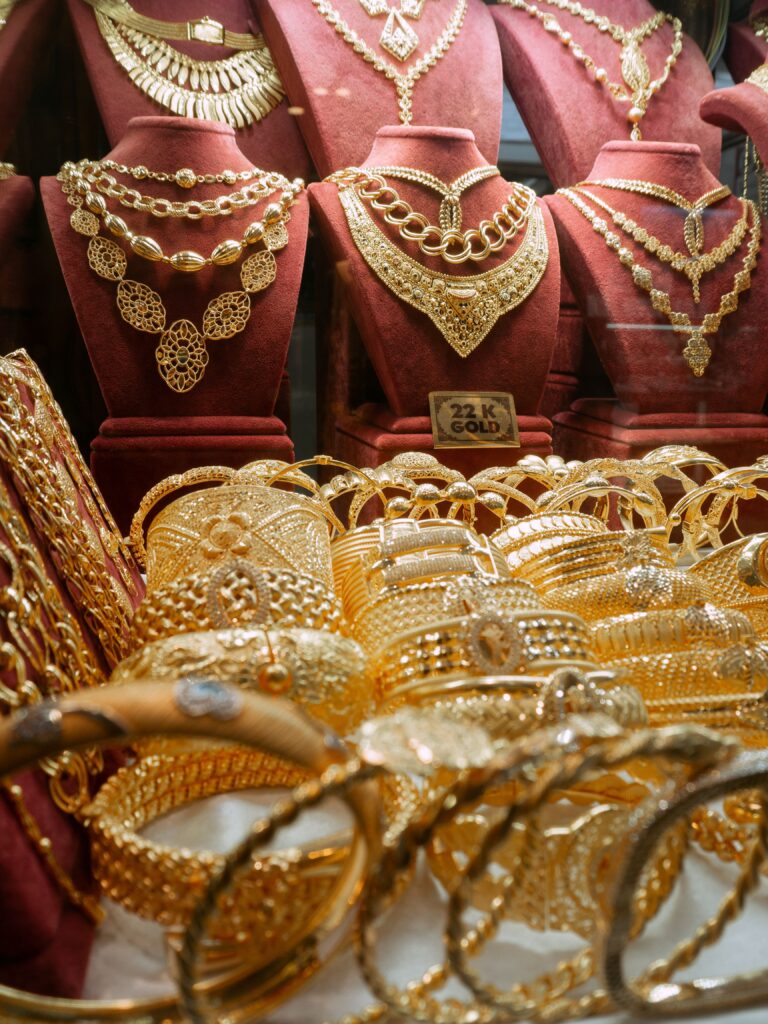
The displays were enormous. There were necklaces that covered what looked like half a mannequin’s chest, rows of heavy bracelets, thick rings and elaborate sets containing so much gold that they looked more like ceremonial objects than the small pieces of jewellery I was used to seeing in Europe. What surprised me most, however, wasn’t the amount of gold. It was the colour.
It was intensely yellow, and in some windows almost orange.
At first I genuinely wondered whether it was a particular style of Middle Eastern gold, because it looked so different from the jewellery I had grown up seeing. European jewellery shops often display delicate 14K or 18K pieces with a softer, less saturated colour. In Deira, entire windows seemed to glow in a much deeper shade of yellow. This difference makes more sense when you look at how gold purity and caratage affect jewellery colour, as explained by the World Gold Council.
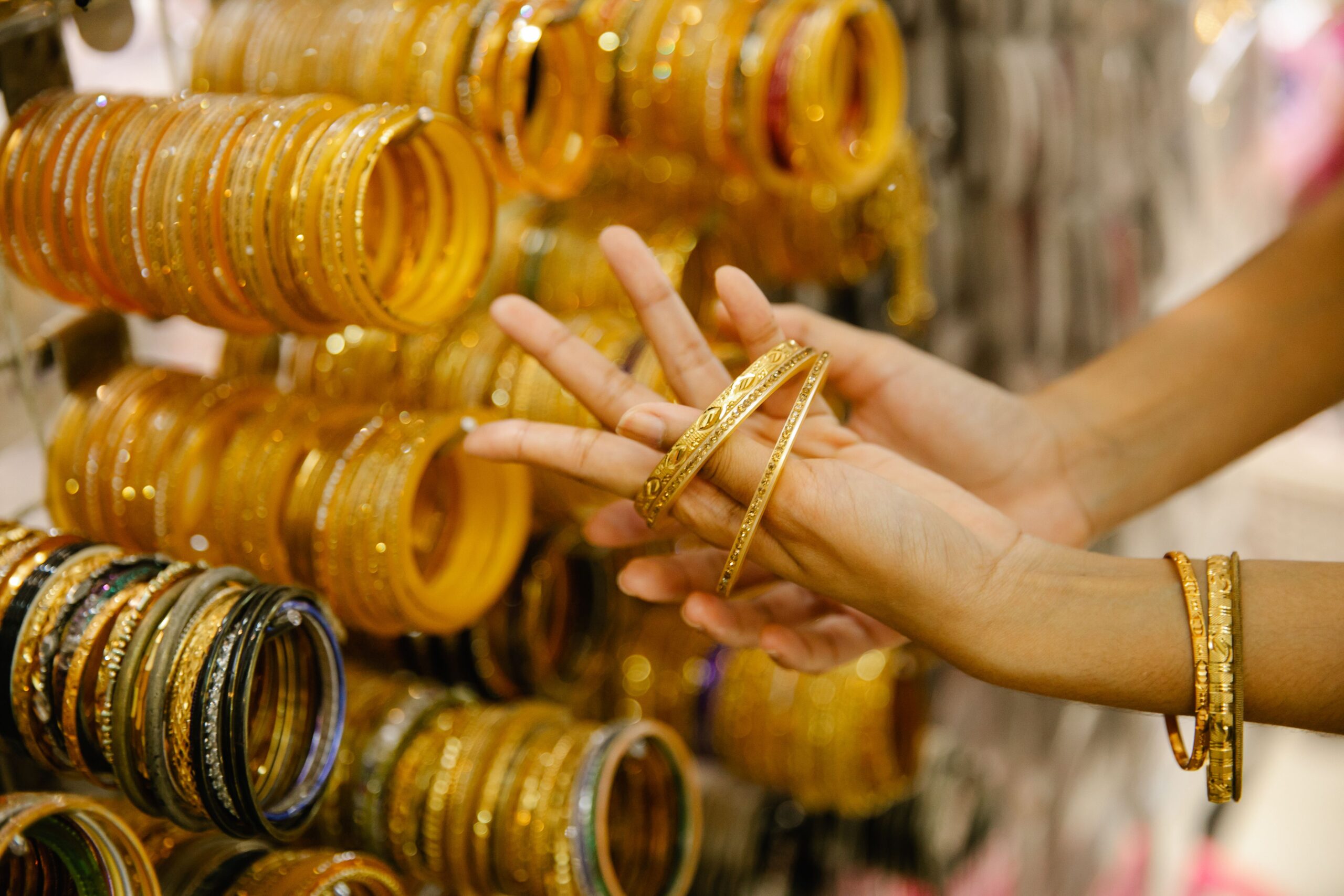
The effect becomes even stronger when dozens of pieces are displayed together under bright jewellery-store lighting. This also partly explains why is Dubai gold so shiny. Highly polished surfaces, strong display lights and large amounts of yellow gold packed into the same window amplify something that already exists naturally in the metal.
You don’t even need to buy anything to notice this side of the city. Walking through Deira and looking at the shops can be part of exploring Dubai without constantly spending money, and I actually find the area more interesting as a cultural experience than as a shopping destination.
The Simple Explanation: Dubai Sells a Lot of High-Karat Gold
So why does gold in Dubai look more yellow? The first thing to understand is what the karat number actually means.
Pure gold is 24K. When you buy 18K jewellery, only 75% of the alloy is gold. With 14K, the gold content falls to roughly 58.5%. The remaining material consists of other metals added partly because pure gold is very soft and impractical for many types of everyday jewellery. The Gemological Institute of America’s explanation of gold purity and alloys shows how these different karat levels affect both the composition and properties of gold jewellery.
That creates a noticeable visual difference.
| Gold | Purity | Typical Appearance |
|---|---|---|
| 24K | 99.9% | Very deep yellow |
| 22K | 91.6% | Rich yellow |
| 21K | 87.5% | Strong yellow |
| 18K | 75% | Softer yellow |
| 14K | 58.5% | Paler yellow |
This table also answers a question I hear surprisingly often: does Dubai gold contain more gold? Sometimes, yes — but not because it comes from Dubai. A 22K bracelet sold in Dubai contains more gold than an 18K bracelet sold in Paris simply because 22K is a higher-purity alloy. A 22K bracelet bought in another country should have the same basic gold content.
That distinction matters because “Dubai gold” sometimes gets discussed online as though it were a separate category of metal.
It isn’t.
Why Is Dubai Gold Yellower Than American Gold?
The difference can be particularly striking for someone arriving from the United States because 10K and 14K jewellery are common there. If that is the colour of gold you are accustomed to seeing, a large 21K or 22K necklace can look almost unnaturally yellow the first time you encounter one.
So why is Dubai gold yellower than American gold? In many cases you are simply comparing different karats rather than different countries.
The same principle helps explain why is Dubai gold yellower than European gold. European markets vary considerably, but 14K and 18K jewellery is familiar across many countries. That makes the Dubai gold vs European gold comparison visually dramatic when the Dubai piece happens to be 21K or 22K.
This was essentially what happened to me. I was mentally comparing the huge yellow pieces in Deira with the much lighter jewellery I remembered from European shops without realizing that I wasn’t necessarily comparing like with like.
Why Does 22K Gold Look Different From 18K?
The numbers make this much easier to understand. A 22K piece is approximately 91.6% gold, while an 18K piece is 75% gold. That is a substantial difference in composition.
It explains why is 22k gold more yellow and why does 22k gold look different from 18k. With considerably more gold in the alloy, 22K retains more of the rich colour associated with pure gold.
The trade-off is practicality. Higher-purity gold is softer. This is one reason you can’t simply assume that the highest possible karat is automatically the best choice for every piece of jewellery. An intricate piece intended for frequent everyday wear may benefit from the hardness provided by an alloy.
So when someone asks is Dubai gold really better quality, I wouldn’t answer yes purely because it looks yellower. Karat tells you about gold purity, not whether a particular design is well made, whether the craftsmanship is good or whether the piece is appropriate for the way you intend to wear it.
But Purity Isn’t the Only Reason
This is where the explanation gets more interesting, because karat alone doesn’t determine the exact colour.
Take 22K gold. Roughly 91.6% is gold, which still leaves around 8.4% made from other metals. Depending on the alloy, that remaining portion can contain different proportions of copper, silver, zinc or other metals used in jewellery production. As the Gemological Institute of America explains about gold alloys and colour, mixing pure gold with different metals can change both its properties and its final appearance.
Copper can push the colour toward a warmer or slightly reddish tone. Different alloy recipes can produce a somewhat different yellow. That means two 22K pieces do not necessarily have to look absolutely identical even though their gold content is essentially the same.
This is useful to know if you have ever asked does Dubai gold have a different color or even why does Dubai gold look orange. That deep warm colour isn’t evidence that somebody has painted the jewellery or given it a mysterious “Dubai” coating. It can result from the high gold content combined with the particular metals used in the alloy, while lighting and polishing can make the effect look even stronger.
And if you’re wondering is very yellow gold real gold, an intense yellow colour is certainly not evidence that it is fake. High-purity gold naturally has a rich yellow colour. Colour alone, however, isn’t a sensible way to authenticate jewellery; proper hallmarking and testing matter far more than whether a piece looks yellow enough.
Is “Dubai Gold” Actually a Different Type of Gold?
No. Dubai gold is not a special chemical variety of gold.
Gold remains gold whether the jewellery is made or sold in Dubai, Mumbai, London or New York. What makes Dubai gold different to many visitors is the combination of karat preferences, alloy composition, jewellery styles and the customers the local market serves.
That distinction also answers is Dubai gold more pure. Dubai doesn’t somehow produce inherently purer gold, but its jewellery market makes higher-karat pieces extremely visible. If you compare a 22K Dubai necklace with a 14K necklace from another country, the Dubai piece is more pure. Compare two properly marked 22K pieces from different countries and their nominal gold purity is the same.
The city itself is a huge part of the story. Dubai’s population brings together people from the Gulf, South Asia, Europe, Africa and dozens of other regions, and the retail market reflects those different tastes. The gold business is another example of how much the city is shaped by migration, something you also notice when looking at Dubai’s international job market and the enormous number of nationalities competing and working within one relatively small city.
Why You See So Much 21K and 22K Gold in Dubai
One of the mistakes I made initially was mentally putting everything I saw into the category of “Dubai gold.” In reality, there are several important karats in the UAE market.
If you’re wondering what karat is gold in Dubai, there isn’t one answer. You can find 18K, 21K, 22K and 24K, among others. Likewise, the answer to is Dubai gold 22k or 24k is that both exist, but they serve different purposes and buyers.
The 18k vs 21k vs 22k gold Dubai distinction becomes more interesting when you look at who actually lives and shops here. Dubai serves Emirati and other Gulf customers as well as huge Indian, Pakistani, Bangladeshi and other South Asian communities, alongside international tourists. These groups haven’t all arrived with identical jewellery traditions.
That helps explain why is 21k gold popular in Dubai. High-karat yellow gold has a long-established place in Gulf jewellery traditions, while 22K jewellery is particularly familiar to many South Asian buyers. Walk around Dubai long enough and you start noticing how jewellery styles change between stores depending on their customer base.
This is also why questions such as why do Arabs wear yellow gold, why is Middle Eastern gold so yellow and why is Arabic gold so yellow don’t really have a single answer based on ethnicity. Jewellery preferences are connected to regional traditions, occasions, wealth, family customs and fashion, while the striking colour itself is largely explained by the higher-karat alloys commonly used in those styles.
It’s similar to other highly visible Gulf traditions: something that looks unusual to a newcomer often makes much more sense once you understand the practical and cultural context behind it, rather than reducing it to “that’s just what Arabs do.” I found the same thing when looking into the practical reasons behind traditional Gulf clothing.
Dubai Gold vs Indian Gold: Why Can the Color Still Look Different?
This comparison is especially interesting because simply saying “Dubai uses high-karat gold” isn’t enough. India also has a huge market for 22K jewellery.
So why is Dubai gold more yellow than Indian gold in some comparisons?
First, make sure you are actually comparing the same karat. Comparing 22K Dubai jewellery with 18K Indian jewellery tells you more about purity than geography. But even when both pieces are marked 22K, their exact shade can vary because the remaining alloy metals don’t necessarily have identical compositions.
That is why the Dubai gold vs Indian gold color comparison can produce slightly different results even at the same nominal purity. One piece may look richer yellow while another appears warmer or slightly more reddish.
In other words, the country name on the receipt isn’t what gives gold its colour. The useful questions are: What karat is it? What is in the alloy? How has it been finished?
Once I understood that, those almost orange-looking displays I had seen in Deira stopped seeming mysterious. They were still impressive, but for a much more interesting reason: the windows reflected the jewellery preferences of the people who actually live and shop in Dubai, rather than some secret variety of gold that exists only here.
Does Yellow Color Mean Gold Is More Pure?
Usually, a deeper yellow colour can indicate a higher gold content, but I wouldn’t use colour alone to judge purity. This is where a lot of confusion starts. People see an intensely yellow necklace in Dubai and assume that the colour itself proves it must be purer or better than jewellery sold elsewhere.
The more useful way to think about does yellow color mean gold is more pure is that purity strongly influences colour, but alloy composition and finishing also matter. A 22K piece will generally look richer and more yellow than an 18K piece because it contains much more gold, but two pieces of the same karat can still look slightly different.
That is also why why Dubai gold is more yellow doesn’t have a single magic explanation. The answer is a combination of higher-karat jewellery being very common in the UAE, different alloy recipes and the fact that Dubai shops often display large quantities of polished yellow gold under very strong lighting.
Why Does Dubai Gold Look Different in Malls and at the Gold Souk?
One thing I noticed after living in Dubai is that the visual impression changes depending on where you are looking.
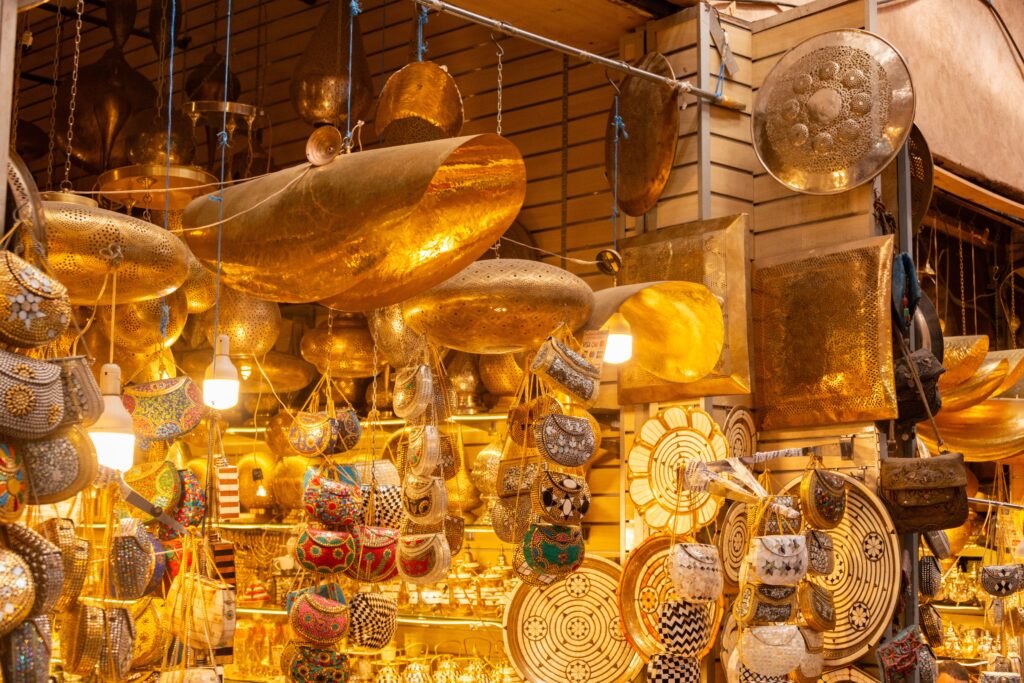
At the Gold Souk in Deira, the amount of yellow gold is almost overwhelming because the displays are packed with heavy necklaces, bangles and sets. There is very little empty space between pieces, so you are seeing a wall of reflective yellow metal.
In many Dubai malls, the presentation is more polished and modern, but you still see a lot of 21K and 22K jewellery alongside 18K pieces. South Asian jewellery stores often have especially large traditional sets, while other shops may focus on lighter or more contemporary designs.
This helps answer why does Dubai gold look different from what many visitors are used to. The difference is not only chemistry. It is also what is being displayed, how much of it is displayed, which customers the store serves and what jewellery styles are popular in that part of the market.
Is Dubai Gold Really Better Quality?
I would be careful with this question because “quality” gets used to mean several different things.
If someone asks is Dubai gold really better quality, they may actually be asking whether Dubai sells higher-purity gold. In that sense, the city certainly has a very visible market for 21K, 22K and 24K products, so it is easy to find jewellery with a higher gold content than the 14K or 18K pieces many people are accustomed to elsewhere.
But higher purity does not automatically mean better jewellery.
A softer 22K piece might not be the best choice for something that gets knocked around every day. An 18K ring may be more practical for regular wear while still containing a high proportion of gold. Craftsmanship, construction, finishing, hallmarking and whether the design suits its intended use all matter.
So when I look at Dubai gold now, I don’t automatically think “more yellow means better.” I think “higher karat, different jewellery tradition, different market.”
That is a much more accurate way to understand what you are seeing.
Why Is Dubai Gold More Yellow Than Indian Gold?
This is one of the comparisons that sounds simple until you look closely.
India is also strongly associated with high-karat yellow gold, so why is Dubai gold more yellow than Indian gold is not always a question of one country selling purer gold than the other.
If both pieces are 22K, they should both contain roughly 91.6% gold. The visual difference can come from the remaining alloy, polishing, surface finish and even lighting.
This is why the Dubai gold vs Indian gold color comparison is much more useful when the karat is known. A piece that looks more orange may contain an alloy mix that gives it a warmer appearance, while another 22K piece may look more purely yellow.
There is also a practical retail difference. Dubai jewellery shops often place huge numbers of gold pieces together under bright lighting, which can make the entire display look more saturated than a single item seen in normal daylight.
So if you are standing in Deira thinking that all Dubai gold somehow has a special colour that Indian gold does not, the reality is more complicated.
Why Is Dubai Gold Yellower Than European Gold?
The Dubai gold vs European gold comparison is usually easier to explain because many European shoppers are familiar with lower-karat jewellery.
In a European shop, you may regularly see 14K or 18K jewellery. In Dubai, you are much more likely to come across large 21K and 22K pieces. Once you compare those side by side, the colour difference becomes obvious.
That is essentially why is Dubai gold yellower than European gold. It is not because European gold has been chemically altered to look pale. It is because different markets have different preferences for purity, durability, price and design.
The same applies when people ask why is Dubai gold yellower than American gold. A 14K American chain and a 22K Dubai chain are not equivalent products in terms of gold content, so of course they can look very different.
Why Is 21K Gold So Common in Dubai?
The UAE gold market sits at the intersection of several jewellery traditions.
That is why why is 21k gold popular in Dubai is partly a cultural question rather than only a technical one. In Gulf markets, 21K gold has long been familiar and widely accepted, while 22K has especially strong demand among South Asian customers.
Dubai’s population makes this mix very visible. Emiratis, other Gulf Arabs, Indians, Pakistanis, Bangladeshis and international visitors all shop in the same city, but they do not necessarily want the same styles or karats.
This is also why I don’t like simplified explanations of why do Arabs wear yellow gold. There is no single behaviour shared by every Arab person, and jewellery traditions differ across countries, generations and social groups.
What visitors often notice in Dubai is simply that high-karat yellow gold remains culturally visible in ways that can feel unusual if you come from a market dominated by lighter 14K or 18K jewellery.
That broader context also helps explain why is Middle Eastern gold so yellow and why is Arabic gold so yellow. The yellow tone comes largely from the popularity of higher-karat gold, while the prominence of large yellow-gold jewellery is connected to regional tastes and traditions.
Is Dubai Gold 22K or 24K?
Both, along with 18K, 21K and other options.
If you search is Dubai gold 22k or 24k, it is easy to get the impression that every shop in the city sells only one standard. That isn’t what I see in practice.
24K is the closest to pure gold and has the deepest natural yellow colour, but it is very soft. That makes it more suitable for some forms of investment gold and certain jewellery styles than for pieces that need extra durability.
22K is extremely common for traditional jewellery because it still contains a very high proportion of gold while being stronger than pure 24K. 21K is also very familiar in the Gulf, and 18K is widely sold, especially in more contemporary jewellery.
So what karat is gold in Dubai really depends on what you are buying and which shop you enter.
18K vs 21K vs 22K Gold in Dubai
If I had to explain the 18k vs 21k vs 22k gold Dubai difference without turning it into a chemistry lesson, I would put it like this.
18K contains 75% gold and usually looks softer in colour. It is harder and practical for many everyday designs.
21K contains 87.5% gold and has a noticeably stronger yellow tone.
22K contains around 91.6% gold and gets even closer to the rich yellow appearance people associate with traditional Dubai and South Asian jewellery.
24K goes further again, but its softness limits what can realistically be made from it.
That is why asking why is 22k gold more yellow is almost the same as asking why higher-purity gold looks more like pure gold. There is simply less non-gold metal diluting the natural colour.
Why Is Dubai Gold So Shiny?
The high gold content explains the colour, but not all of the shine.
When people ask why is Dubai gold so shiny, part of the answer is the finish. Jewellery can be polished to create a highly reflective surface, and Dubai stores know how to present it dramatically.
The Gold Souk is probably the best example. Bright lights hit polished bracelets, necklaces and bangles from multiple angles while dozens of pieces sit next to each other. The reflection makes the yellow look even richer.
I noticed the same effect in shopping malls, especially in stores displaying heavy South Asian-style jewellery. The gold sometimes looks almost unreal behind the glass, but when you see an individual piece in normal light, the colour can feel less exaggerated.
What Makes Dubai Gold Different?
After seeing the Gold Souk for the first time, I originally thought there must be something fundamentally different about the gold itself. There isn’t.
What makes Dubai gold different is the market around it.
You have unusually visible access to high-karat jewellery, a huge customer base with strong Gulf and South Asian gold traditions, competitive jewellery retail, large traditional designs and shops that make gold part of the visual identity of entire neighbourhoods.
That is why the experience of seeing gold in Dubai can feel so different even though the underlying metal is the same element sold everywhere else.
For me, this is what makes the subject interesting. It starts as a simple question about colour and ends up revealing something about the city itself: Dubai is a place where several cultures overlap so closely that you can see their preferences reflected in something as ordinary as a jewellery-store window. If you are interested in understanding more of the history, identity and everyday culture behind the city, I also put together a guide to books that help you understand Dubai beyond the tourist image.
FAQ
Why is Dubai gold so yellow?
Dubai gold often looks very yellow because 21K and 22K jewellery is common in the UAE. Higher-karat gold contains a larger proportion of pure gold, which naturally has a deep yellow colour. Alloy composition, polishing and jewellery-store lighting can make that colour look even stronger.
Is Dubai gold more pure than other gold?
Not automatically. A 22K piece sold in Dubai has roughly the same gold purity as properly marked 22K jewellery sold elsewhere. Dubai simply has a very visible market for higher-karat gold, which can make it seem as though all Dubai jewellery is purer.
Is Dubai gold really 24K?
Some gold sold in Dubai is 24K, but much of the jewellery you see is 18K, 21K or 22K. 24K is very pure but also very soft, so it is not ideal for every jewellery design.
Is very yellow gold real gold?
Yes. High-purity gold naturally has a strong yellow colour, so very yellow jewellery can absolutely be real gold. Colour alone, however, should not be used to confirm authenticity; hallmarking and proper testing are much more reliable.
Why does 22K gold look more yellow than 18K?
22K gold contains about 91.6% gold, while 18K contains 75%. Because 22K contains substantially more gold and less alloy metal, it usually retains a richer version of gold’s natural yellow colour.
Why does Dubai gold look different from Indian gold?
Dubai and India both sell large amounts of high-karat jewellery, including 22K. Two pieces with the same karat can still look slightly different because of the metals used in the remaining alloy, as well as polishing, finish and lighting.
What is the difference between 18K, 21K, 22K and 24K gold?
18K is 75% gold, 21K is 87.5%, 22K is approximately 91.6%, and 24K is close to pure gold. As purity increases, gold generally becomes deeper yellow and softer.
Is Dubai gold a different type of gold?
No. Gold sold in Dubai is not a separate type of gold. The difference people notice comes mainly from karat, alloy composition, jewellery traditions and the popularity of high-purity yellow gold in the UAE market.
Explore the Culture & Society Hub
Discover more stories about language, identity, traditions, social habits and the cultural details that shape everyday life around the world.
Explore the Culture & Society Hub →This article combines my own experience of visiting gold markets and jewellery shops in Dubai with independent research into gold purity, karatage, alloys, and the reasons gold jewellery can appear more intensely yellow in the UAE than in many European jewellery stores.
Research sources included:
- My own experience of visiting gold markets and jewellery shops in Dubai and comparing the colour and appearance of gold sold there with jewellery I had previously seen in Europe.
- Gemological information from the Gemological Institute of America (GIA) at 4cs.gia.edu, including explanations of gold purity, karatage, alloys, and how different metals can influence the colour of gold jewellery.
- Industry information from the World Gold Council at gold.org, including background on gold jewellery, purity standards, caratage, and the composition of different types of gold.
- First-hand observations from Dubai’s gold retail areas, including differences in the appearance of 18K, 21K, 22K and higher-purity yellow gold displayed in jewellery shops.
The goal is to explain why Dubai gold often looks more yellow by separating the measurable factors — especially gold purity and alloy composition — from the visual effect created by jewellery styles, polishing, lighting, and the way gold is displayed in Dubai’s jewellery markets.

Founder & Editor
Founder of The City Theory, writing about digital nomad lifestyle, modern city culture, remote work, travel experiences, psychology and human behaviour around the world.