Best Alternatives to Dubai for Digital Nomads: Where to Move for Lower Costs and a Better Lifestyle
If you’re looking for the best alternatives to Dubai for digital nomads, the strongest options are Kuala Lumpur, Bangkok, Tbilisi, Madeira, Da Nang, Malta and Bahrain. None recreates Dubai perfectly, but each replaces different strengths. Kuala Lumpur comes closest to matching Dubai’s convenience at a much lower cost, Bahrain preserves the Gulf lifestyle, while Madeira and Tbilisi offer a better sense of community and a slower pace of life.
What Are You Actually Trying to Replace About Dubai?
When people search for Dubai alternatives for digital nomads, they’re usually not trying to replace the Burj Khalifa or luxury shopping. They’re trying to replace a lifestyle that quietly becomes normal after living there for a while, especially after experiencing Dubai’s extreme summer climate. You get used to reliable internet, clean apartment buildings with professional management, food arriving in twenty minutes, excellent private healthcare, almost everything working in English, card payments everywhere and one of the world’s best-connected airports. Those conveniences are difficult to give up once they’ve become part of your daily routine.
At the same time, there are good reasons why people start looking elsewhere. Rent has climbed dramatically in many neighborhoods, everyday expenses add up quickly, and summer temperatures make walking almost impossible for several months each year. Dubai is also home to one of the world’s largest expatriate populations, which contributes to a highly international but often transient social environment. You meet interesting people, but many leave after a year or two, making it harder to build long-term friendships. Others simply want a city where walking replaces driving, or where their monthly budget stretches further without sacrificing safety and infrastructure.
That’s why comparing cities only by rent misses the point. A place might look much cheaper on paper, but if internet outages are common, furnished apartments are difficult to find or international flights require multiple connections, the savings may not feel worthwhile. The best Dubai alternatives replace the things remote workers actually value rather than simply offering lower prices.
Best Alternatives to Dubai for Digital Nomads at a Glance
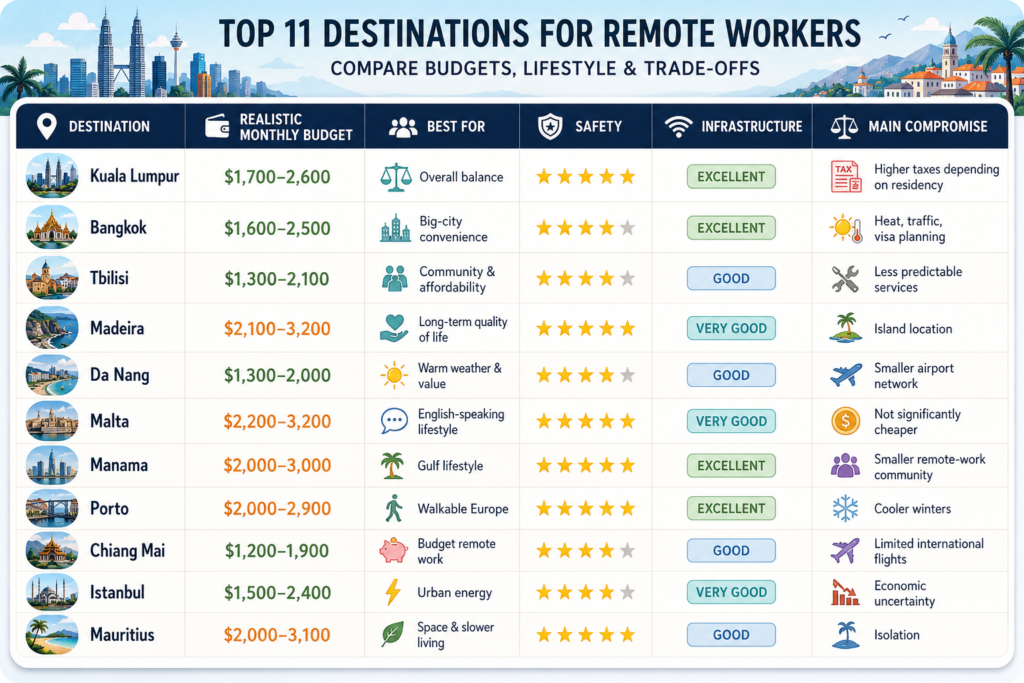
Budgets assume a furnished private apartment, reliable internet, groceries, some restaurant meals, local transport and occasional coworking. Costs vary by neighborhood, season and rental length.
Kuala Lumpur — The Closest All-Rround Replacement for Dubai
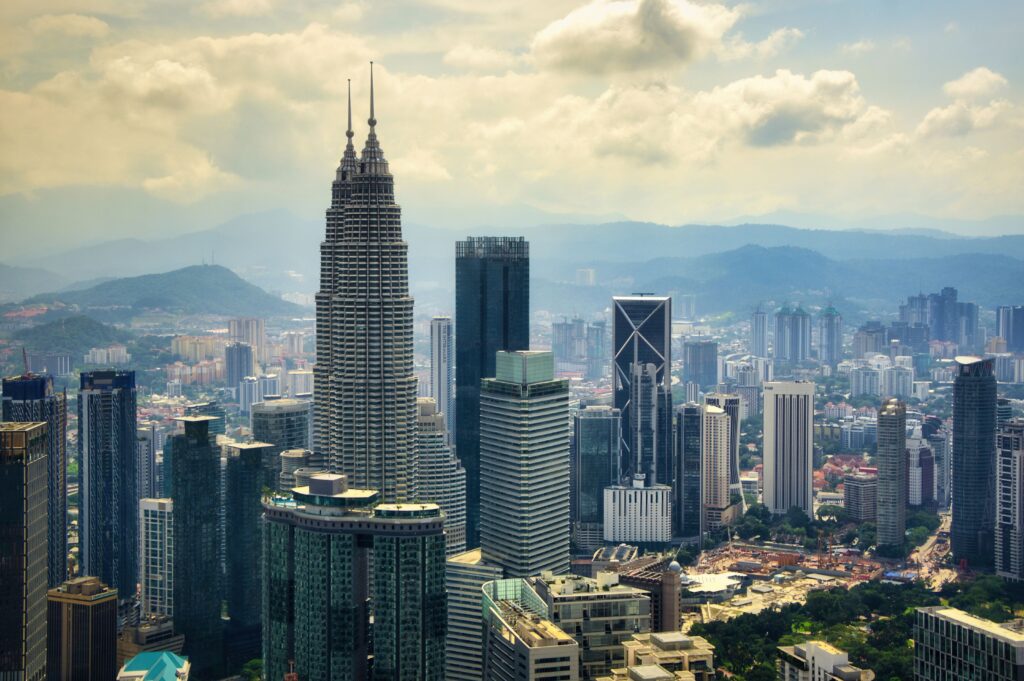
If someone asked me for the single city that best replaces Dubai without requiring the same salary, Kuala Lumpur would probably be my answer.
The reason isn’t that Kuala Lumpur feels identical to Dubai—it doesn’t. The architecture is different, the culture is different and the climate is far more humid. What makes it stand out is that it replaces almost every practical convenience remote workers become accustomed to. Apartments are modern, supermarkets are excellent, food delivery is fast, coworking spaces are everywhere and English is widely spoken in business and everyday life.
One thing people often underestimate after leaving Dubai is how frustrating everyday errands can become elsewhere. In Kuala Lumpur, many of those frustrations never appear. Online shopping is efficient, ride-hailing is inexpensive, internet connections are reliable enough for video calls, and serviced apartments are easy to find in neighborhoods popular with international residents.
A comfortable monthly lifestyle generally falls between $1,700 and $2,600, with one-bedroom furnished apartments commonly ranging from $700 to $1,200 depending on the neighborhood and building. Areas such as KLCC, Mont Kiara and Bangsar remain particularly popular with expats and remote professionals.
Internet quality is excellent, often exceeding what many freelancers actually need, and coworking operators like Common Ground and WORQ make it easy to meet other remote workers. Remote work no longer feels unusual here; cafés are full of laptops throughout the week.
Visa options require some planning, and anyone considering a longer stay should check the latest countries offering legal remote-work visas, since immigration policies change regularly.
What it replaces from Dubai: reliable infrastructure, modern apartments, convenience, shopping, healthcare and international airport connections.
What you’ll probably miss from Dubai: lower humidity, simpler tax planning for some residents, and the feeling that almost every building is brand new.
Bangkok — Better Value Without Giving Up Big-City Convenience
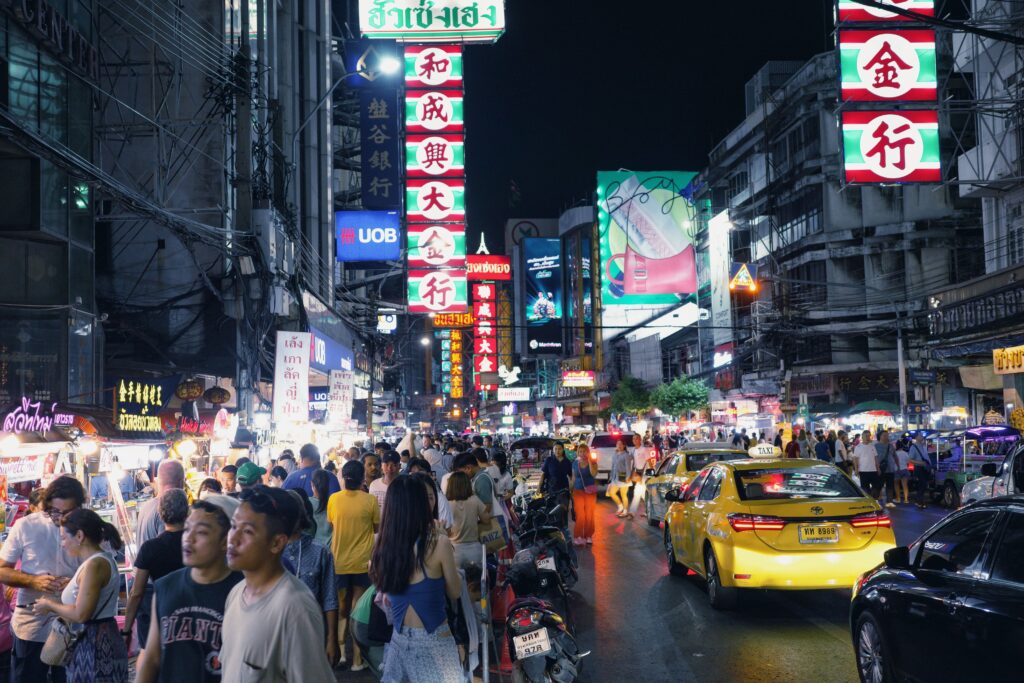
Bangkok appeals to a different kind of remote worker.
If Kuala Lumpur feels like the practical replacement, Bangkok feels like the city where you gain more life outside work. Restaurants stay open late, neighborhoods have distinct personalities, public transport covers much of the city, and it’s surprisingly easy to build routines that don’t revolve around driving.
For many people searching for alternatives to Dubai for remote workers, Bangkok offers a better balance between affordability and urban energy. Healthcare is excellent by international standards, coworking spaces are abundant, and almost every service you need can be delivered quickly. Areas like Sukhumvit, Ari and Sathorn have become established hubs for both expats and digital professionals.
A realistic monthly budget sits around $1,600–2,500, while a furnished one-bedroom apartment often costs $700–1,100, depending on the building and location. Internet speeds are consistently strong enough for software development, design work and daily video meetings.
The compromise is that Bangkok doesn’t have Dubai’s orderliness. Traffic can be exhausting, humidity lasts much of the year, and visa planning generally requires more attention than many newcomers expect. Yet for people asking where digital nomads are moving instead of Dubai, Bangkok repeatedly appears because the daily quality of life often feels richer despite costing considerably less.
What it replaces from Dubai: convenience, healthcare, food, shopping, coworking and international connectivity.
What you’ll probably miss from Dubai: cleaner streets, more predictable administration and the sense that everything runs with remarkable efficiency.
Tbilisi — Better for Community and Lower Costs, Worse for Predictability
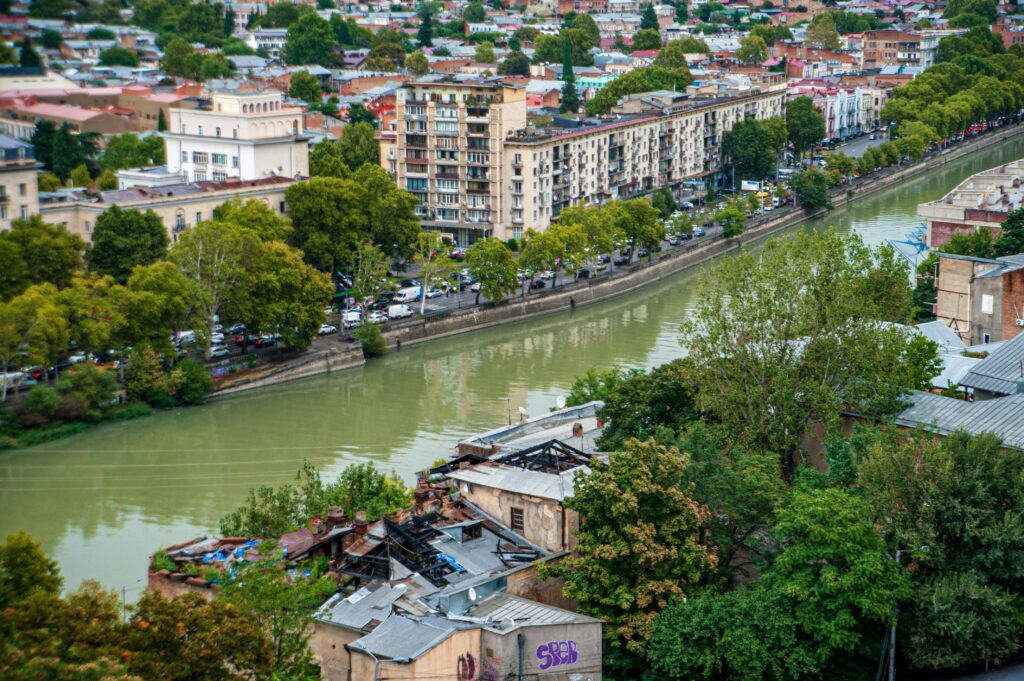
If your biggest frustration with Dubai isn’t the cost but the feeling that everyone eventually leaves, Tbilisi deserves serious consideration.
Georgia’s capital has built a reputation as one of the easiest places in Europe to meet other remote workers. Conversations happen naturally in cafés, coworking spaces and weekly community events. Many people arrive intending to stay for three months and end up remaining for a year because building friendships feels considerably easier than in many larger cities.
Financially, it’s one of the strongest cheaper alternatives to Dubai. A realistic monthly budget falls between $1,300 and $2,100, while a modern furnished one-bedroom apartment in neighborhoods such as Vera, Vake or Saburtalo usually costs $600–1,000 depending on the season and lease length.
Internet is generally reliable, coworking spaces continue to grow, and remote work is completely normal in much of the city. English isn’t as widespread as it is in Dubai or Kuala Lumpur, but younger Georgians working in hospitality, technology and tourism usually speak it well enough for everyday life.
The biggest adjustment isn’t infrastructure—it’s consistency. One apartment building may be beautifully renovated while the next still has unreliable maintenance. Customer service varies more than in Dubai, and bureaucracy occasionally requires extra patience.
What it replaces from Dubai: affordability, stronger social connections, walkability in many neighborhoods and a lively international community.
What you’ll probably miss from Dubai: predictable services, professionally managed apartment buildings and the seamless efficiency that becomes easy to take for granted.
Madeira — The European Alternative for Climate and Long-Term Quality of Life
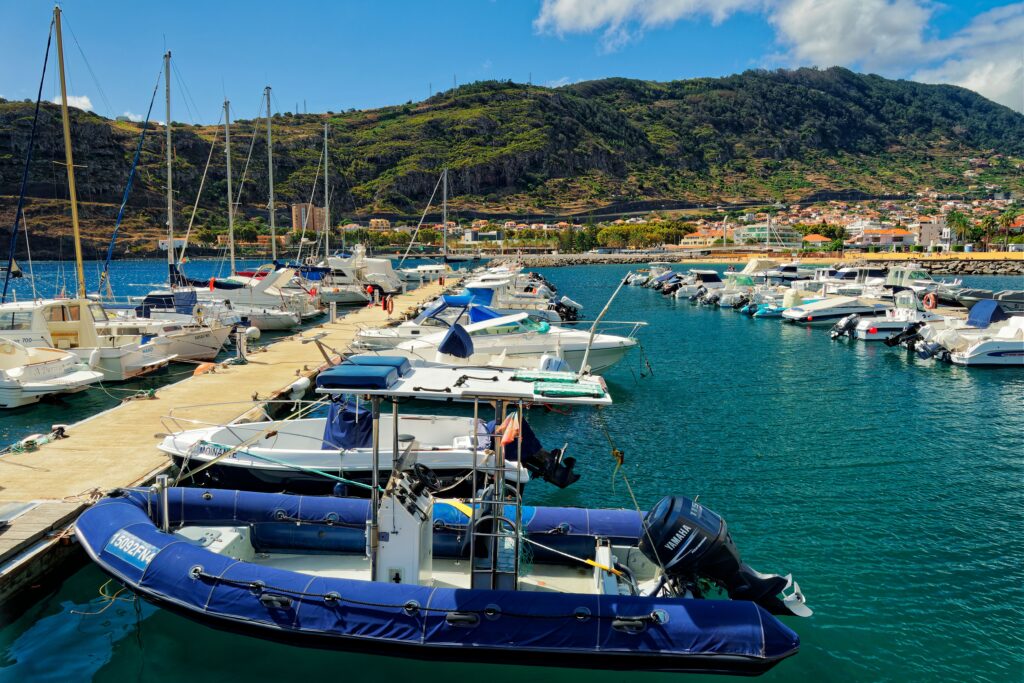
Many people searching for European alternatives to Dubai for remote workers eventually discover Madeira.
It’s not the cheapest destination on this list, but it’s one of the easiest places to imagine living for several years rather than several months. The island has become well known among remote workers because it combines European infrastructure with a mild climate, good healthcare and an unusually welcoming international community.
Unlike Dubai, where summer often limits outdoor life, Madeira encourages it. Walking becomes part of your daily routine instead of something you avoid until sunset. That alone changes how many people experience remote work.
A comfortable monthly budget generally ranges between $2,100 and $3,200, with furnished one-bedroom apartments often costing $1,000–1,700 depending on location and season. Internet quality is excellent throughout Funchal, coworking spaces continue expanding, and English is widely spoken in tourism and among the international community.
The trade-off is geography. Madeira is an island, so flights are naturally more limited than Dubai’s enormous global hub. If your work requires frequent travel across Asia or the Middle East, you’ll notice the difference immediately.
What it replaces from Dubai: safety, healthcare, modern infrastructure and an international community.
What you’ll probably miss from Dubai: nonstop global flight connections, year-round warmth and the speed of everyday services.
Da Nang — The Best Warm-Weather Option on a Moderate Budget
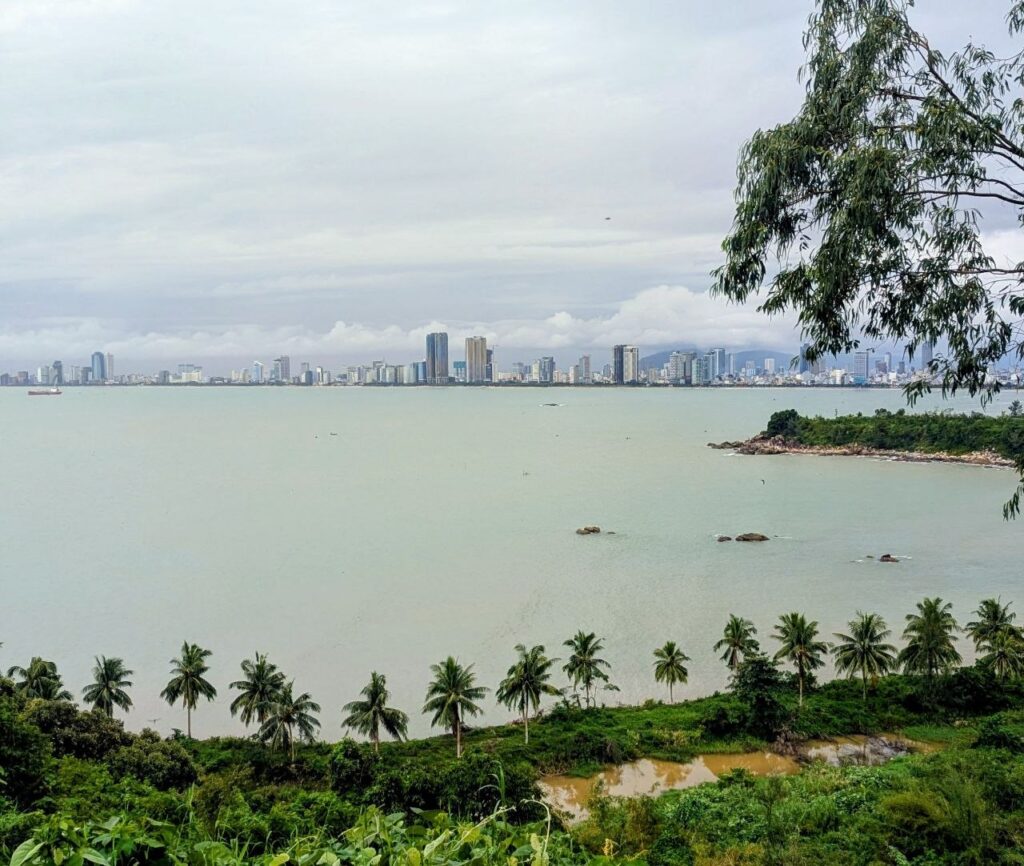
For remote workers who care more about lifestyle than skyscrapers, Da Nang is one of the strongest places like Dubai without Dubai prices.
It replaces something Dubai struggles to provide for much of the year: comfortable outdoor living. Morning walks along the beach, cafés overlooking the ocean and affordable apartments within walking distance of daily essentials create a rhythm that many former Dubai residents quickly appreciate.
A realistic monthly budget sits around $1,300–2,000, while furnished apartments generally cost $500–900 depending on proximity to the beach and lease duration. Internet speeds are more than sufficient for remote work, coworking options continue improving and cafés with reliable Wi-Fi are everywhere.
One reason many people looking for best places outside Dubai for remote work choose Da Nang is the growing international community. If you’re curious about the main expat bases across Vietnam, you’ll notice Da Nang consistently appears alongside Ho Chi Minh City as a favorite for long-term foreign residents.
Visa planning, however, requires attention. Vietnam remains attractive, but immigration rules change periodically, so anyone considering a long stay should verify the latest official requirements rather than assuming previous arrangements still apply.
If your priority is tropical living, you may also want to compare Da Nang with lower-cost destinations with a Bali-style lifestyle, since both appeal to remote workers seeking warmth and affordability.
What it replaces from Dubai: warm weather, modern apartments, safety, cafés and everyday affordability.
What you’ll probably miss from Dubai: premium shopping, the enormous airport network and English being nearly universal.
Malta — English-Speaking and Familiar, but Not Truly Cheap
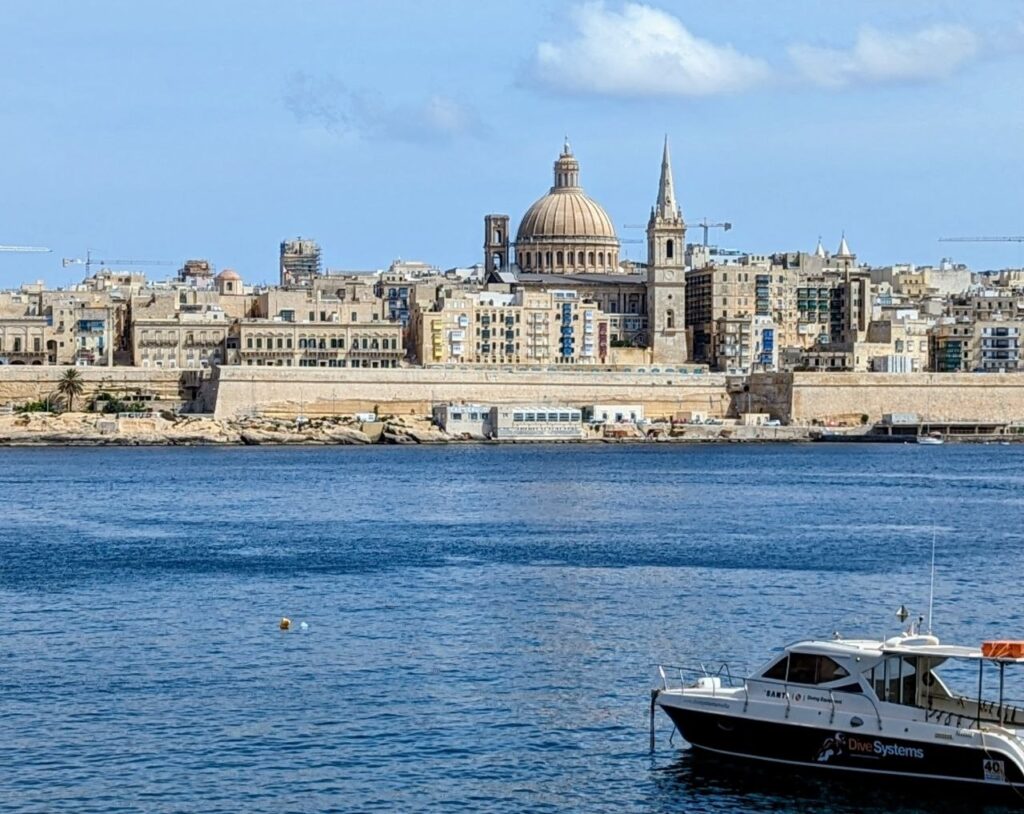
Malta often appears in discussions about Dubai alternatives for expats, largely because daily life feels familiar to many English-speaking professionals.
Government services, contracts and everyday conversations happen comfortably in English, making the transition much smoother than in destinations where learning the local language becomes necessary. Healthcare is strong, infrastructure is dependable and international flights connect Malta well with Europe.
The surprise is cost.
Many people assume Malta will be dramatically cheaper than Dubai.
It usually isn’t.
A comfortable monthly budget often falls between $2,200 and $3,200, while furnished apartments commonly range from $1,100–1,800, especially in popular areas.
That’s why Malta belongs on this list not because it’s one of the cities like Dubai but cheaper, but because it offers a familiar lifestyle with somewhat lower overall living costs while remaining inside Europe.
If you’re considering relocating, it helps to understand where international residents usually settle in Malta, since neighborhoods vary significantly in atmosphere, pricing and walkability.
What it replaces from Dubai: English-speaking daily life, strong healthcare, safety and international community.
What you’ll probably miss from Dubai: larger apartments, faster services and significantly broader flight connections.
Manama — The Closest Alternative for People Who Want to Stay in the Gulf
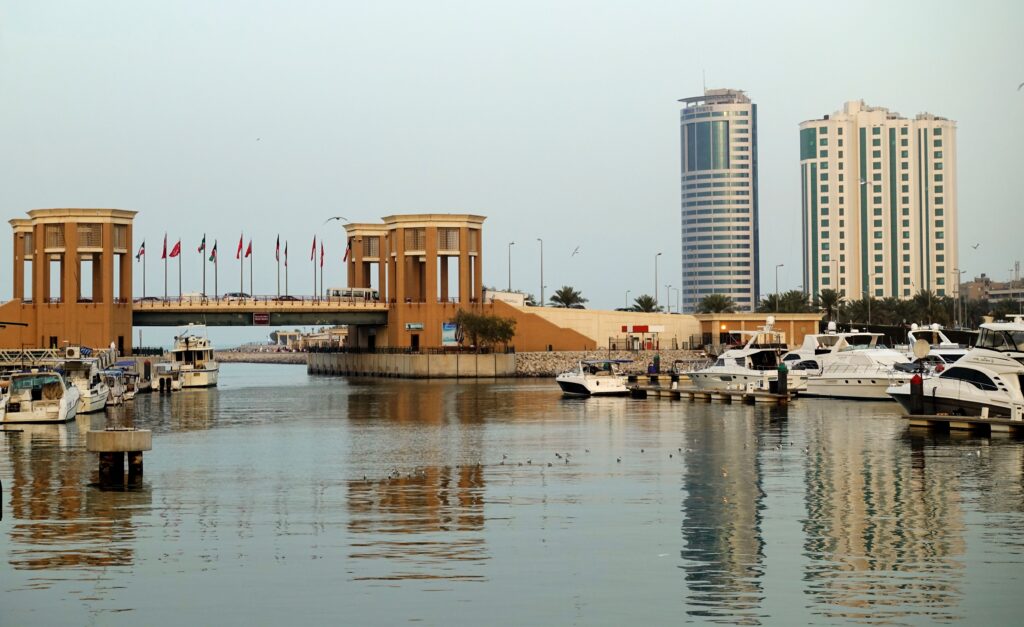
Not everyone leaving Dubai wants to leave the Gulf.
Some people enjoy the climate, the multicultural environment and the convenience of life in the region. They simply want lower costs or a slower pace. For them, Manama deserves much more attention than it usually receives.
Bahrain doesn’t try to compete with Dubai’s scale. The skyline is smaller, the restaurant scene is less extensive and the remote-work community is considerably more modest. But many everyday conveniences feel reassuringly familiar. English is widely spoken, modern apartment buildings are common, supermarkets stock imported products and healthcare is excellent.
A realistic monthly budget is around $2,000–3,000, with furnished one-bedroom apartments generally costing $800–1,300 depending on location. Internet quality is reliable, coworking spaces exist, and remote work is increasingly accepted, although the freelance ecosystem remains much smaller than Dubai’s.
From a practical perspective, Manama is one of the safest Dubai alternatives and one of the easiest places to adapt to if you’ve already spent years living in the Gulf.
What it replaces from Dubai: Gulf lifestyle, safety, modern housing, English-speaking services and familiar daily routines.
What you’ll probably miss from Dubai: a much larger international community, broader career opportunities and one of the world’s busiest airports.
Porto — A More Liveable European Base Than Lisbon

Portugal remains one of the best countries to move to after Dubai, but many remote workers immediately focus on Lisbon.
Increasingly, Porto deserves equal attention.
Porto doesn’t have Lisbon’s enormous international nomad scene, yet that’s becoming one of its strengths. Housing is still expensive by Portuguese standards, but generally offers better value than Lisbon, daily life feels calmer and the city remains highly walkable.
A comfortable monthly budget usually ranges from $2,000–2,900, while furnished apartments often cost $900–1,500, depending on neighborhood and season. Internet is excellent, coworking spaces are plentiful and English is commonly spoken among younger residents and professionals.
Compared with Dubai, Porto offers a completely different rhythm. Cafés encourage lingering rather than rushing, public transport works well and walking often replaces driving.
The downside is climate. Winters are noticeably cooler and wetter than anything most Dubai residents are accustomed to.
What it replaces from Dubai: reliable infrastructure, safety, healthcare and high quality of life.
What you’ll probably miss from Dubai: year-round warmth, low taxation for some residents and immediate access to Asia and the Middle East.
Chiang Mai — The Cheapest Practical Alternative for Established Remote Workers

Chiang Mai has been attracting freelancers and online entrepreneurs for years, so it certainly isn’t an undiscovered destination. What keeps it relevant is that it remains one of the cheapest alternative to Dubai for digital nomads without forcing people to sacrifice reliable internet or an established coworking culture.
A realistic monthly budget falls between $1,200 and $1,900, while furnished apartments frequently cost $400–700 for comfortable long-term rentals. Internet is consistently strong, coworking spaces are everywhere and meeting other remote workers requires very little effort.
This isn’t the right choice if your work involves constant international travel. Chiang Mai’s airport serves the region well, but it doesn’t come close to Dubai’s global connectivity. Many longer journeys require connections through Bangkok or elsewhere in Asia.
For people building an online business and spending months in one place, however, Chiang Mai remains one of the best affordable luxury cities for digital nomads, simply because everyday comfort costs far less than many newcomers expect.
What it replaces from Dubai: affordability, coworking culture and everyday convenience.
What you’ll probably miss from Dubai: premium infrastructure, direct long-haul flights and the polished feel of newer apartment developments.
Istanbul — Better Urban Life, More Complexity

Istanbul is difficult to compare directly with Dubai because each city excels in different ways.
If you miss walking through lively neighborhoods, independent cafés, historic districts and local markets, Istanbul offers something Dubai simply doesn’t. It feels like a city built around everyday life rather than master-planned developments.
Monthly budgets generally range between $1,500 and $2,400, while furnished apartments often cost $700–1,200, depending on the district. Internet quality is generally good enough for remote work, coworking options continue expanding and international flight connections are excellent thanks to Istanbul Airport.
The compromises are equally significant. Inflation, currency fluctuations and changing regulations create uncertainty that many former Dubai residents aren’t used to. Bureaucracy can also require considerably more patience.
What it replaces from Dubai: international connectivity, urban energy, restaurants and walkability.
What you’ll probably miss from Dubai: predictable administration, stable pricing and consistently modern infrastructure.
Mauritius — A Slower Alternative for People Who Want Safety, Weather and Space
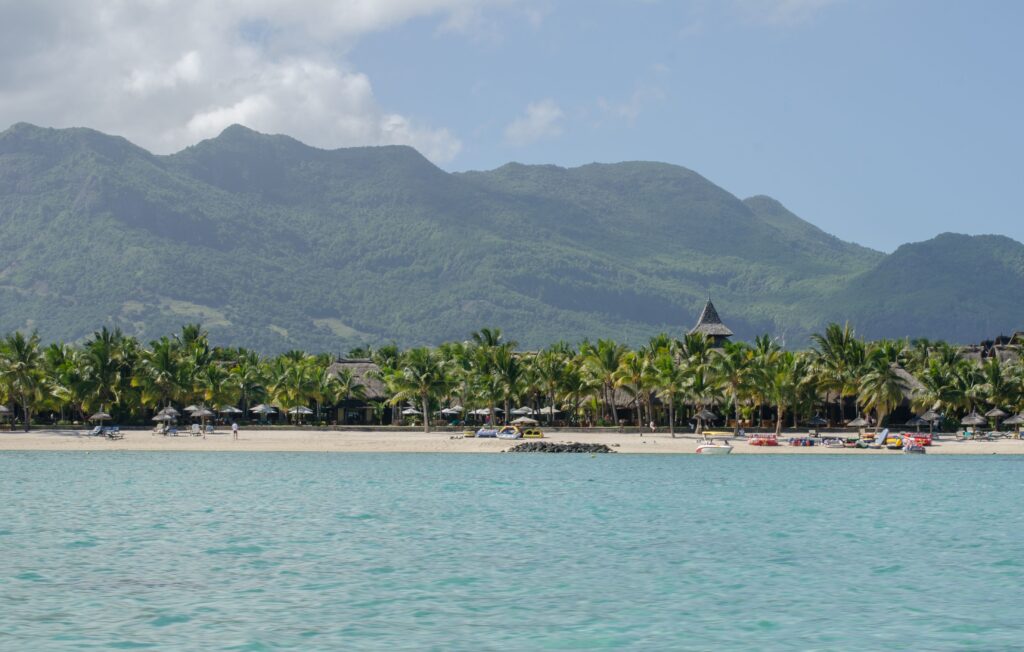
Mauritius isn’t usually the first place people think about when considering countries similar to Dubai but cheaper, yet it fills a very specific niche.
It’s particularly attractive for remote workers who no longer need a huge city. Safety is strong, the pace of life is slower and access to nature becomes part of everyday living rather than something reserved for weekends.
A realistic monthly budget sits around $2,000–3,100, while furnished apartments commonly range between $900 and $1,500 depending on location. Internet has improved substantially in recent years, healthcare is generally good and English is widely spoken.
The biggest adjustment is isolation. Flights are less frequent than from Dubai, and the island naturally offers fewer restaurants, coworking spaces and networking events.
What it replaces from Dubai: safety, warm weather and comfortable long-term living.
What you’ll probably miss from Dubai: variety, convenience and global connectivity.
Which Dubai Alternative Fits Your Priorities?
Choosing between these destinations becomes much easier once you stop asking, “Which city is cheapest?” and instead ask, “Which part of Dubai am I trying to replace?”
One interesting pattern appears among people comparing cities with good infrastructure cheaper than Dubai. Many initially focus only on rent but later realize that reliable services, fast internet, healthcare and efficient transport have real value. Saving $500 per month doesn’t always feel worthwhile if everyday life becomes significantly more complicated, especially when you also need to consider everyday safety and quality of life for remote workers.
The same applies to climate. Many people search for Dubai alternatives with warm weather, assuming any tropical destination will feel more comfortable. In reality, Bangkok, Da Nang and Kuala Lumpur have humid climates that some former Dubai residents actually find more exhausting than Dubai’s dry heat. Madeira, despite being cooler, often feels far more comfortable for year-round outdoor living.
If you’re planning to stay abroad for several years rather than a short working season, it’s also worth comparing affordable long-term bases for remote workers, since the best city for six months isn’t always the best place to build a sustainable routine.
Summer is another consideration. Some people leave Dubai specifically to escape the hottest months before returning later in the year. If that’s your plan, it helps to compare where digital nomads can avoid the worst seasonal weather, since temperatures and humidity vary dramatically between destinations.
Where Do Expats From Dubai Actually End Up?
There isn’t one destination where everyone goes.
When people ask where do expats from Dubai end up or where do expats go after Dubai, the answer depends almost entirely on what they value most.
Professionals who still want modern infrastructure and convenience often choose Kuala Lumpur or Bangkok.
Those wanting a stronger social scene and lower living costs frequently move to Tbilisi or Da Nang.
People who want to remain in the Gulf without Dubai’s price tag often consider Bahrain.
Families sometimes prioritize Madeira or Malta because of safety, healthcare and long-term stability.
Entrepreneurs who value walkability and European living increasingly choose Porto instead of Lisbon, while established freelancers looking for the cheapest cities than Dubai for expats often settle in Chiang Mai, a destination that has remained one of the highest-rated hubs for digital nomads worldwide thanks to its affordability, reliable internet and mature remote-work community.
There isn’t a universal migration pattern because there isn’t a universal reason people leave Dubai. Some are motivated by rent, others by climate, community, taxation, family life or simply wanting a different pace.
FAQ
What is the best alternative to Dubai for digital nomads?
For most remote workers, Kuala Lumpur offers the closest balance of affordability, infrastructure, reliable internet, modern apartments and international connectivity.
What is the cheapest alternative to Dubai for remote workers?
Chiang Mai generally offers the lowest realistic monthly costs while still providing excellent coworking spaces and a mature remote-work community.
Which city is most similar to Dubai but cheaper?
Kuala Lumpur comes closest. It replaces many everyday conveniences—modern housing, shopping, healthcare and efficient services—without requiring a Dubai-sized budget.
Where should a remote worker move after Dubai?
That depends on your priorities. Kuala Lumpur is the strongest all-round choice, Da Nang is excellent for lifestyle and affordability, Madeira suits long-term European living, while Manama feels most familiar to Gulf residents.
What is the safest alternative to Dubai?
Madeira and Manama consistently rank among the safest destinations on this list, although every city has neighborhoods where normal precautions still apply.
Which European city is the best alternative to Dubai?
Madeira is the strongest option for climate and quality of life, while Porto offers a more walkable urban lifestyle with better value than Lisbon.
Is Kuala Lumpur better than Dubai for digital nomads?
It depends on what you value. Kuala Lumpur is significantly more affordable and easier on everyday expenses, but Dubai still offers simpler international travel, a unique tax environment for many residents and one of the world’s strongest aviation hubs.
Is Bahrain cheaper than Dubai?
Generally yes. Housing and some daily expenses are usually lower, although Bahrain doesn’t offer the same scale of entertainment, networking or international business opportunities.
Is Dubai still worth it for digital nomads?
Absolutely—for some people. If your work benefits from outstanding connectivity, premium infrastructure and easy access to global markets, Dubai remains difficult to beat. For remote workers whose income no longer depends on being there, however, several destinations now provide a better balance between cost and quality of life.
This article combines personal experience of living in Dubai, independent editorial research, and discussions from digital nomads and expats comparing the practical realities of relocating to destinations that offer a similar lifestyle at a lower cost.
Research sources included:
- Personal observations from living in Dubai and experiencing its daily lifestyle, infrastructure, climate, transportation, housing market, and international community.
- Community discussions and first-hand experiences shared on Reddit by digital nomads, remote workers, expats, and long-term travelers comparing life after Dubai.
- Destination rankings, cost comparisons, and remote-work insights published by Nomads.com.
- Official demographic information and population statistics published by the Dubai Statistics Center (dsc.gov.ae).
- Independent editorial research comparing housing costs, infrastructure, coworking culture, healthcare, visa options, and quality of life across destinations popular with remote workers.
The goal of this article is to help remote workers identify realistic alternatives to Dubai by comparing everyday life, infrastructure, affordability, community, safety, and long-term liveability rather than focusing only on lower rent or tourist appeal.

Written by
Anna
Founder of The City Theory — writing about digital nomad lifestyle, modern city culture, remote work, travel experiences, psychology, and human behavior around the world.