
5 Best Books About Dubai to Understand the City Beyond the Skyline
If you want one book purely to understand how Dubai developed, I would start with A Detailed History of Dubai. If you are actually planning a trip and want something practical that also gives you context about the neighbourhoods you are walking through, Lonely Planet Dubai & Abu Dhabi is more useful. If you want to understand the much messier social side of the city — relationships, status, cultural differences and the strange experience of building a life in a place where almost everybody seems to come from somewhere else — Desperate in Dubai is still my personal favourite. I live in Dubai, and after reading very different books about the city, I have realised that no single one explains it properly. The best books about Dubai history and culture are useful for completely different reasons, because Dubai itself is not one simple story.
That is also why I did not want to make this another generic list of books about skyscrapers, sheikhs and luxury hotels. When people ask what are the best books about Dubai history, they are often really asking a bigger question: how did a relatively small trading settlement become this enormous international city, and what is life underneath the polished image we see online? History explains part of that, but so do migration, business, neighbourhoods, relationships and local traditions. Even small cultural details become much more interesting once you live here. I noticed this with everything from the meaning behind traditional white clothing in the Gulf to the way old trading traditions are still visible in completely modern parts of the city.
What Are the Best Books About Dubai?
If you want one book to start with, I would choose A Detailed History of Dubai for the city’s development, Lonely Planet Dubai & Abu Dhabi if you are visiting, and Desperate in Dubai if you are more interested in social life and the experience of living here. For modern ambition and identity, The Dubai Mirror offers a very different perspective. I don’t think there is one definitive book about Dubai because its history, culture, business environment and expatriate life are really separate subjects.
I Live in Dubai — These Are the Books That Actually Help Explain the City
Before moving here, Dubai looked much flatter to me. I knew the standard version: Burj Khalifa, Palm Jumeirah, luxury hotels, malls, beaches and people arriving to make money. Living here gradually made that picture much more complicated. There is old Dubai and new Dubai, Emirati society and an enormous expatriate population, neighbourhoods that feel almost completely South Asian and others that could be mistaken for an international business district anywhere in the world. You can read about pearl diving and trading ports in the morning and then walk through DIFC or Dubai Marina in the afternoon and wonder how all of this ended up existing in the same place.
That is the reason my list of the best books about Dubai for foreigners looks a little unusual. It includes history, fiction, a travel guide, a book about modern ambition and even a practical book about setting up a company. I would actually be suspicious of a list claiming that five traditional history books can explain modern Dubai, because business and migration have shaped the city just as strongly as architecture or politics have. If you are searching for books for understanding UAE culture, it helps to read across several perspectives instead of expecting one author to explain everything.
Best Books About Dubai History
If your main reason for looking for books about Dubai is to understand how the city developed, I would start with its history rather than the modern skyline. The most useful Dubai history books explain the role of the Creek, regional trade, merchants and the commercial decisions that shaped the city long before Downtown or Dubai Marina existed. I have included one accessible history book below, but I would combine it with books about modern Dubai because the city changed so quickly that its recent social and economic story matters just as much as its older history.
Books About Dubai Culture
Books about Dubai culture are slightly more complicated because Dubai culture and Emirati culture are not exactly the same subject. The city has been shaped by Emirati traditions as well as decades of migration, and much of everyday Dubai is experienced through a mixture of Gulf, South Asian, Arab, European and other expatriate communities. If you specifically want books about Emirati culture, I would look beyond general Dubai titles and include UAE history, oral histories and books focused on local traditions. If you want to understand life in Dubai as it exists today, however, fiction and books about migration, work and social life can sometimes explain the city better than a conventional cultural guide.
Best Books About the UAE and Emirati Culture
Dubai is only one emirate, so if your goal is to understand the city rather than simply read stories set here, I would also look at books about the UAE and Emirati culture more broadly. Dubai’s development makes much more sense when you understand the country’s history, Gulf traditions, the formation of the United Arab Emirates and the difference between Emirati society and the international expatriate culture most visitors encounter in Dubai. None of the books on this list is a complete guide to Emirati culture, but several provide useful pieces of that wider picture.
1. A Detailed History of Dubai — Best for Understanding How the City Was Built
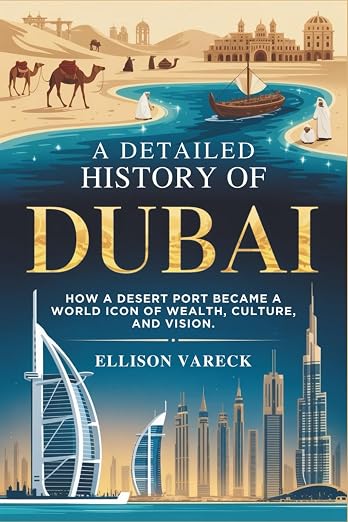
A Detailed History of Dubai: How a Desert Port Became a World Icon of Wealth, Culture, and Vision is the book I would choose first for someone whose main question is simply: how did Dubai become Dubai? It is a relatively new book by Ellison Vareck, published in 2025, and at around 112 pages it is much more approachable than a dense academic history. That is both its strength and its limitation. I found it useful as a fast overview of the transformation of the city, but I would not treat it as the only book you ever need about the history of the Emirates.
What I liked is that it brings the timeline together. Dubai makes much more sense once you stop thinking of it as a city that suddenly appeared after somebody discovered oil and started building skyscrapers. Its commercial identity existed long before the skyline. Dubai’s history as a trading centre stretches back long before the modern skyscraper era. Trade, the creek, shipping, merchants and the city’s position between different regions all mattered before modern Dubai became a global business centre.
That connection became much more obvious to me after living here. When you spend most of your time around Downtown, Marina or Business Bay, it is incredibly easy to think Dubai’s story begins with glass towers. Go towards the creek, Deira or the old trading areas and the city suddenly feels different. Even something as ordinary as jewellery becomes part of that commercial history; Dubai’s gold trade, for example, makes far more sense once you understand why the city developed as a regional trading centre, which is also why I became interested in why gold in Dubai often has such a distinctive deep yellow appearance.
For readers searching for books about how Dubai became rich or books about how Dubai was built, I would still caution against expecting a simple “oil made Dubai rich” explanation. That version misses too much. Trade, logistics, aviation, property, tourism, free zones and an aggressive effort to make Dubai useful to international business all played a role. This book introduces that transformation well, but if you want an academic treatment of the wider UAE, you will eventually need something deeper.
I would recommend it to someone who wants one of the best Dubai history books in English without committing to a huge historical study. I would not recommend it as your only source if you are researching Emirati society in depth, because a short history of a city cannot fully explain family structures, religion, tribal history, migration and the differences between Dubai and the other emirates.
2. Lonely Planet Dubai & Abu Dhabi — Best Before You Actually Arrive
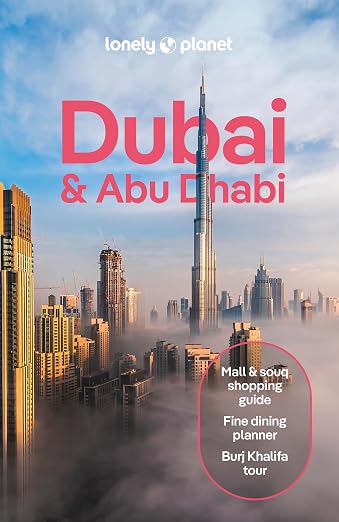
Lonely Planet Dubai & Abu Dhabi: Plan the Trip of a Lifetime is not a history book, and I would not pretend that it is. I included it because if somebody asks me what book should I read before going to Dubai, this is probably the most practical answer. The current 11th edition was published in 2024 and covers the city area by area, including Deira, Bur Dubai, Downtown, Jumeirah, Dubai Marina and Palm Jumeirah, as well as Abu Dhabi and possible day trips.
The reason it works is that geography matters enormously in Dubai. Before I lived here, names like Deira, Jumeirah, Downtown and Marina sounded like different attractions on the same map. Once you live in the city, you realise that they represent completely different versions of Dubai. The contrast between old commercial neighbourhoods and the newer coastal districts tells you more about the city’s development than a generic paragraph about “old meets new” ever could.
For that reason, I would put Lonely Planet among the best books about Dubai before visiting, particularly for a first trip. It gives you enough history and local background to understand where you are, while still answering normal practical questions. If you are comparing the best books about Dubai before moving there, however, I would combine it with something about contemporary life because a travel guide cannot prepare you for the everyday reality of employment, rent, bureaucracy and the cost of maintaining a normal routine here. The gap between visiting Dubai and building a life here is substantial; even the reality of Dubai’s job market for newcomers is much more complicated than the city’s glossy international image suggests.
So, is Lonely Planet Dubai worth buying? I think it is if you are actually coming to the UAE and want one physical reference instead of opening thirty browser tabs. I would not buy it purely to study Dubai’s history, and I would not use it as my main source for books about Emirati culture and traditions. Its strength is helping you connect places, neighbourhoods and background information while you are physically experiencing the city.
There is also a new 12th edition scheduled for December 2026, so if you are reading this after that edition has been released, check which version you are buying. I would recommend checking the official Lonely Planet Dubai guide for the latest destination information and current guidebook options. At the moment, the 2024 edition is still the relevant one.
3. Desperate in Dubai — The Book That Changed How I Saw the City
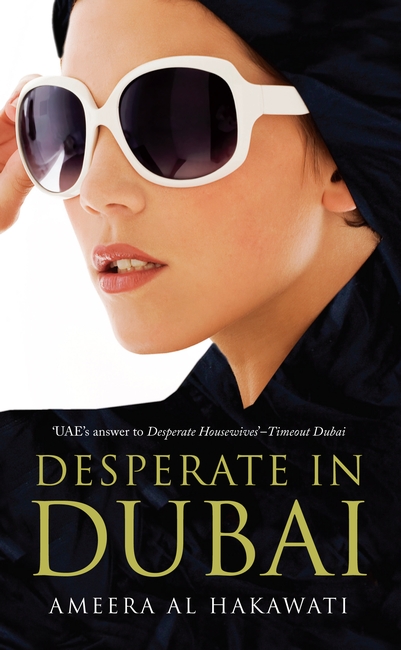
Desperate in Dubai is the book on this list I enjoyed the most, although it is probably the least obvious choice if you arrived here searching only for the best nonfiction books about Dubai. It is fiction, and it should be read as fiction, but for me it did something that historical timelines and travel books could not do: it made Dubai feel emotionally recognisable.
The story follows women from very different backgrounds, including an Emirati woman, an Indian woman and a Lebanese woman, and moves through dating, relationships, expectations, disappointment, status and the social rules people carry with them into Dubai. That mix immediately felt familiar to me because this is one of the strangest things about living here. People may share the same restaurants, offices and apartment buildings while coming from completely different cultures, religions, family expectations and ideas about relationships.
Before reading it, I still had some of that glamorous Dubai image in my head even though I already knew from daily life that the city was much more complicated. The book pushed that feeling further. It reminded me that behind the polished restaurants, beautiful dresses, expensive cars and impressive apartments are ordinary people trying to figure out whom they can trust, whether a relationship is serious, what someone really wants from them and whether they actually belong here. After finishing it, Dubai felt much less like a colourful postcard to me.
That is why my Desperate in Dubai book review is not really about whether every situation in the novel accurately represents Dubai today. It does not, and no novel should carry that responsibility. What makes it valuable is the social tension underneath the story, which is exactly why I would include it among the most interesting books about expat life in Dubai and novels about life in Dubai rather than treating it as a factual guide.
For me, this is also one of the more useful fiction books set in Dubai if you are curious about the emotional side of the city rather than its landmarks. It shows why the enormous international population is both one of Dubai’s strengths and one of the things that can make relationships here unusually complicated.
4. The Dubai Mirror — Best for Understanding the Pressure Behind Modern Dubai
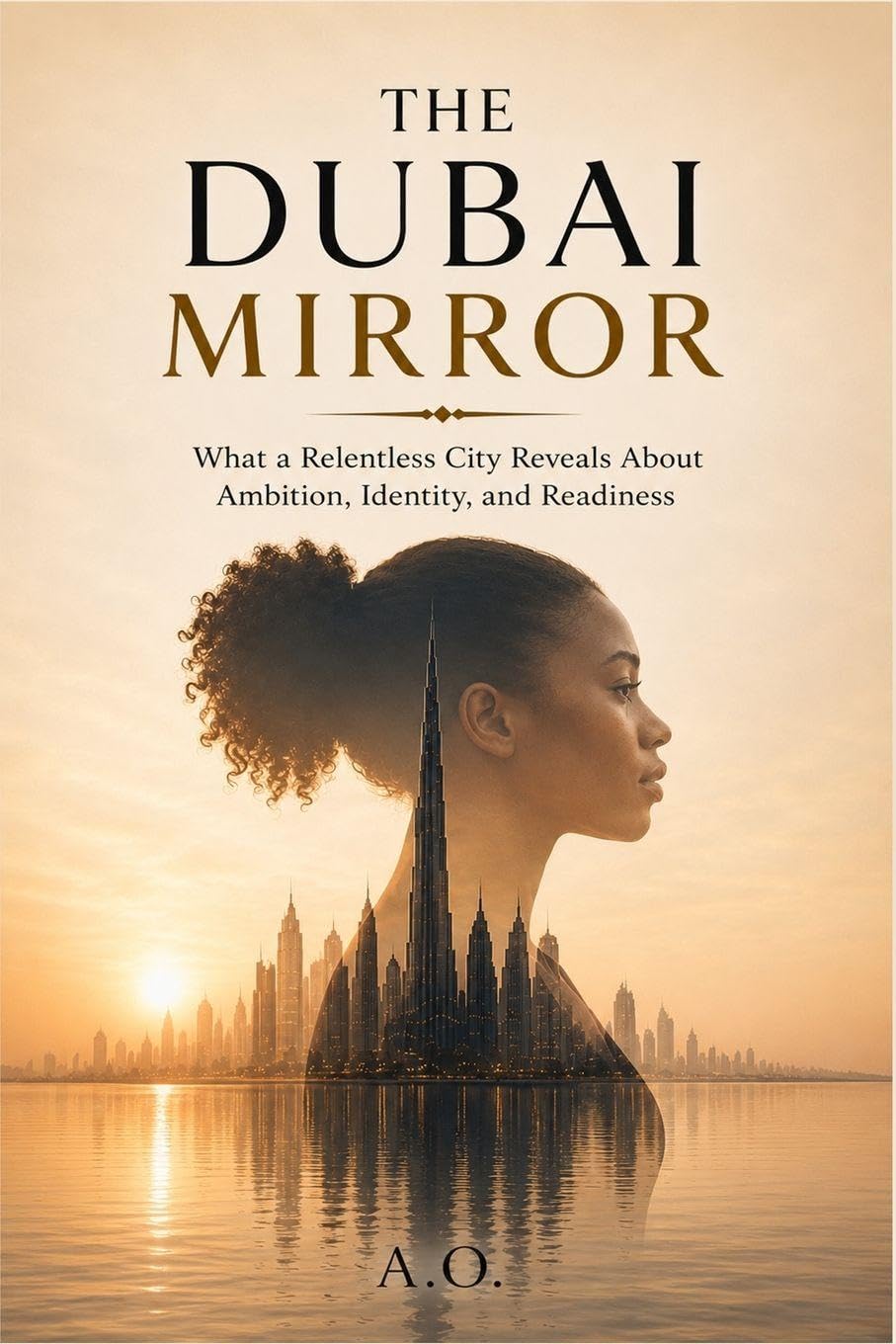
The Dubai Mirror: What a Relentless City Reveals About Ambition, Identity, and Readiness is probably the most introspective book on this list because it is less interested in telling you when a road was built or which district you should visit and more interested in what a city like Dubai does to the people who come here. That is exactly why I wanted to include it among the books about modern life in Dubai, because the city’s emotional atmosphere is difficult to explain until you have actually spent some time here.
Dubai is relentlessly ambitious. You feel it in the architecture, in conversations about work, in the constant opening of new restaurants and businesses, in the way people introduce themselves through their professions, and sometimes even in the strange pressure to look as though your life is going better than it really is. When I first moved here, I noticed how quickly this atmosphere becomes normal. You stop being surprised by supercars parked outside ordinary cafés, people changing jobs every year, entrepreneurs talking about launching companies over coffee, or friends discussing property investments as casually as other people might discuss weekend plans.
That is the side of Dubai that traditional books about Dubai history often cannot capture. They can explain what happened, but not necessarily what it feels like to live inside the result. The Dubai Mirror works better as a book about ambition, identity and the psychological effect of being in a city that constantly seems to be moving forward. I found myself thinking less about individual facts and more about why Dubai attracts a certain type of person in the first place, especially people who are willing to leave their country, start again and tolerate uncertainty because they believe there is an opportunity here.
At the same time, I would not recommend this as your first book if your priority is books about how Dubai was built in the literal historical sense. It is much more useful after you already understand the basics of the city’s development. I would read it after A Detailed History of Dubai, because the two books answer different questions: one explains how the city changed physically and economically, while the other is more useful for thinking about what that environment does to people living inside it.
For me, this also connects with one of the biggest contradictions of modern Dubai. The city attracts people with the promise of opportunity, yet the reality can be extremely competitive. You see the same contradiction in how difficult the employment market can become for newcomers, where thousands of people may arrive with impressive qualifications and still struggle to find the position they imagined before moving. That gap between expectation and reality is part of modern Dubai too, and books that ignore it usually end up describing a city I do not recognise.
5. Opening A Company In Dubai — Best for Understanding Why Business Is Part of the City’s Identity
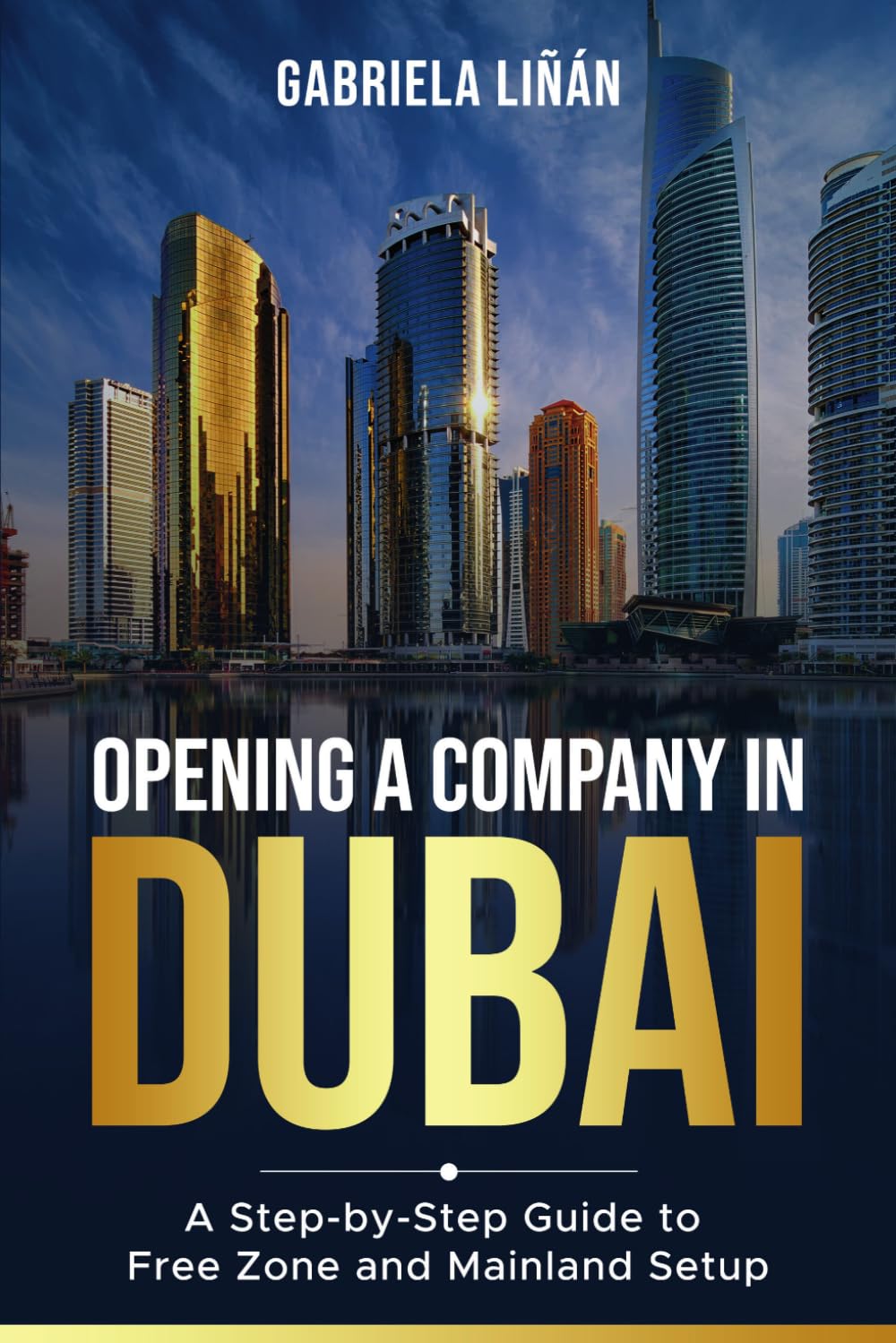
Opening A Company In Dubai: A Step-by-Step Guide to Free Zone and Mainland Setup looks like the odd book on this list, and technically it is. It is not one of the traditional books that explain Dubai culture, it is not a history book and it is certainly not a novel. I still think it belongs here because you cannot understand modern Dubai properly without understanding how seriously the city takes business.
Gabriela Liñán’s book is structured as a practical introduction to setting up a company, including the basic choice between Free Zone and Mainland structures. If you are actually planning to open a business, you should obviously verify everything against current UAE regulations because licensing rules, fees and requirements can change. What interested me more, however, was what the subject itself reveals about Dubai. There are very few cities where conversations about company formation, visas, business licences and free zones become part of normal expatriate life so quickly.
After living here, I stopped seeing free zones and company formation as boring administrative topics. They are part of the infrastructure that helped create modern Dubai. The city deliberately made itself attractive to entrepreneurs, international companies, investors and professionals who wanted access to a regional market. This is one reason books about Dubai’s development feel incomplete when they jump directly from oil to skyscrapers without explaining the commercial systems built in between.
It also gives useful context to the enormous population of people who are here temporarily. Many residents are working on employment visas, running businesses or earning income from clients abroad, so people’s relationship with Dubai is often tied to work in a very direct way. Even the monthly reality of staying here varies enormously depending on how someone earns money and where they live, something that becomes obvious when comparing the real cost of living across different UAE cities.
I would recommend this book to someone who is considering entrepreneurship or who wants to understand one piece of the machinery behind Dubai’s growth. I would not recommend it to somebody searching specifically for books about Emirati culture and traditions, because that simply is not what it is trying to do. Its value on this list is different: it helps explain why commerce is not just an industry in Dubai but part of the city’s identity.
Best Books to Read Before Moving to Dubai
If you are moving rather than visiting, I would choose differently. A travel guide can help you understand the geography of Dubai, but it will not explain what it feels like to build an everyday life here. I would start with A Detailed History of Dubai for context, then read The Dubai Mirror for the mentality of the modern city and Desperate in Dubai for a very different perspective on relationships and expatriate social life. Someone relocating for work or business may also get more from Opening A Company In Dubai than a tourist ever would. After living here myself, I think the most useful books to read before moving to Dubai are the ones that explain why the city works the way it does, not simply what to see after you arrive.
What About Novels and Fiction Books Set in Dubai?
If you specifically want novels set in Dubai rather than history or travel books, Desperate in Dubai is the strongest choice on this particular list. Fiction gives you something nonfiction often misses: conversations, relationships, social expectations and the awkward cultural misunderstandings that happen when people from very different backgrounds build lives in the same city. I would not use a Dubai novel as evidence for how the city works in every detail, but I do think fiction books about Dubai can be surprisingly useful alongside history. They show an imagined version of everyday life rather than another timeline of construction projects and economic growth.
If You Only Read One Book About Dubai
Choosing one depends completely on why you are interested in the city. If somebody asked me for the single best historical introduction, I would choose A Detailed History of Dubai. It gives enough background to understand why the creek, trade and commercial development matter without turning the subject into an academic project.
If you are coming here for a holiday and searching for the best books about Dubai before visiting, I would choose Lonely Planet Dubai & Abu Dhabi because it will actually help once you arrive. If you are moving here, I would read that alongside something about modern Dubai, because neighbourhoods and attractions are only a small part of what becomes important once you start dealing with work, housing and everyday expenses.
For social life, my answer is easily Desperate in Dubai. It remains my favourite because it was the book that most strongly broke the perfect postcard image of Dubai for me. If you want modern identity and ambition, choose The Dubai Mirror. If you are particularly interested in why entrepreneurs keep coming here and how the commercial system works, Opening A Company In Dubai makes more sense.
The main thing I would avoid is expecting one book to explain everything. Some of the best books about Dubai for expats are useful precisely because they contradict one another. The city described by a historian is not the same Dubai described by a novelist, and neither is exactly the same city experienced by someone trying to establish a company or simply survive August here. Climate alone shapes daily life in ways visitors often underestimate; once you experience how extreme Dubai’s summer heat changes everyday routines, even the architecture and indoor lifestyle start to make more sense.
The Dubai I Recognised in These Books
What surprised me most while reading these books was how often I recognised fragments of the city without ever feeling that one author had captured the whole thing. That actually feels appropriate. Dubai is a difficult place to summarise because people experience radically different versions of it depending on their nationality, income, job, neighbourhood and social circle.
Someone staying in Downtown for five days may see luxury hotels, fountains and restaurants. Someone working in Deira may experience the city primarily as a trading centre. A person setting up a company sees licences, banks and free zones. An Emirati family has a relationship with the city that expatriates like me cannot fully reproduce, while a newly arrived foreign worker may spend the first months thinking mostly about rent, employment and whether moving here was a mistake.
This is why I think the best books about Dubai history and culture should not simply repeat the same story about a fishing village turning into a futuristic metropolis. That story is true only in the broadest possible sense, and it leaves out far too much. Dubai existed as a trading centre long before the skyline, and modern Dubai is still built around movement: goods, money, businesses and people constantly arriving and leaving.
It is also why I enjoy reading about the older city now that I live here. The historical material becomes more tangible when you can physically move between very different versions of Dubai. You can spend the morning around the creek thinking about merchant routes and old commercial districts, then cross the city and end the day in Marina surrounded by towers built within living memory. Very few places make historical change feel that compressed.
At the same time, I would not romanticise the transformation. The more I read about Dubai, the less interested I become in the simplistic “miracle in the desert” narrative. The city is impressive, but it is also complicated, unequal, competitive and sometimes exhausting. That does not make Dubai less interesting to me. It actually makes it more interesting, because there is much more to understand once you stop treating it as a collection of landmarks.
FAQ
What is the best book about Dubai history?
For a short and accessible introduction, I would start with A Detailed History of Dubai: How a Desert Port Became a World Icon of Wealth, Culture, and Vision. It is particularly useful if you want an overview of Dubai’s transition from a regional trading settlement to a global commercial city. Readers looking for deeper academic history should treat it as a starting point rather than their only source.
What should I read before visiting Dubai?
If your trip is already booked, Lonely Planet Dubai & Abu Dhabi is the most practical option on this list because it combines neighbourhood information, local context and travel planning. It is particularly useful for understanding why Deira and Bur Dubai feel so different from Downtown, Jumeirah or Marina instead of seeing Dubai as one continuous collection of attractions.
Are there good books about Emirati culture?
Yes, although I would separate books specifically about Emirati culture from general books about Dubai. Dubai is an international city where expatriates make up a large part of the population, so a book about life in Dubai is not automatically a book about Emirati society. If your main interest is local traditions, look for books focused specifically on UAE history, oral histories, family life and Gulf culture rather than relying only on travel guides.
Are there novels set in Dubai?
Yes, and Desperate in Dubai is the one I enjoyed most from this list. It is useful not because it documents every aspect of contemporary Dubai accurately, but because fiction can show relationships, insecurity, cultural differences and social expectations in a way that a conventional history book cannot. For readers specifically searching for fiction books set in Dubai, I think novels are worth combining with nonfiction rather than choosing one or the other.
What are the best books about Dubai?
The best book depends on what you want to understand. For Dubai history, I would start with A Detailed History of Dubai. For a trip, Lonely Planet Dubai & Abu Dhabi is more practical, while Desperate in Dubai is my favourite for the social side of life in the city. There is no single book that explains modern Dubai completely, which is why I prefer combining history, fiction and contemporary perspectives.
Are there books about life in Dubai?
Yes. Books about life in Dubai range from novels about relationships and expatriate society to nonfiction about business, ambition and the city’s rapid development. I find these particularly useful because everyday Dubai is very different from the version of the city most visitors see through hotels, malls and tourist attractions.
What is the best book for understanding modern Dubai?
I would choose The Dubai Mirror if your main interest is ambition, identity and the mentality associated with modern Dubai. If you want to understand the economic structure behind that modern city, Opening A Company In Dubai provides a completely different but surprisingly useful perspective. Personally, I think modern Dubai only becomes understandable when you combine those perspectives with its older trading history rather than treating the skyline as the beginning of the story.
What books should I read before moving to Dubai?
If you’re planning to move to Dubai rather than simply visit, I would start with books that explain how the city developed and how people actually live here. A Detailed History of Dubai is useful for understanding the city’s transformation, while The Dubai Mirror gives a more personal perspective on modern Dubai and the ambitions behind it. I would also include Desperate in Dubai because, although it is fiction, it explores relationships, status and expat social life in a way that conventional Dubai guides rarely do. After living in Dubai myself, I think the best books to read before moving here are the ones that help you understand the city beyond its tourist attractions.
What are the best books about the UAE?
The best books about the UAE depend on whether you’re interested in history, Emirati culture, modern development or everyday life. For Dubai specifically, A Detailed History of Dubai is one of my choices for an accessible introduction to the city’s development, while books covering the UAE more broadly can help explain the formation of the country, Emirati traditions and the enormous social and economic changes that followed the discovery of oil. I would combine a Dubai-focused book with a broader book about UAE history and culture, because it is difficult to understand modern Dubai properly without understanding the country and region around it.
Are there books about expat life in Dubai?
Yes, although books about expat life in Dubai vary enormously in style and perspective. Some are practical guides to relocating and working in the UAE, while others use memoir or fiction to explore the social side of living in a city where most residents come from somewhere else. Desperate in Dubai is one example from my list that looks at relationships, identity, status and social life through fiction. These books can be particularly interesting if you’re considering moving to Dubai because they show a side of the city that you won’t necessarily understand from travel guides, hotel reviews or lists of attractions.
Explore The City Theory Library
Looking for something worth reading? Explore our curated book collections about countries, cultures, people, human connection, expat life, digital nomad life and remote work.
Explore The City Theory Library →This article is based primarily on books about Dubai that I personally read and reviewed, combined with my own experience of living in Dubai and exploring the city beyond its main tourist areas. The recommendations reflect my own assessment of what each book does well, where it has limitations, and which type of reader I think will get the most from it.
Research sources included:
- My own reading and review of the books included in this guide, with recommendations based on their content, usefulness, depth, and perspective on Dubai.
- My first-hand experience of living in Dubai and visiting many of the neighbourhoods, historical areas, cultural sites, and places discussed in the books.
- Official information from Lonely Planet, used to verify information relating to its Dubai & Abu Dhabi travel guide and destination coverage.
- Official information from Visit Dubai, used for additional background and fact-checking on Dubai’s history, neighbourhoods, attractions, and development as a destination.
The goal is not simply to list books available about Dubai, but to help readers understand which ones are actually worth reading depending on what they want to learn — from the city’s history and modern identity to social life, travel, and doing business in Dubai.

Founder & Editor
Founder of The City Theory, writing about digital nomad lifestyle, modern city culture, remote work, travel experiences, psychology and human behaviour around the world.