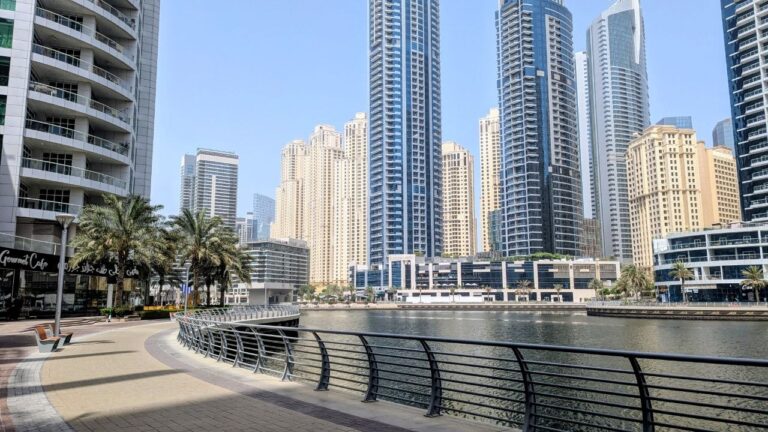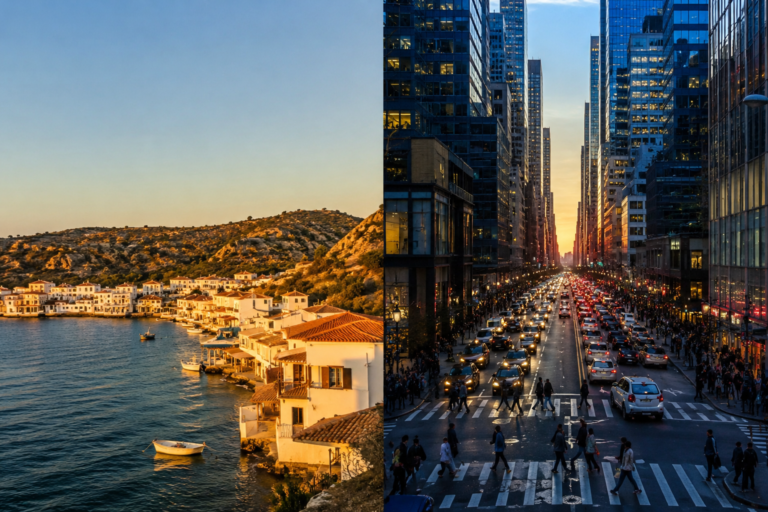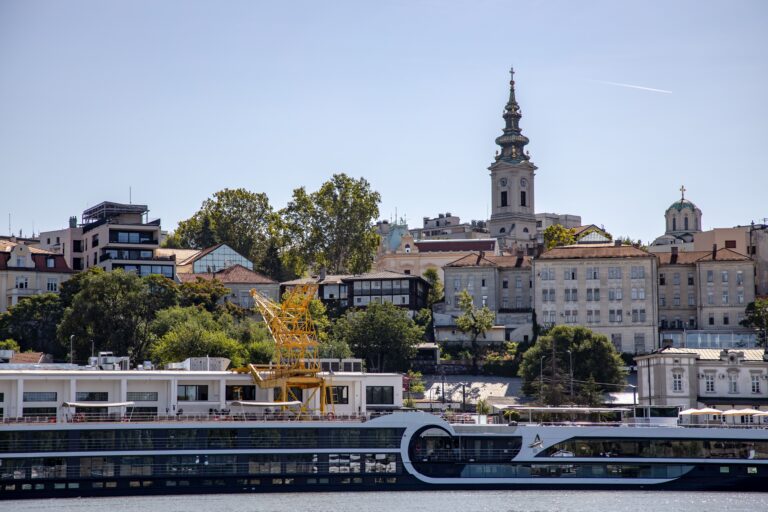
Why Lebanese Look European: The Real Story Behind Lebanon’s Diverse Appearance
If you’ve ever visited Lebanon or simply watched interviews, TV shows or social media videos featuring Lebanese people, you’ve probably noticed something that surprises many first-time visitors. Some people have dark hair, olive skin and brown eyes that fit what many imagine when they think of the Middle East. Others have pale skin, green eyes or blue eyes, and could easily be mistaken for someone from Greece, southern Italy or even France. Sometimes two siblings from the same family can look remarkably different from each other—a reminder of the genetic diversity found within human populations.
That naturally leads people to ask why Lebanese look European.
The short answer is that there isn’t one single reason, and there certainly isn’t one “Lebanese appearance.” Lebanon sits in one of the most historically connected parts of the Mediterranean, where people, goods, cultures and families have mixed for thousands of years. Modern genetic research also suggests that populations in the Eastern Mediterranean share a great deal of ancestry with one another, making physical similarities across countries much more common than many people realize.
The question itself can also be a little misleading. Saying someone “looks European” assumes Europe has one recognizable appearance, when in reality a person from Sweden, Sicily and Greece can look completely different from each other. In many cases, people who ask why do Lebanese look European are actually noticing similarities with southern European populations rather than Europe as a whole.
Understanding that distinction makes the rest of the discussion much easier.
Why Do People Think Lebanese Look European?

Most people don’t begin asking this question after reading genetics research.
They ask it after meeting Lebanese people.
Imagine someone arriving in Beirut for the first time. They expect everyone to resemble the stereotypes they’ve seen in films about the Middle East. Instead, they notice a café full of people where one person has curly black hair and olive skin, another has chestnut hair and green eyes, someone else has freckles, and another person could easily be mistaken for being Greek or Italian.
After a few days, the visitor starts wondering whether they misunderstood what Lebanese people look like.
Social media has made this curiosity even stronger. Lebanese actors, singers, models and influencers often receive comments asking whether they’re French, Spanish, Italian or Eastern European. The same thing happens to members of the Lebanese diaspora living abroad, who are frequently asked where they’re “really from” because their appearance doesn’t always match people’s expectations.
Part of the confusion comes from how people imagine the Middle East.
Many assume the region is visually uniform, when it’s actually one of the most genetically and culturally diverse parts of the world. Countries stretching from Morocco to Iraq cover thousands of kilometers and include hundreds of ethnic, linguistic and historical communities. Expecting everyone across that region to share one appearance is a bit like expecting everyone from Europe to look Scandinavian.
That’s also why questions like why do Lebanese people look white, why are Lebanese white, or why don’t Lebanese look Arab appear so often online. They’re usually based on the mistaken assumption that there is one typical Middle Eastern appearance against which everyone should be compared.
The reality is much more interesting.
Why Lebanese Appearance Varies So Much
One of the biggest mistakes people make is looking for a single explanation.
Some websites immediately point to Phoenicians.
Others blame French influence.
Others focus on the Crusades.
None of those explanations, by themselves, explains modern Lebanon.
The simplest answer is that why are Lebanese so diverse has everything to do with geography and human movement.
Lebanon occupies a small strip of land on the eastern Mediterranean coast, but historically it has connected Africa, Europe and Asia. Ports such as Beirut, Sidon and Tyre have welcomed traders, merchants, sailors and travelers for centuries. Unlike isolated mountain communities that remained relatively unchanged for long periods, coastal trading societies constantly interacted with neighboring populations.
That doesn’t mean everyone mixed equally or that every Lebanese family has the same ancestry.
It means that over many generations, the population developed considerable genetic diversity.
Research into Lebanese genetics suggests continuity with ancient Levantine populations while also showing evidence of interactions with neighboring Mediterranean groups over long periods. This isn’t unusual. Similar patterns appear throughout much of the Mediterranean because people have always moved, traded and married across the region.
That’s one reason researchers often describe Levantine ancestry as a complex mixture of many historical populations rather than something that can be traced to one single event or civilization.
Family history matters too.
One Lebanese family may have lived in the same mountain village for centuries.
Another may have ancestors from neighboring Syria, Cyprus or Armenia.
Another may include more recent migration through business, education or marriage.
By the time those histories combine over multiple generations, appearance can vary enormously—even within the same extended family.
That’s also why questions such as why do Lebanese have mixed ancestry or why are Lebanese genetically different don’t have simple answers. They aren’t genetically “different” because of one historical event. Rather, they belong to a region where human populations have interacted continuously for thousands of years.
Mediterranean Populations Often Resemble One Another
This is probably the most overlooked part of the discussion.
When people say Lebanese “look European,” they’re rarely comparing them to people from Norway, Finland or Scotland.
More often, they’re thinking about southern Europe.
Someone from Beirut may resemble someone from Naples.
Someone from Tripoli may look similar to a person from Crete.
Another Lebanese person might easily pass for being from Cyprus or Malta.
These comparisons aren’t especially surprising because all of these populations belong to the broader Mediterranean world.
Climate, historical migration and shared ancestry have contributed to overlapping physical characteristics across the region. Olive skin, dark hair, lighter complexions, hazel eyes and green eyes all appear on both sides of the Mediterranean.
That’s why asking why do Lebanese look Italian often makes more sense than asking why they look “European.”
Southern Italians, particularly in Sicily and Calabria, have centuries of interaction with other Mediterranean populations. Similar observations apply to Greeks, Cypriots and Maltese people.
This doesn’t mean Lebanese people are secretly southern European.
Nor does it mean southern Europeans are somehow Middle Eastern.
It simply reflects the fact that neighboring Mediterranean populations have never been completely isolated from one another.
Think about how easily people sometimes confuse Spanish, Portuguese and Italians.
Or Swedes with Norwegians.
Shared geography often creates overlapping physical characteristics without making populations identical.
The same principle applies across the Eastern Mediterranean.
That’s also why tourists are sometimes surprised after spending time in Lebanon. Before arriving, they expect dramatic visual differences between Lebanon and southern Europe. Instead, they often notice familiar facial features, skin tones and eye colors that make national boundaries seem much less obvious than they expected.
Understanding this shared Mediterranean background is far more useful than trying to divide people into simplistic categories of “European” and “Middle Eastern.”
Why Some Lebanese Have Green or Blue Eyes
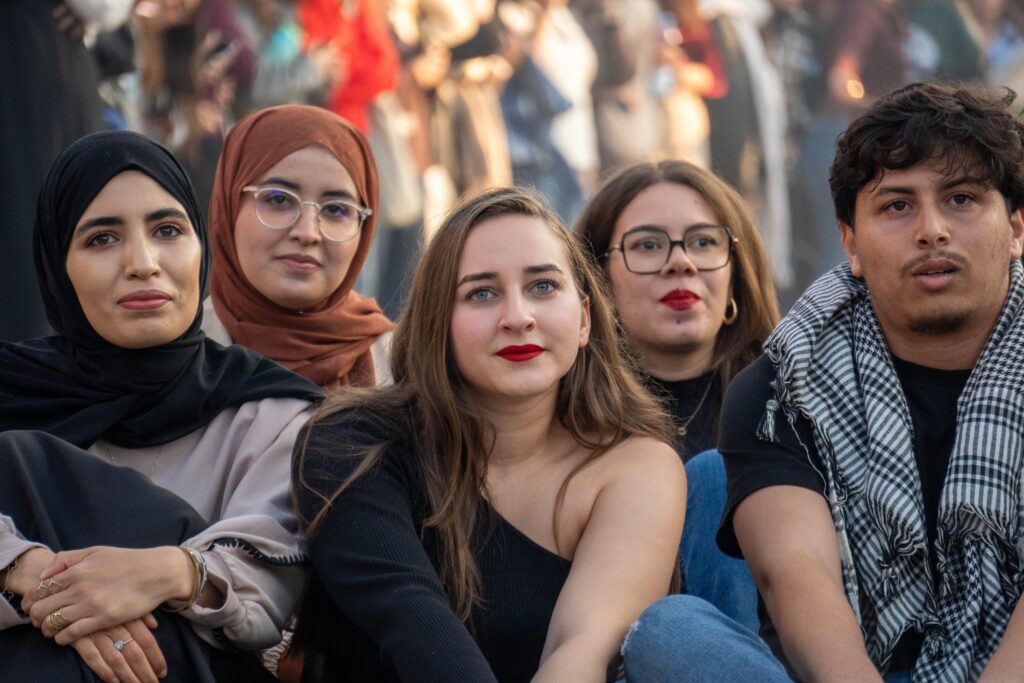
Eye color is probably the feature that sparks the most curiosity.
People search questions like why do Lebanese have green eyes or why do some Lebanese have blue eyes because they assume these traits must have come from one particular historical event. The internet often points to the Crusaders or the French, but genetics is rarely that simple.
Green and blue eyes are uncommon on a global scale, but they are found across many Mediterranean and Middle Eastern populations. You can find them in Lebanon, Syria, Jordan, parts of Turkey, Cyprus, Greece and southern Italy. They aren’t exclusive to northern Europe, even though many people associate them with countries like Sweden or Germany.
Genetic research suggests that eye color depends on combinations of several genes rather than nationality. Those genes have existed in different populations for a very long time, and eye color is influenced by multiple genetic variants. That means a Lebanese child can inherit lighter eyes even if both parents have brown eyes, simply because those genetic variants have been carried within the family for generations.
Spend enough time in Lebanon and you’ll notice that lighter eyes aren’t concentrated in one city or one religious community. You may meet a taxi driver in Beirut with bright green eyes, a shop owner in Byblos with hazel eyes, and a family in the mountains where one sibling has blue eyes while another has dark brown eyes. None of those examples automatically tells you anything about recent European ancestry.
This is also why appearance alone is a poor guide to family history. A person with olive skin and dark eyes may share much of the same ancestry as their cousin with pale skin and green eyes. The difference comes from how genes are inherited rather than from belonging to different populations.
Are Lebanese Actually European?
This is where many online discussions become unnecessarily confusing.
The answer is straightforward.
No, are Lebanese European? Geographically and culturally, Lebanon is part of the Middle East, specifically the Levant in the Eastern Mediterranean.
People sometimes ask this question because they associate certain facial features with Europe. But appearance isn’t the same thing as geography, nationality or ancestry.
Think about someone from Malta.
Someone from Cyprus.
Someone from southern Italy.
Someone from coastal Greece.
Many of these populations can resemble one another quite closely despite belonging to different countries and cultural traditions.
Lebanese people belong to the same broad Mediterranean region, where neighboring populations have shared trade routes, migration and historical connections for thousands of years. Similar features don’t suddenly make one population “European.”
Modern DNA studies generally suggest that Lebanese people share much of their ancestry with other Levantine populations while also showing varying degrees of shared ancestry with neighboring Mediterranean groups. That pattern reflects geography rather than a hidden European identity.
In other words, similarities exist because the Mediterranean has connected people for centuries—not because national borders determine what someone looks like.
Are Lebanese Arabs?
This question is actually more interesting than it first appears because people often use the word “Arab” to mean completely different things.
If someone asks are Lebanese Arabs, they could be talking about language, ethnicity, culture or genetics.
Those aren’t the same thing.
Most Lebanese speak Arabic, specifically Lebanese Arabic (a variety of Levantine Arabic), which makes Lebanon part of the Arab world linguistically and culturally.
But ethnicity is more complicated.
Ask ten Lebanese people about their identity and you may receive ten slightly different answers. Some strongly identify as Arab. Others describe themselves as Lebanese first. Some emphasize their Levantine heritage. Others mention Phoenician ancestry as an important part of their family identity.
None of these answers automatically contradicts the others.
Historical influence doesn’t automatically translate into genetic influence. A good comparison is the lasting impact of French rule on Morocco’s language, where French remains widely used in education and business even though it never became part of Morocco’s official identity.
Language doesn’t always determine ethnicity.
The United States, Australia and New Zealand all speak English, yet nobody argues they’re ethnically identical because of it.
The same principle applies here.
That’s why questions like what ethnicity are Lebanese don’t have a single universal answer. Lebanese identity combines language, culture, history, religion, family background and personal identity in ways that can’t be reduced to one label.
Are Lebanese Caucasian?
This search appears surprisingly often, largely because older racial classifications still circulate online.
The answer depends on which definition you’re using.
Historically, the word “Caucasian” was used by nineteenth-century anthropologists as a broad category covering Europeans, North Africans, the Middle East and parts of South Asia. Modern anthropology and genetics generally avoid using these outdated racial categories because they don’t accurately reflect how human populations are related.
So if you’re asking are Lebanese Caucasian, you’ll encounter different answers depending on whether someone is using historical legal terminology or modern scientific language.
Today, researchers generally prefer discussing populations in terms of ancestry, geographic origin and genetics rather than broad racial labels.
That approach provides a much clearer picture of human diversity.
Why Not All Lebanese Look Alike

If there’s one idea worth remembering from this entire article, it’s this:
There is no single Lebanese appearance.
Walk through downtown Beirut and you’ll see people with almost every combination of hair color, eye color and skin tone you can imagine.
Travel north and you’ll notice subtle differences.
Visit mountain villages and you’ll notice others.
Even within one family, appearance can vary dramatically.
Imagine three siblings.
The oldest has dark curly hair, olive skin and brown eyes.
The middle child has lighter skin and hazel eyes.
The youngest has pale skin with blue eyes inherited from grandparents several generations back.
All three are equally Lebanese.
That’s why questions such as why are Lebanese light skinned, why are Lebanese lighter than other Arabs, or why do Lebanese look different from Arabs usually have the same answer.
People are comparing Lebanon to an imagined version of the Middle East that doesn’t actually exist.
The Middle East itself contains enormous diversity.
Compare Lebanon with Yemen.
Turkey.
Iran.
Jordan.
Iraq.
Saudi Arabia.
The physical differences are obvious because the region covers vast distances and many different historical populations.
Lebanon simply happens to sit in one of the most interconnected parts of the Mediterranean, where visual diversity is especially noticeable.
That’s also why trying to identify someone’s nationality from appearance alone rarely works.
Many Lebanese are mistaken for Greeks.
Greeks are mistaken for Italians.
Southern Italians are mistaken for Lebanese.
Cypriots are mistaken for all of the above.
Appearance follows patterns.
It doesn’t follow passports.
Common Misconceptions About Lebanese Appearance
Questions about Lebanese appearance often spread through short social media videos or comment sections where complex topics get reduced to one simple explanation. That usually creates more confusion than understanding. A few myths appear over and over again, and none of them tells the whole story.
The first is that all Lebanese people descend only from the Phoenicians. This idea is popular because the Phoenicians are one of the best-known civilizations associated with Lebanon, and many people are curious whether are Lebanese descendants of Phoenicians. Modern genetic research suggests there is substantial continuity between ancient Levantine populations and many people living in Lebanon today. At the same time, no modern population remains genetically unchanged for thousands of years. Lebanon has experienced migration, trade, intermarriage and cultural exchange throughout its history, just like every other country around the Mediterranean. Saying modern Lebanese people descend only from the Phoenicians oversimplifies a much more complex story.
Another misconception is that light skin or blue eyes automatically mean European ancestry.
That’s simply not how genetics works.
Traits such as lighter skin, green eyes and blue eyes appear in many populations across the Eastern Mediterranean and the Middle East. Someone can have blue eyes without having a recent European ancestor, just as someone with dark hair and olive skin may have exactly the same family history as their lighter-featured cousin. Physical traits are inherited independently, which is why appearance alone cannot reliably reveal someone’s ancestry.
People also assume that because some Lebanese resemble southern Europeans, they must actually be European.
This mixes up similarity with identity.
Southern Italians, Greeks, Cypriots, Maltese and Lebanese often share overlapping Mediterranean features because their populations developed around the same sea for thousands of years. Shared geography creates similarities without making everyone part of the same ethnic group.
Perhaps the biggest misconception is that appearance determines ethnicity.
It doesn’t.
You cannot accurately identify someone’s ethnicity, nationality or genetic background simply by looking at them. The same facial features appear across many neighboring populations, and Lebanon is a perfect example of why those assumptions often fail.
Why Tourists Are Often Surprised by Lebanon
Many visitors arrive in Lebanon carrying unconscious expectations about what people from the Middle East “should” look like.
Those expectations usually come from films, television or limited exposure to the region rather than reality.
After a few days in Beirut, those stereotypes quickly begin to disappear.
Someone orders coffee in fluent Arabic while looking like they could be from southern Italy. A taxi driver with green eyes discusses football. A university student speaks Arabic, French and English interchangeably. A family sitting nearby includes siblings who look remarkably different from one another.
None of those situations feels unusual inside Lebanon.
They only feel surprising if you expected the country to have one typical appearance.
Interestingly, many Lebanese living abroad have similar experiences. They’re often asked whether they’re Italian, Greek, Spanish, Armenian or French before anyone guesses Lebanon. That doesn’t happen because Lebanese people are “European.” It happens because Mediterranean populations frequently overlap in appearance.
The same thing occurs in reverse. Greeks visiting Lebanon are sometimes mistaken for Lebanese. Southern Italians receive the same comments. These similarities reflect shared regional history rather than simple national categories.
Modern Lebanon is also much more than appearance. Its music, food, languages and social life create a distinctive identity that cannot be understood by looking at facial features alone. Anyone interested in Lebanon’s contemporary cultural scene will quickly notice that today’s country is shaped as much by modern creativity as by its long history.
Comparison: Mediterranean Populations
The purpose of this comparison isn’t to suggest these populations are the same. It’s to show why people often confuse them. Geography creates overlapping characteristics that don’t always follow modern national borders.
Myth vs Reality
The reason so many people search why Lebanese look European is understandable. Visitors often notice that Lebanon doesn’t match the narrow image of the Middle East they’ve seen elsewhere, and the country’s remarkable physical diversity naturally raises questions.
The answer, however, isn’t that Lebanese people are secretly European or fundamentally different from everyone around them. It’s that Lebanon belongs to one of the world’s most interconnected regions. The Eastern Mediterranean has linked neighboring populations for thousands of years, and those connections are still visible today in the wide variety of appearances found across the region.
Perhaps the most important lesson is that appearance tells only a small part of the story. Genetics are far more complicated than eye color or skin tone, and nationality is even more complicated than genetics. Two Lebanese siblings can look surprisingly different while sharing the same parents. A Lebanese person may resemble someone from Sicily, Cyprus or Greece without sharing a recent family history. Another may resemble neighbors from Syria or Jordan just as closely.
That’s why reducing Lebanon to one “look” doesn’t really work.
The country’s diversity is the point.
Instead of asking whether Lebanese people look European, it’s probably more accurate to recognize that Mediterranean populations often resemble one another because they’ve never existed in complete isolation. Modern genetics supports that complexity, and everyday life in Lebanon reflects it. Walk through Beirut for an afternoon and you’ll quickly realize there is no single face that represents the country.
In the end, that’s a much more interesting answer than the simple myths you’ll often find online.
FAQ
Why do Lebanese look European?
The simplest answer is that many Lebanese share physical features common across the Mediterranean. When people ask why do Lebanese look European, they’re usually comparing Lebanese people with southern Europeans rather than Europe as a whole. Geography, shared ancestry across the Mediterranean and centuries of interaction between neighboring populations all contribute to these similarities.
Why are Lebanese white?
Not all Lebanese are. Questions like why are Lebanese white usually come from seeing lighter-skinned Lebanese people online or while traveling. In reality, Lebanon has a broad range of appearances, from very fair complexions to darker olive skin tones.
Why do Lebanese people look white?
For the same reason many Greeks, southern Italians or Cypriots may appear light-skinned. Fair skin exists naturally across Mediterranean populations and isn’t unusual in parts of the Levant. Genetics, rather than nationality, determines individual appearance.
Why do Lebanese look Italian or French?
Many people notice similarities with southern Italy because both populations belong to the Mediterranean region. Questions like why do Lebanese look Italian or why do Lebanese look French reflect these visual overlaps rather than proof of recent ancestry. Southern Europeans and Eastern Mediterranean populations have interacted for thousands of years, leading to shared physical characteristics.
Where do Lebanese come from?
If you’re asking where do Lebanese come from, modern Lebanese people primarily descend from populations that have lived in the Levant for thousands of years. Over time, migration, trade and intermarriage added further diversity, but research generally suggests strong continuity with ancient populations of the region.
Are Lebanese descendants of Phoenicians?
Research suggests many Lebanese people share ancestry with the ancient inhabitants of the Levant, including populations associated with the Phoenicians. However, modern Lebanese are not descendants of the Phoenicians alone. Like every modern nation, their ancestry reflects many centuries of demographic change.
Why don’t Lebanese look Arab?
Questions such as why don’t Lebanese look Arab usually assume there is one typical Arab appearance. In reality, the Arab world stretches across more than twenty countries and contains enormous genetic and physical diversity. Lebanese people simply represent one part of that broader picture.
Why are Lebanese lighter than other Arabs?
Not everyone is. Why are Lebanese lighter than other Arabs is largely a matter of comparison. Lebanon’s Mediterranean location, regional genetic diversity and long history of interaction with neighboring populations mean lighter complexions are relatively common, but darker complexions are equally part of Lebanese society.
Why are Lebanese so diverse?
Why are Lebanese so diverse comes down to geography more than any single historical event. Lebanon sits at the crossroads of the Eastern Mediterranean, where populations have interacted through trade, migration and intermarriage for thousands of years. Family histories also differ greatly, so appearance naturally varies from one person to another.
This article combines personal observations from conversations with Lebanese friends, independent editorial research, and discussions exploring Lebanese identity, genetics, and the country’s remarkable diversity of appearances.
Research sources included:
- Personal conversations and cultural observations from interacting with Lebanese friends and learning about everyday life in Lebanon.
- Community discussions and first-hand perspectives shared on Reddit by Lebanese residents, members of the Lebanese diaspora, and travelers.
- Genetics and human diversity research published by the U.S. National Library of Medicine.
- Educational resources on human genetic diversity from the Smithsonian National Museum of Natural History.
- Historical and cultural information about Lebanon’s Mediterranean heritage published by the UNESCO World Heritage Centre.
The goal is to provide a balanced, evidence-based explanation of why Lebanese people can have such diverse appearances while separating common myths from current understanding of genetics, history, and Mediterranean populations.

Written by
Anna
Founder of The City Theory — writing about digital nomad lifestyle, modern city culture, remote work, travel experiences, psychology, and human behavior around the world.