
“Having a Job Is a Luxury”: Why Dubai’s Job Market Is Becoming a Real Struggle
The Dubai job market has not stopped hiring, but getting hired has become noticeably harder for a lot of people. The problem is not simply that there are no vacancies. Dubai still has thousands of open positions, companies are still expanding and some industries are actively recruiting, yet the city is also pulling in an enormous number of applicants from inside the UAE and abroad. Employers can be extremely selective, salary expectations vary wildly, and experienced professionals increasingly find themselves competing for jobs below the level they previously held. That contradiction is what makes the current market so frustrating: there are jobs, but that does not mean there is an easy path into one.
I know this because I went through it myself. I spent around five months trying to find an office job in Dubai, sending CVs and applying for positions that matched my experience, and almost nobody responded. It wasn’t that I went through dozens of interviews and kept losing at the final stage; I struggled to get into the conversation at all. Eventually I stopped trying to force it and found a remote position with a US company instead. That experience completely changed the way I look at the question why is it difficult to get a job in Dubai, because from the outside the city looks like one enormous employment opportunity, while from the applicant’s side it can feel like throwing CVs into a hole.
“Having a job is a luxury” — where did that statement come from?
The phrase became widely discussed after Dubai-based HR manager Aliya Wani Masood posted about what she was seeing in recruitment. She said she had worked in HR in Dubai for around ten years and was receiving 10 to 20 CVs a day, including applications from people with managerial experience who were willing to consider entry-level positions. Her warning was simple: this was not a market in which she would casually quit a job without having another one ready. The story was picked up by Hindustan Times under a headline built around the statement that “having a job is a luxury.”
That is also why people started searching variations of dubai hr manager says ‘having a job is a luxury’ and asking is the job market in Dubai really that bad. The comment resonated because it describes something many applicants already feel. It does not mean every company has stopped recruiting or that everybody is losing their job, but it captures the strange situation where even experienced people can spend months applying without getting anywhere.
My own experience happened before this particular comment went viral, which is exactly why it caught my attention. When somebody in recruitment says she is seeing managers applying for entry-level roles, it does not sound surprising to me. I had already experienced the silence from employers myself, and I have written separately about why finding a job in Dubai can be much harder than newcomers expect. What interests me now is the larger question: what is happening to the Dubai job market that makes this experience so common even when the city is obviously not economically dead?
Dubai isn’t out of jobs — and that’s what makes this confusing
If the Dubai job market had simply collapsed, the situation would actually be easier to explain. There would be very few vacancies, companies would be closing and the answer to is Dubai still hiring would simply be no. That is not what the data shows.
A 2026 report profiling the UAE labour market analysed 23,739 unique online job postings collected across the country. Dubai accounted for 69.8% of them, compared with 23.8% for Abu Dhabi. In other words, almost seven out of every ten jobs in that dataset were located in Dubai.
There are also sectors where demand remains strong. Recruiters interviewed by The National reported continued hiring in technology, healthcare, financial services, infrastructure, renewable energy and professional services, even while broader hiring conditions had temporarily weakened. In April and May, UAE hiring intent was reported to be 23% lower year on year, but recruiters stressed that the market was not moving in one direction across every sector.
Gulf News reported something similar in August: technology, financial services, healthcare, logistics, real estate, construction and professional services were still generating demand, while employers were becoming more selective about experience, AI skills and what candidates could actually demonstrate.
So are companies hiring in Dubai? Yes. Is Dubai still a good place to find a job? Potentially, depending heavily on your profession, experience, network and salary expectations. The mistake is assuming those two facts automatically mean finding work will be easy.
Dubai DET‘s research into future jobs provides another good example. In one sample of roughly 1,800 technology vacancies advertised in Dubai, the largest groups included data scientists, software engineers and developers. There is genuine demand for specialised people, but somebody seeing 1,800 vacancies on LinkedIn may reasonably assume there are 1,800 realistic opportunities available to them personally. Those are two very different things.
The real problem is the number of people competing for the same jobs
For me, this is the most important answer to why is Dubai job market so competitive. Dubai is not competing for workers only within Dubai. Employers can receive applications from residents who already have UAE experience, people elsewhere in the Emirates, applicants in India, Pakistan, the Philippines, Europe, the UK, Africa and pretty much anywhere else where somebody sees Dubai as an opportunity to improve their income or lifestyle.
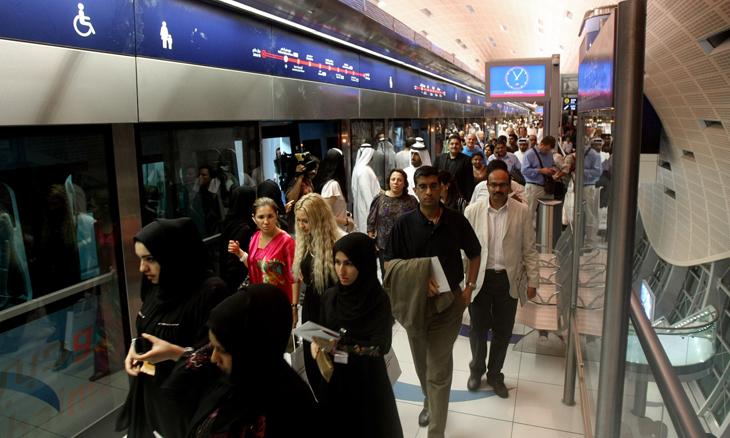
The supply of candidates can therefore grow much faster than the number of genuinely attractive jobs. A vacancy does not have to attract twenty relevant people; it can attract hundreds of applicants, including candidates willing to relocate quickly, accept a lower salary or take a title below their previous level. That helps explain why are there so many applicants for jobs in Dubai and why simply finding hundreds of vacancies online tells you very little about your actual chances.
There is another uncomfortable part of the Dubai job market for foreigners that does not appear neatly in official employment statistics: candidates do not necessarily enter the market with equal bargaining power. Salary expectations are shaped by nationality, previous salary, passport, company culture, the candidate’s existing UAE network and how urgently they need the job. I have personally seen situations where people doing broadly similar work were discussing dramatically different compensation. I have heard examples of British candidates reaching packages around AED 50,000 while someone from Eastern Europe might be discussing something closer to AED 15,000 for a comparable level of responsibility. I would not present those numbers as a universal Dubai salary rule, because they are not, but the differences I encountered were large enough that I could not ignore them.
I also came away with the impression that some of the most attractive office opportunities never really reach the open market in the way applicants imagine. Roles can move through personal recommendations, existing professional circles and referrals before somebody applying cold through LinkedIn has much of a chance. I repeatedly saw British candidates with strong local networks moving into good positions while other qualified foreigners struggled simply to get noticed. Again, that does not mean every good Dubai vacancy is “for British people only,” but pretending networks and background play no role would be equally unrealistic.
That is why the Dubai job market for expats can look so contradictory. The person who arrives with a senior former colleague already working at a multinational may experience a completely different market from somebody with the same years of experience who knows nobody in the UAE.
Why experienced professionals are getting stuck too
One of the biggest misconceptions is that only inexperienced applicants are struggling. The viral HR manager story became interesting precisely because she was talking about people with solid careers applying downward. That raises the question why are experienced professionals struggling to find jobs in Dubai when experience is supposedly what employers want.
One reason is simple maths: there are far fewer genuinely senior positions than there are mid-level positions. When a senior manager loses a job, finding another AED 40,000 or AED 50,000 role may take much longer than finding an AED 10,000 position because companies simply do not need as many people at that level. After months without an offer, applicants start widening the search and applying below their previous title, which pushes even more candidates into the same middle of the market.
Employers can also become extremely specific when they have enough candidates to choose from. Ten years of general experience may lose to six years in exactly the right industry, with UAE clients, GCC contacts and knowledge of a particular market. This is one reason is the Dubai job market oversaturated cannot really be answered with a single yes or no. Some general corporate roles can feel heavily oversupplied while niche skills remain difficult for companies to find.
The National’s reporting reflects that difference: recruiters said specialists with technical expertise, regulatory knowledge, commercial impact or hard-to-find skills were still in demand even while employers became more cautious overall. The question which sectors are hiring in Dubai therefore matters much more than the total number of vacancies.
Applying to hundreds of Dubai jobs isn’t necessarily helping
During those five months, I eventually realised that sending more applications was not necessarily increasing my chances. When you are getting no response, the natural reaction is to apply to twenty more vacancies, then fifty more, then start using Easy Apply for anything remotely related to your background. That feels productive because at least you are doing something, but it can become a numbers game in which the applicant is sending generic CVs into recruitment systems already overloaded with generic CVs.
This is where the question why are Dubai employers not responding to applications overlaps with another common search: why am I not getting interviews in Dubai. Sometimes the answer is that your CV genuinely needs work, but sometimes the problem is simply that an employer received so many applications that your profile never became a serious candidate. A CV can be perfectly respectable and still disappear in a pile of hundreds.
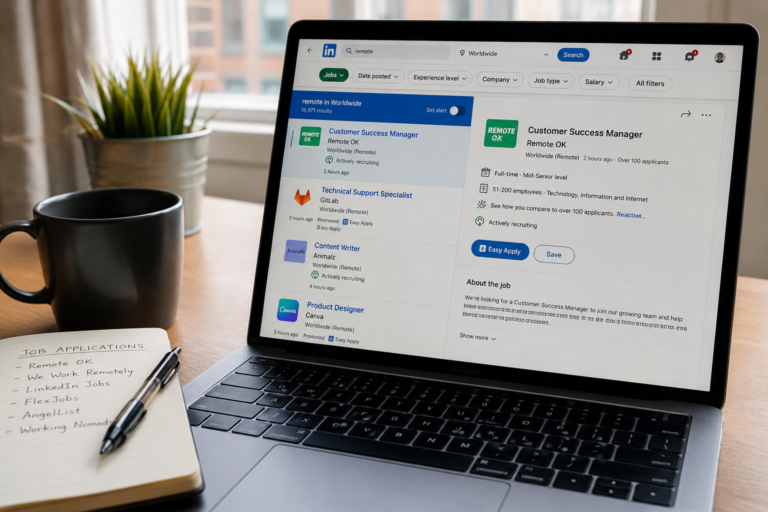
LinkedIn can still be useful, but I would treat it less like a slot machine and more like a way to identify companies, recruiters and actual decision-makers. I eventually learned that using LinkedIn strategically during a job search is very different from pressing Easy Apply all day. For people whose background is not strong enough for the local office market yet, it may also be worth looking at remote roles that do not require a long conventional career history rather than spending months waiting for Dubai employers to respond.
In my case, giving up on the conventional Dubai office search turned out to be the thing that finally worked. I found a remote job with a US company instead, which was not the outcome I had originally planned, but after five months of silence it made much more sense than continuing the same process and expecting a different result.
Some industries are struggling while others are still hiring
One thing I would avoid saying is that the Dubai job market is dead, because that is simply not true. Companies are still hiring, but the demand is uneven. Technology, healthcare, financial services, construction, logistics, real estate and professional services continue to generate vacancies, while some general office roles attract far more applicants than employers realistically need. This is why two people can have completely opposite experiences in the same city: one person with a niche technical skill may receive several recruiter messages, while another with ten years of general corporate experience can spend months applying without getting an interview.
That is also the best answer to why is the Dubai job market so bad right now. It is not equally bad for everybody. The market is difficult because supply and demand are badly mismatched in certain professions, employers have more choice, and candidates are often competing internationally rather than only against people already living in Dubai. When people ask is it difficult to find a job in Dubai right now, I would answer yes for many general office roles, but I would not automatically say the same thing about every specialised profession.
The same applies to why is hiring slowing down in Dubai. Companies can still be growing while becoming more careful about adding headcount. A business may replace one employee but delay creating three new positions, or hire one specialist rather than a larger general team. Hiring can therefore feel slow from the applicant side even when the wider economy is still expanding.
Should you move to Dubai without a job?
If somebody asked me should I move to Dubai without a job specifically to search locally, I would be much more cautious now than I would have been before going through this myself. Dubai is an expensive city in which to remain unemployed for months. Rent, transport, food, mobile service and ordinary daily spending continue whether recruiters answer your applications or not.
This matters because job searches here can take much longer than people expect. The City Theory’s own research into the real monthly cost of living across the UAE shows how quickly ordinary expenses accumulate, particularly in Dubai. If your plan is to arrive with savings and “find something within a few weeks,” you need to be prepared for the possibility that those few weeks become three, four or five months.
I would personally want either a strong financial buffer, existing contacts in the UAE, interviews already arranged, or another income source before moving solely for a job search. My own experience taught me that being physically present in Dubai does not guarantee employers will suddenly start responding.
There is also a psychological cost that rarely appears in job-market articles. Applying repeatedly, hearing nothing and watching savings disappear can become exhausting very quickly. Anyone going through a long search should pay attention to the point where job hunting starts turning into the kind of chronic work-related stress that can lead to burnout, even if the “work” at that moment is searching for work rather than doing a job.
If your goal is simply to build a career while living abroad, Dubai is not the only option either. For someone who already works remotely, there are lower-cost alternatives to staying in Dubai where monthly financial pressure can be much lower.
So is the Dubai job market actually bad?
I think the most accurate answer is that the Dubai job market is active but extremely competitive. There are vacancies, companies are hiring and certain sectors still have genuine shortages, yet that reality exists alongside thousands of applicants competing for the same corporate roles. Experienced professionals are not protected from this simply because they have impressive CVs, and even knowing how to tailor a CV with ChatGPT does not guarantee that a recruiter will ever see your application.
For me, the biggest lesson from five months of trying to find an office job in Dubai was that persistence alone is not always a strategy. At some point I had to stop asking why nobody was replying and change the type of opportunity I was looking for. Once I switched my focus away from Dubai office jobs and found a remote position with a US company, the situation finally moved.
That does not mean everyone should abandon Dubai and look for remote work. It means that if you have spent months repeating exactly the same approach with no result, changing channels may make more sense than sending another hundred identical applications. A more structured search, such as focusing applications on a smaller number of realistic opportunities instead of applying everywhere, can be more useful than treating the process purely as a numbers game.
So how competitive is the Dubai job market? Competitive enough that having experience is no longer sufficient by itself. Is Dubai still a good place to find a job? For the right profession and the right network, absolutely. Is the job market in Dubai really that bad? For someone applying cold to general office positions with no local connections, it can genuinely feel that way.
The phrase “having a job is a luxury” sounds dramatic, but I understand why it resonated. After spending months applying without receiving meaningful responses, I reached the point where having any stable professional position in Dubai started to look less automatic than the city’s endless job listings make it appear.
FAQ
Why is Dubai job market so competitive?
The Dubai job market attracts applicants from both inside the UAE and around the world. Employers can receive hundreds of applications for a single vacancy, which gives them the ability to be extremely selective about industry experience, salary expectations, local knowledge and professional networks.
Why are experienced professionals struggling to find jobs in Dubai?
Senior candidates face fewer suitable vacancies, higher salary expectations and competition from people willing to accept lower titles or salaries. Employers may also prioritise very specific UAE or GCC experience rather than general years of experience.
Why are Dubai employers not responding to applications?
Sometimes the CV is not strong enough, but volume is also a major factor. A recruiter receiving hundreds of applications may never seriously review every candidate. Generic Easy Apply submissions are particularly easy to overlook.
Is Dubai still hiring?
Yes. Companies are hiring in Dubai, particularly in areas such as technology, healthcare, finance, logistics, construction, real estate and professional services. The issue is that hiring activity does not necessarily mean every type of candidate has strong opportunities.
Is the Dubai job market oversaturated?
Some parts of it appear heavily oversupplied, especially general corporate and administrative positions. Specialist roles can be completely different, which is why describing the entire market as oversaturated would be too simplistic.
Should I move to Dubai without a job?
I would only do it with enough savings to support several months without income and preferably with interviews, contacts or another income source already in place. Assuming you will find a job within a few weeks is a risky plan in the current market.
Explore the Remote Work & Careers Hub
Discover more practical guides about remote jobs, hybrid work, career growth, burnout and the realities of building a career outside the traditional office.
Explore the Remote Work & Careers Hub →This article combines my personal experience of looking for a job in Dubai with independent editorial research into the UAE employment market, hiring practices, salaries, and the realities faced by people searching for work in the city.
Research sources included:
- My own experience searching and applying for office jobs in Dubai.
- Reporting and analysis on employment, salaries, recruitment, and the UAE economy published by The National.
- UAE employment news, workplace trends, and job market reporting published by Gulf News.
- Official economic, business, and labour-related data published by the Dubai Department of Economy and Tourism (DET).
The goal is to separate the image of Dubai as a city full of opportunities from what job hunting can actually look like on the ground, using personal experience alongside established UAE media and official Dubai data.

Founder & Editor
Founder of The City Theory, writing about digital nomad lifestyle, modern city culture, remote work, travel experiences, psychology and human behaviour around the world.