
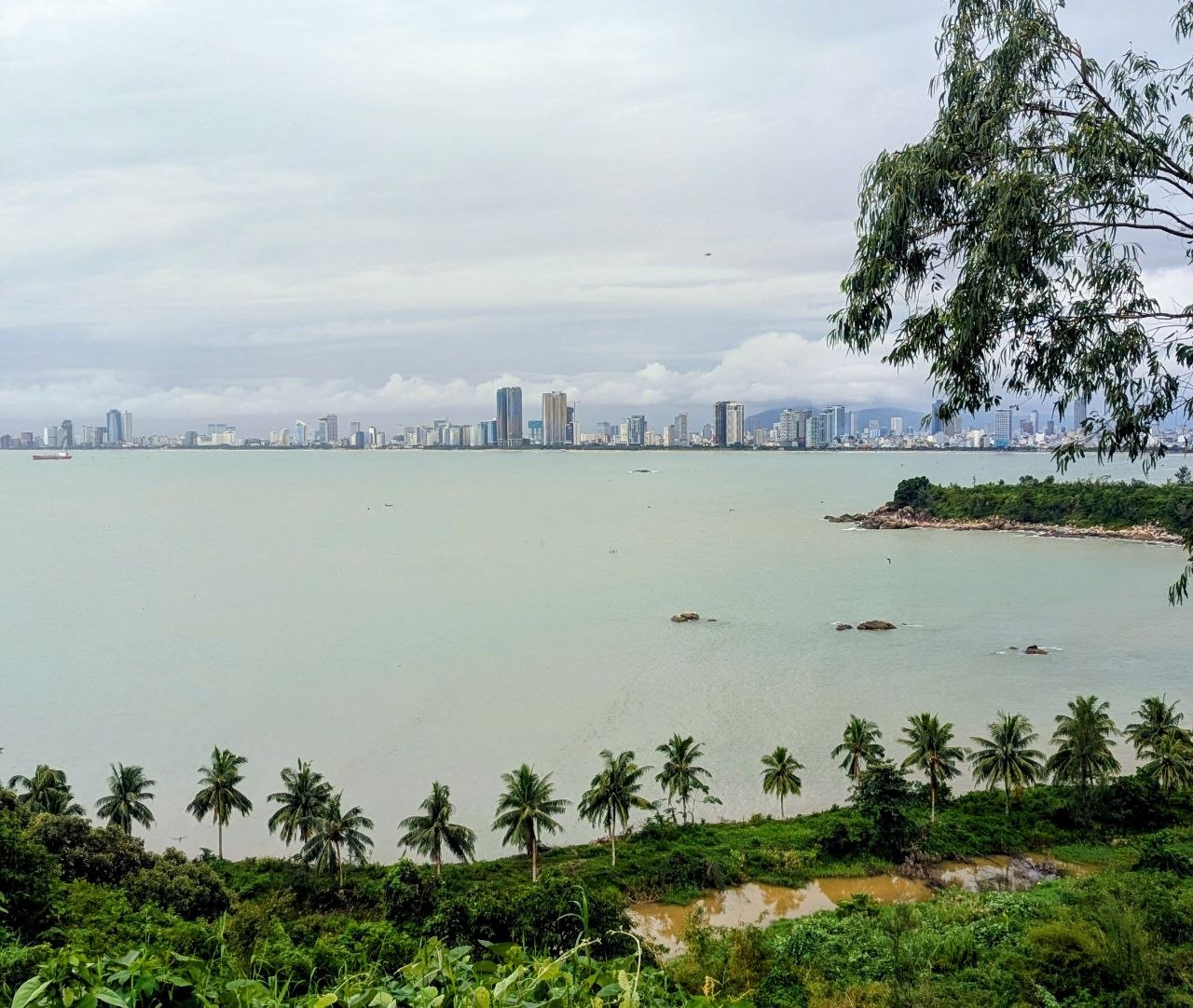
Is Da Nang Worth Visiting in September? An Honest Answer Based on My Trip
Da Nang can be worth visiting in early September if you are flexible about beach time, but it is a risky choice for a short, beach-focused holiday later in the month.
I learned this after arriving in Da Nang from Ho Chi Minh City at the end of September for a four-day trip. On paper, the plan looked easy: stay close to the beach, explore the city, spend some time by the sea, visit Sơn Trà Mountain, see the Marble Mountains and dedicate one full day to Ba Na Hills. We knew September was part of the wetter period, but we assumed the rain would come in short tropical showers, disappear after an hour and leave us enough time to continue with the day.
That was not what happened.
It was already raining when our plane landed in the evening. By the time we checked into a hotel near the beach and went out to find dinner, the rain had turned into a proper downpour. We ended up spending almost the entire evening inside a restaurant because walking was not realistic, even with umbrellas or raincoats. The water came down too heavily, the streets were soaked within minutes, and there was no point pretending that we could casually explore the neighbourhood while waiting for it to pass.
That first evening gave us a fairly accurate preview of the trip.
So, is Da Nang worth visiting in September despite the rain? It can be, but only if you understand what you are booking. September in Da Nang is not automatically a ruined holiday, yet it is also not a reliable way to get four uninterrupted days of beaches, mountain views and outdoor sightseeing. Your experience can range from warm mornings with occasional showers to several grey, wet days when the sea is unsafe, mountain attractions disappear into fog and every plan depends on the weather radar.
The question is not simply whether Da Nang is beautiful in September. It is whether the version of Da Nang available during unsettled weather matches the kind of holiday you want. If you’re also considering a longer stay or combining travel with remote work, it is worth comparing it with other digital nomad destinations worth considering in September, where seasonal conditions can completely change the experience.
What Is Da Nang Weather Really Like in September?

Average temperature charts do not explain the main problem with September. The city is still warm, and you are unlikely to spend the day shivering at street level, but comfortable temperatures do not guarantee usable weather.
What matters is the combination of heavy rain, high humidity, cloud cover, rough sea conditions and rapid changes during the same day. September marks the transition into a much wetter part of the year in Central Vietnam, with rainfall generally increasing as the month progresses. Historical climate data also shows a sharp rise in accumulated rainfall between the beginning and end of September, although the exact pattern varies considerably from year to year. (WeatherSpark)
You might wake up to a dry sky, see ten minutes of sunshine and assume the forecast was unnecessarily pessimistic. Half an hour later, the beach can be covered by dark clouds and heavy rain. On another day, the rain may remain light enough to continue sightseeing in a raincoat. Then a stronger weather system can arrive and make outdoor plans unrealistic for the rest of the afternoon.

This variability is why no honest article can tell you exactly how many useful beach hours you will get.
During our first morning, we walked to the beach and briefly saw the sun. It lasted around ten minutes. The clouds returned, the rain started again and red warning flags were flying along the beach. Swimming was prohibited because the sea conditions were considered unsafe. A red flag at Da Nang’s beaches means that visitors should stay out of the water, regardless of whether the waves look manageable from the shore. (Da Nang beach safety guidance)
We could still walk around the city in raincoats and see some places, but the beach holiday we had imagined was no longer possible.
Does It Rain All Day in Da Nang in September?
One of the most common questions is does it rain all day in Da Nang in September, and the frustrating answer is that both reassuring and pessimistic travellers can be correct.
Some September days have short, intense showers followed by long dry periods. On those days, you can have breakfast while it rains, wait an hour and then spend most of the afternoon outside. Other days bring persistent drizzle, repeated downpours or several hours of rain strong enough to disrupt sightseeing. Larger storms can produce much more serious conditions.
During our trip, it did not rain at maximum intensity every minute of every day. There were usable windows, and we took advantage of them. After the wet morning at the beach, the rain stopped in the afternoon, so we went to Sơn Trà Mountain. We were able to explore the pagoda, see the Lady Buddha and watch the monkeys without standing under an umbrella the entire time. In the evening, the rain returned intermittently, but it was lighter and did not completely prevent us from going out.
The following day was different. We visited the Marble Mountains while light rain continued for much of the day. There was no sunshine at all, but the attraction was still accessible, and the grey weather did not completely ruin it. In some ways, the wet stone, mist and darker sky suited the atmosphere better than they would have suited a beach.
This is the practical distinction people often miss. Rain does not always mean you must remain in your hotel, but it changes what is comfortable, safe and visually worthwhile. Walking around a city in light drizzle is manageable. Climbing wet stone steps requires more care. Visiting a viewpoint with no visibility is usually pointless. Going into the sea under red flags is dangerous.
If you are asking how often does it rain in Da Nang in September, climate averages can show that rain is common, but they cannot tell you how those wet hours will be distributed during your particular four-day stay. That uncertainty is the real issue.
Is Early September a Good Time to Visit Da Nang?
In general, early September gives you a better chance of combining city sightseeing with some beach time than the final part of the month. Rainfall tends to build as Da Nang moves deeper into its wet season, although an individual week can still behave differently from the historical pattern.
Therefore, the answer to is early September a good time to visit Da Nang is a cautious yes. It can be a reasonable period when:
- You’re staying for 5–7 days or longer.
- Your hotel booking is flexible.
- You’re happy to rearrange outdoor plans if the weather changes.
- The beach isn’t the main reason for your trip.
- You check the latest weather forecast before flying.
- You already have indoor backup plans.
Early September is still not a guaranteed beach period. It should be treated as a transition month rather than an extension of perfect summer weather.
A forecast showing scattered rain should not automatically frighten you, because tropical forecasts often display a rain symbol even when much of the day remains usable. A forecast showing a developing storm, strong winds or continuous heavy rainfall is a different situation and deserves to be taken seriously.
Is Late September a Good Time to Visit Da Nang?
Based on my experience, late September is much harder to recommend for a short trip centred on the beach.
The question is late September a good time to visit Da Nang depends on what you would consider a successful holiday. It can still work for food, cafés, city life, pagodas and flexible day trips. It becomes much riskier when your expectations depend on swimming, sunshine, panoramic views and a fixed outdoor itinerary.
The end of September can also overlap with the beginning of more serious storm activity affecting Central Vietnam. This does not mean that a typhoon hits Da Nang every September or that every late-September visit is dangerous. It means the possibility should not be dismissed as an abstract worst-case scenario. In late September 2025, for example, storm conditions led to flight disruption and the temporary suspension of operations at Da Nang International Airport.
A four-day trip gives you very little room for recovery. If two days are wet and one mountain day is covered in fog, most of the itinerary is gone. A two-week stay is different because several bad days are less likely to define the entire experience.
Our own four-day visit was not a complete failure, but it was far from the trip we had planned. We saw Da Nang, ate well, explored Sơn Trà and visited the Marble Mountains. What we did not get was a real beach day, safe swimming or reliable views from the mountains.
Can You Swim in Da Nang in September?
Technically, there can be perfectly swimmable days in September. Practically, you cannot count on them before arrival.
Whether can you swim in Da Nang in September has a positive answer depends on daily wind, waves, currents and official beach warnings. The sea can remain warm while still being unsafe. Water temperature alone is therefore almost irrelevant if red flags are displayed.
During our visit, red flags were placed along the beach because of the weather and sea conditions. There was no ambiguity: swimming was prohibited. We could walk beside the sea, but entering it would have meant ignoring a clear safety warning.
Anyone planning a September beach day should follow three simple rules:
- Check the flags rather than judging the sea by appearance.
- Swim only in monitored areas where lifeguards are present.
- Never assume that conditions will remain the same throughout the day.
Morning can be calmer than afternoon, but this is not a dependable rule during unstable weather. Conditions can worsen quickly.
Is Da Nang Good for a Beach Holiday in September?

If the beach is the main reason for your trip, I would not choose late September.
The question is Da Nang good for a beach holiday in September should be answered differently from “Is Da Nang still interesting in September?” The city remains interesting. A reliable beach holiday is another matter.
Da Nang has a long coastline, attractive urban beaches and many hotels located within walking distance of the sea. In dry weather, this makes the city extremely convenient. You can stay near My Khe Beach, swim in the morning, work or explore during the day and return for an evening walk.
In wet weather, that convenience does not solve the problem. A room with a sea view does not create safe swimming conditions. A beach hotel can leave you paying for a location you barely use. If several days are rainy, you may spend more time taking taxis to restaurants and indoor attractions than sitting by the water.
For travellers specifically looking for lower-cost tropical destinations, Da Nang is often mentioned among affordable places offering some of Bali’s appeal. However, the comparison only works when seasonality is considered. A cheaper hotel is not automatically good value if the weather prevents you from doing what you travelled there to do.
For a September trip, I would book a comfortable city hotel with easy access to restaurants, cafés and transport rather than paying a large premium for a beach resort.
Should I Cancel My Da Nang Trip in September?
If the flights are already booked, do not cancel automatically just because a weather app displays rain every day. At the same time, do not ignore a serious forecast because someone online claims that tropical rain always disappears after twenty minutes.
The best answer to should I cancel my Da Nang trip in September depends on four factors.
Your dates
Early September is generally less risky than late September, although no week is guaranteed.
Your trip length
A seven- or ten-day stay can absorb several wet days. A two- or three-night stay cannot.
Your main priorities
A food-and-culture trip can survive rain. A beach holiday, diving plan or viewpoint-heavy itinerary is much more vulnerable.
The actual short-term forecast
Look at the forecast again several days before departure, not several weeks in advance. Pay particular attention to official storm warnings, expected wind, rainfall intensity and potential transport disruption.
If you are visiting Vietnam for longer, it may be possible to change the order of your route. Travellers working remotely from the south can spend additional time using free places to work around Ho Chi Minh City and fly to Da Nang when the forecast improves. That flexibility is much easier than trying to force every attraction into a fixed four-day window.
I would consider changing plans when a recognised weather service or local authority warns of a tropical storm, flooding, dangerous winds or transport closures. I would not cancel solely because ordinary showers appear in the forecast.
Does Da Nang Flood During September?

The city does not flood every time it rains, and a normal September shower should not be treated as a disaster. Nevertheless, does Da Nang flood during September is a legitimate question because prolonged heavy rainfall can overwhelm drainage, affect low-lying streets and create difficult travel conditions.
Minor street flooding and serious regional flooding are not the same thing. Water collecting on roads may delay a taxi or make walking unpleasant. A major storm can disrupt flights, close attractions and create genuine safety concerns.
Central Vietnam is particularly vulnerable to intense rainfall later in the wet season. During major weather events, the effects can extend beyond Da Nang to Hoi An, Hue and surrounding mountain roads. Travellers should follow local warnings rather than relying only on the weather widget built into a phone.
This also matters when choosing accommodation. A hotel near the beach may look perfect on a map, but it is worth checking recent reviews for comments about street access, drainage and how the property handles heavy rain.
Are There Typhoons in Da Nang in September?
Yes, typhoons can affect Central Vietnam in September, particularly later in the month, but that does not mean one will occur during every trip.
The question are there typhoons in Da Nang in September cannot be answered with a simple travel-calendar rule. Tropical systems vary by year, route and intensity. Some pass far away and create only rain or rough seas. Others affect flights, roads and local safety more directly.
The sensible approach is not panic but flexibility:
- avoid non-refundable outdoor tours when a storm is developing;
- keep airline and hotel notifications enabled;
- check local authority announcements;
- do not travel into mountain areas during severe weather;
- never ignore beach closures;
- have enough time and money to adjust the itinerary.
Da Nang remains a popular base for foreigners because it combines a large city, beaches and relatively manageable living costs. Anyone considering a longer stay can also compare it with other Vietnamese cities where international residents tend to settle. For a short September holiday, however, the weather deserves more weight than it would for someone staying several months.
Our Biggest Mistake: Booking Ba Na Hills Without Considering Visibility

The most disappointing part of our trip was Ba Na Hills.
The ticket was not cheap, and we had set aside an entire day for it. During the first half of the day, the rain was not even the main problem. The problem was fog.
Because of the moisture and low cloud around the mountain, visibility was reduced to roughly a couple of metres in some places. The famous views, architecture and surrounding landscape were almost completely hidden. We could walk around the complex, but we could not properly see what we had paid to see.
This is why is Ba Na Hills worth visiting in September requires a more careful answer than most promotional guides provide. It may be worth visiting on a clear day, but rain is not the only factor you need to check. Low clouds and dense fog can ruin visibility even during a temporarily dry period. September marks the beginning of a wetter, mistier period in the hills, and local travel guidance acknowledges that clouds can obscure panoramic views. (Ba Na Hills September conditions)
After lunch, heavy rain started again and made the experience worse. At that point, the day felt like poor value. We had paid for an expensive attraction, travelled up the mountain and dedicated most of the day to a place we could barely see.
If the forecast suggests low cloud, fog and rain, I would postpone Ba Na Hills or skip it. Do not go simply because the ticket is already part of your planned itinerary. The attraction depends too heavily on visibility.
This is particularly important for travellers choosing Da Nang as one of several warmer and more affordable alternatives to Dubai. Da Nang can offer excellent value over a longer stay, but a short tourist visit still requires seasonal planning. September discounts do not compensate for an expensive mountain day with no view.
Can You Visit Hoi An From Da Nang in September?
Yes, can you visit Hoi An from Da Nang in September usually has a positive answer, but the weather can change how enjoyable the trip feels.
Hoi An is close enough to visit as a day trip, and under normal conditions the drive is straightforward. The old town also works better than a beach day when the sky is grey because you can still walk between cafés, shops, temples and covered areas. Light rain can even make the yellow buildings and lanterns look more atmospheric.
Heavy rain is different.
Hoi An is low-lying and more vulnerable to flooding than many visitors realise. A wet afternoon does not automatically mean the old town will flood, but prolonged rainfall can affect streets, transport and access to some areas. If local warnings mention rising water or serious weather, do not travel there simply because it is already part of the itinerary.
If the forecast looks mixed rather than severe, go early, take a raincoat and keep the schedule loose. Avoid booking a rigid evening activity that depends on perfect weather. A lantern boat ride may sound romantic in advance, but it is much less appealing in strong rain and wind.
For a first trip, I would choose Hoi An over another beach afternoon when Da Nang’s sea conditions are poor. It gives you something genuinely different rather than forcing yourself to sit beside a beach you cannot use.

Is Da Nang or Hoi An Better in September?
The answer to is Da Nang or Hoi An better in September depends on whether you value convenience or atmosphere.
Da Nang is better for:
- hotels with modern facilities;
- cafés and restaurants;
- transport;
- indoor backup options;
- remote work;
- staying flexible during unsettled weather;
- quick access to the airport.
Hoi An is better for:
- historic atmosphere;
- evening walks;
- smaller streets;
- cafés and boutique hotels;
- a slower pace;
- a short cultural stay.
During wet weather, Da Nang is the safer base because it has more infrastructure and more ways to change plans. Hoi An is more visually appealing, but it is less practical when rain becomes persistent.
For September, I would stay in Da Nang and visit Hoi An for one day rather than split a short trip evenly between both places. Changing hotels in heavy rain creates unnecessary inconvenience, especially if you only have four or five days.
Can You Combine Da Nang, Hoi An and Hue in September?
You can combine all three, but not comfortably in a rushed itinerary.
Da Nang, Hoi An and Hue look close enough on a map to treat them as one simple route. In practice, September weather can slow road travel and reduce the value of outdoor sightseeing. Hue also receives significant rainfall during the wet season, and the route over Hai Van Pass becomes less appealing when visibility is poor.
A realistic minimum is five days, and even that requires flexibility.
For example:
- two days in Da Nang;
- one day in Hoi An;
- one full day in Hue;
- one backup day for weather changes.
The backup day matters more than it seems. Without it, one period of heavy rain can force you to choose between missing Hue and squeezing several attractions into the same day.
If the forecast is poor across Central Vietnam, do not assume that moving from Da Nang to Hue will solve the problem. The weather system may affect the entire region.
Da Nang vs Phu Quoc in September
The comparison Da Nang vs Phu Quoc in September is not as simple as choosing the island for better beach weather.
September is also part of the rainy season in Phu Quoc. The island can experience heavy showers, rough seas and high humidity, so switching destinations does not automatically guarantee sunshine.
Da Nang offers:
- a proper city;
- more indoor activities;
- easier cafés and restaurants;
- day trips to Hoi An, Hue and the Marble Mountains;
- better options if the sea is unusable.
Phu Quoc offers:
- a stronger resort atmosphere;
- island scenery;
- beaches as the main attraction;
- fewer urban distractions.
If your priority is a beach resort, neither destination is completely reliable in September. If you still want to travel and need enough alternatives to survive several wet days, Da Nang is usually easier.
Phu Quoc may still work for a longer resort stay where you are comfortable spending time at the hotel. Da Nang is better for travellers who want to remain active even when swimming is not possible.
Da Nang or Hanoi in September?
The choice between Da Nang or Hanoi in September depends less on which city has better weather and more on the kind of trip you want.
Hanoi is not a beach destination, so rain does not destroy the main purpose of the trip in the same way. You can still visit cafés, museums, markets, temples and restaurants. The city can be hot and humid, and heavy rain is still possible, but you are not paying for a coastal holiday you may be unable to enjoy.
Choose Hanoi if:
- you are mainly interested in food and culture;
- you do not care about swimming;
- you prefer dense city life;
- you only have three or four days;
- the Central Vietnam forecast looks particularly bad.
Choose Da Nang if:
- you want a mix of coast and city;
- you are staying longer;
- you are comfortable with weather risk;
- you want access to Hoi An and Hue;
- you can move activities between days.
For a very short September trip, Hanoi can be the safer choice because the experience is less dependent on sunshine and sea conditions.
Is September Low Season in Da Nang?
Yes, is September low season in Da Nang can generally be answered with a qualified yes.
September sits outside the most reliable dry-season beach period, so visitor numbers often begin to fall. You may find quieter beaches, easier restaurant bookings and better hotel availability. Attractions can feel less crowded, especially on weekdays.
However, low season does not mean empty.
Domestic travel around public holidays, weekends and specific events can still create busy periods. Ba Na Hills may remain crowded even in poor weather because many visitors have already booked tickets or included it in package tours.
Low season also does not mean every service is discounted. Flights, popular hotels and weekend stays can still be expensive depending on demand.
Is Da Nang Cheaper in September?
The answer to is Da Nang cheaper in September is often yes for accommodation, but the savings are not guaranteed.
Hotels near the beach may offer lower rates because fewer travellers are willing to risk unstable weather. You may get a larger room, a better view or a more central location for less than during the dry season.
That sounds attractive until you consider what you may lose.
A discounted beach hotel is poor value if you cannot use the beach. A cheaper Ba Na Hills package is still expensive if the mountain is covered by fog. Lower prices only matter when the trip still matches your expectations.
I would use September savings to book flexibility rather than luxury:
- refundable accommodation;
- a central location;
- a room large enough to spend time indoors;
- access to cafés and restaurants;
- no prepaid outdoor tours;
- airport transfers that can be changed.
That approach is more useful than spending the same budget on a resort with facilities you may barely use.
What to Do in Da Nang When It Rains
Knowing what to do in Da Nang when it rains can save the trip, but only if you plan realistically.
Do not build a fake “rainy day itinerary” full of outdoor viewpoints and long walks. Light drizzle and heavy tropical rain are not the same thing.
Good options include:
Museum of Cham Sculpture
This is one of the most logical indoor attractions in the city. It gives context to the Cham ruins and culture you may encounter elsewhere in Central Vietnam.
Cafés
Da Nang has many large cafés where you can spend one or two hours without feeling rushed. This works especially well if you are travelling slowly or need to work.
Spa or massage
A wet afternoon is a good time to use one of the city’s many spas, but check recent reviews rather than choosing only by price.
Han Market and Con Market
Markets are not fully protected from rain, but they offer more cover than walking along the beach. They are useful for food, local products and short visits between showers.
Shopping centres
A mall is not the reason anyone flies to Da Nang, but it can be useful during several hours of intense rain.
Food-focused days
You can structure the day around local dishes, cafés and restaurants rather than forcing sightseeing. Try mì Quảng, bún chả cá, bánh xèo and seafood in places that do not depend on beach views.
Remote work
Da Nang is increasingly popular with digital nomads because it is affordable, easy to navigate and full of cafés. If you are staying longer, rainy hours do not need to be wasted. Travellers comparing the city with other warm bases for remote workers may find that the city works better for a month than for a four-day beach break.
Indoor Things to Do in Da Nang
The list of genuinely useful indoor things to do in Da Nang is not endless, so do not assume you can fill four completely wet days with major attractions.
The most practical options are:
- Museum of Cham Sculpture
- 3D Art in Paradise
- Shopping centres
- Cafés
- Spas
- Cooking classes
- Indoor markets
- Local restaurants
- Hotel facilities
- Coworking spaces
This is enough for one or two rainy days. It is not a perfect substitute for the beach, Sơn Trà, the Marble Mountains and outdoor city views.
That is why trip length matters. A longer stay gives you time to wait for better conditions. A short stay forces you to accept whatever weather arrives.
What to Pack for Da Nang in September
A good answer to what to pack for Da Nang in September is more specific than “bring an umbrella.”
Pack:
- a lightweight waterproof jacket;
- a compact rain poncho;
- quick-drying clothes;
- sandals or shoes that can handle water;
- a second pair of shoes;
- waterproof covers for a phone and documents;
- a small dry bag;
- insect repellent;
- sunscreen;
- a portable charger;
- a light layer for air-conditioned spaces;
- medication you may need;
- a small towel;
- a plastic bag for wet clothes.
An umbrella is useful during light rain, but during a strong downpour it may not help much. Wind can turn it inside out, and water can still soak your clothes from the side.
Avoid heavy denim, shoes that take two days to dry and bags with no water resistance. Wet shoes can become a bigger problem than the rain itself.
How Many Days Do You Need in Da Nang in September?
The question how many days do you need in Da Nang in September has a different answer than it would in the dry season.
In good weather, three days can be enough for the main sights. In September, three days can easily become too short.
I would recommend:
- three days only if your schedule is fixed and you accept missing attractions;
- five days for Da Nang and Hoi An;
- seven days if you want Da Nang, Hoi An and Hue with weather flexibility.
The extra time is not about adding more attractions. It is about moving activities around.
For example, if Ba Na Hills is covered by fog on Tuesday, you may be able to go on Thursday. If the sea is unsafe for two days, you may still get one calm morning later. A four-day trip, like ours, leaves very little space for this.
A Realistic Da Nang September Itinerary
A good Da Nang September itinerary should not assign every outdoor attraction to a fixed day weeks in advance.
Instead, divide activities by weather type.
Clear or mostly dry day
- beach in the morning;
- Sơn Trà Mountain;
- Lady Buddha;
- outdoor viewpoints;
- Marble Mountains;
- Hoi An in the late afternoon.
Cloudy but dry day
- Marble Mountains;
- Cham Museum;
- city cafés;
- local food;
- Hoi An;
- markets.
Light rain
- museums;
- cafés;
- restaurants;
- spa;
- shopping;
- short outdoor walks;
- Hoi An only if road and flood conditions are normal.
Heavy rain or storm warnings
- remain close to the hotel;
- avoid mountain roads;
- do not go to the beach;
- do not visit Ba Na Hills;
- follow local weather alerts;
- change travel plans if necessary.
The itinerary should remain provisional until you see the short-term forecast.
3 Days in Da Nang in September
For 3 days in Da Nang in September, keep the trip simple and leave enough flexibility to change plans around the weather.
City and Sơn Trà
If the weather is dry, visit the beach briefly in the morning, then go to Sơn Trà Mountain and the Lady Buddha. Spend the evening exploring the city.
Marble Mountains and Hoi An
Visit the Marble Mountains during the driest available part of the day. Continue to Hoi An only if road conditions are safe and the rain remains manageable.
Flexible Weather Day
Use the final day for whichever major activity the weather prevented you from doing earlier.
5 Days in Da Nang and Hoi An in September
A 5 days in Da Nang and Hoi An in September itinerary offers much better flexibility and gives you more room to move outdoor plans around the weather.
Arrival and Central Da Nang
Check in, explore the nearby streets and have dinner. Avoid planning a major attraction on arrival day in case your flight is delayed or the weather changes.
Sơn Trà and the Beach
Use the clearest forecast day for the coast and mountain. Start with the beach if sea conditions are safe, then continue to Sơn Trà Mountain and the Lady Buddha.
Marble Mountains and Hoi An
Visit the Marble Mountains in the morning during the driest available period, then continue to Hoi An in the afternoon.
Ba Na Hills or Hue
Choose one destination based on the weather rather than fixing the decision too far in advance.
Backup Day
Use the final day for anything cancelled or postponed by rain.
Is Ba Na Hills Worth Visiting in September?
Based on our experience, is Ba Na Hills worth visiting in September deserves a cautious answer.
It is worth considering only if:
- the mountain forecast is clear;
- low cloud is unlikely;
- visibility is reported as good;
- heavy rain is not expected;
- you can buy or change tickets late.
It is not worth it simply because the city is dry at sea level.
Mountain conditions can be completely different. Da Nang may have light rain while Ba Na Hills sits inside dense fog. The cable car ride, Golden Bridge and viewpoints lose much of their value when visibility falls to a few metres.
Our mistake was assuming that no heavy rain in the morning meant the day would be fine. It was not. The fog alone was enough to ruin the main experience, and the later downpour made it worse.
So, Is Da Nang Worth Visiting in September?
Yes, but not for everyone.
Da Nang can be worth visiting in early September if you are staying long enough, willing to change plans and interested in food, city life, culture and nearby destinations as much as the beach. It is a much riskier choice later in the month, especially for a short holiday built around swimming, sunshine, mountain views and expensive outdoor attractions.
Our four-day trip at the end of September was not completely ruined. We visited Sơn Trà Mountain, saw the Lady Buddha and monkeys, explored the Marble Mountains, ate well and experienced the city. However, we did not swim, barely saw the sun and spent an expensive day at Ba Na Hills looking into dense fog.
That is the honest trade-off.
Do not cancel an existing trip because rain appears in a long-range forecast. Do reconsider the plan if official warnings mention storms, flooding, dangerous sea conditions or transport disruption. Keep accommodation flexible, avoid booking every tour in advance and prepare at least one indoor option for each day.
Da Nang is a good city in bad weather. It is not always a good beach holiday in bad weather.
FAQ
Is September rainy season in Da Nang?
Yes. September marks the beginning of a wetter period in Da Nang, and rainfall generally becomes more frequent as the month progresses. Conditions vary by year, so some early-September weeks can still be relatively dry while other periods bring repeated rain.
Does it rain all day in Da Nang in September?
Sometimes, but not always. Rain may arrive as short heavy showers, light drizzle or several hours of persistent downpour. During stronger weather systems, several wet days can occur in a row.
Is early September better than late September?
Generally, yes. Early September usually offers a better chance of dry periods and usable beach weather. Late September carries a higher risk of heavy rain, rough seas, fog and tropical storm disruption.
Can you swim in Da Nang in September?
You can swim only when sea conditions are safe and lifeguards allow it. Red flags mean swimming is prohibited. Warm water does not guarantee safe currents or waves.
Are there typhoons in Da Nang in September?
Typhoons can affect Central Vietnam in September, particularly later in the month. They do not occur during every visit, but travellers should monitor official forecasts and be prepared to change plans.
Is Hoi An worth visiting in September?
Yes, if the rain is light and there are no flooding warnings. Hoi An can still be atmospheric in grey weather, but heavy rain may affect roads, walking conditions and low-lying parts of the old town.
What should I pack for Da Nang in September?
Bring a waterproof jacket, quick-drying clothes, water-resistant shoes, a dry bag, phone protection, insect repellent, sunscreen and a second pair of shoes. A rain poncho is often more practical than an umbrella during strong rain.
How many days should I spend in Da Nang in September?
Five to seven days is safer than a short three-day trip because it gives you time to move outdoor activities around. Three days may be enough in good weather, but several wet days can remove most of the planned itinerary.
Explore the Smart Travel Hub
Discover more practical travel guides about cheaper destinations, flight hacks, long-term travel and smarter ways to explore the world without spending more than necessary.
Explore the Smart Travel Hub →This article is based on my personal experience visiting Da Nang at the end of September, combined with independent weather research and local travel resources. Rather than relying only on climate averages, it explains what the weather actually felt like during the trip, how it affected sightseeing, beach conditions, and whether visiting Da Nang in September is worth the risk.
Research sources included:
- First-hand travel experience from a four-day trip to Da Nang and nearby attractions during late September.
- WeatherSpark for historical weather patterns and climate data.
- Hoi An – Da Nang Travel Guide for local beach safety information and destination guidance.
The goal is to help travellers decide whether late September is a good time to visit Da Nang by combining first-hand experience with reliable weather data and practical local guidance.

Founder & Editor
Founder of The City Theory, writing about digital nomad lifestyle, modern city culture, remote work, travel experiences, psychology and human behaviour around the world.