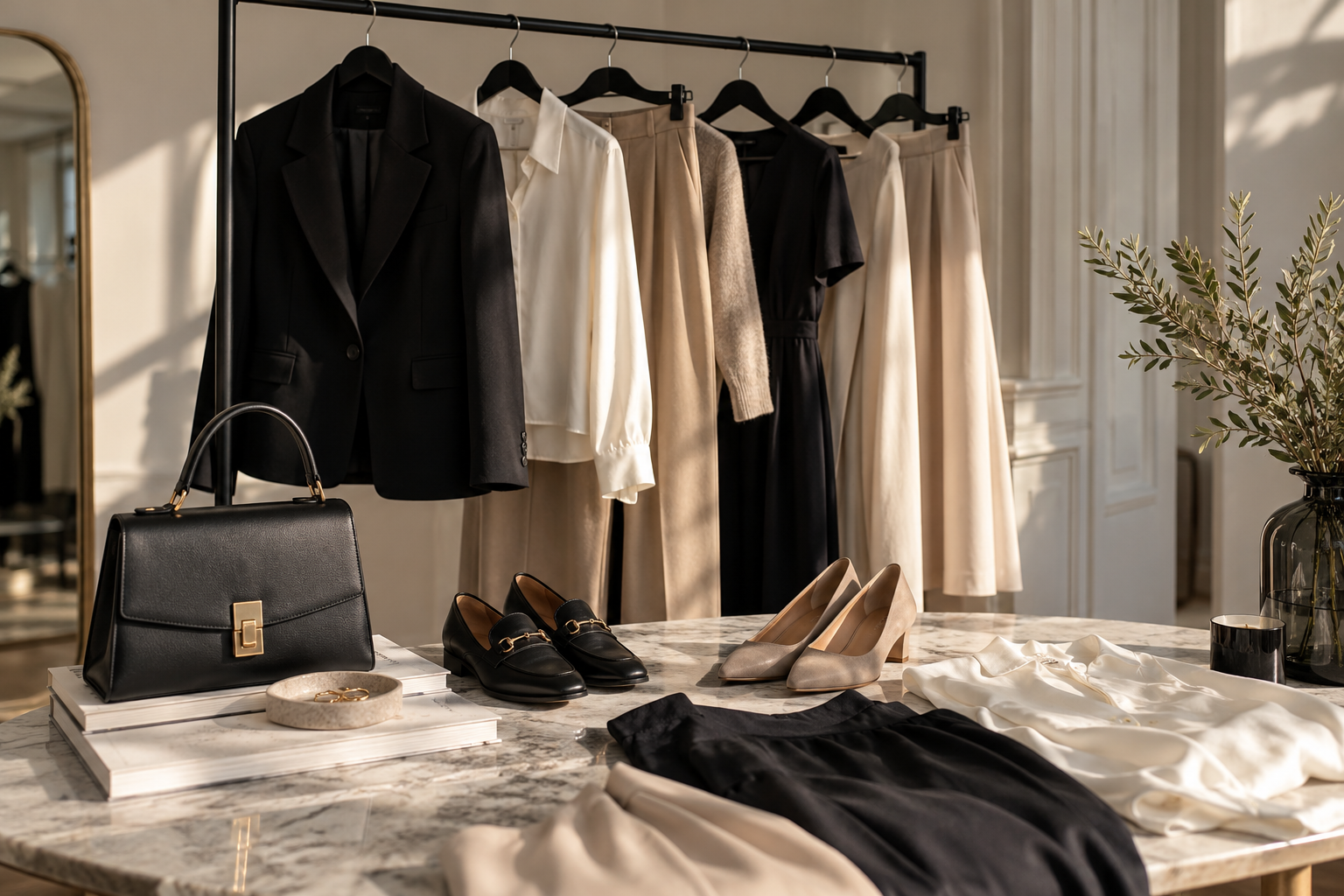
What to Wear to a Job Interview for Women: 10 Outfit Ideas
For most job interviews, women can’t go wrong with tailored trousers or a midi skirt, a simple blouse or fitted top, polished shoes and, for more formal workplaces, a blazer. The exact combination depends on the company: what I would wear to an interview at a bank is not what I would choose for a marketing agency, and neither would necessarily make sense for a casual startup.
The difference between these dress codes isn’t just about wearing a blazer. It also depends on the industry. According to Harvard University’s professional attire recommendations, corporate finance generally has more formal expectations than tech startups, where everyday clothing tends to be much more relaxed. That’s why I wouldn’t choose an interview outfit based on the job title alone. I’d look at the company first.
I have been through enough job searches and interviews to know that dressing more formally does not automatically mean dressing better. My rule is simple: I want to look like I could already work there, just slightly more polished than I would be on an ordinary Tuesday. For a corporate interview, that might mean black tailored trousers, a cream blouse and a blazer. For a business casual office, wide-leg trousers, a fitted knit top and loafers may be enough. At a genuinely casual startup, even dark jeans can work if denim is already part of the company culture.
If you are still at the application stage, especially if you are using LinkedIn to find new job opportunities, look at the company’s LinkedIn page, website and employee photos before deciding what to wear. They often tell you more about the real dress code than the careers page does.
What Should a Woman Wear to a Job Interview?
A safe starting point is tailored trousers or a midi skirt, a simple blouse or good-quality top, and shoes that look polished without being uncomfortable. Add a blazer when the company is corporate or the position is senior, and leave it out when the workplace is obviously more relaxed.
That does not mean every woman needs black trousers, a white shirt and black pumps. Professional interview outfits for women can include dresses, wide-leg trousers, loafers, flats, knit tops and even dark jeans in the right environment.
Before choosing anything, I would look at three things: the company, the position and the people I am meeting. An Account Manager meeting clients needs a slightly different presentation from a graphic designer interviewing at a small studio. A senior management interview calls for more structure than an interview for a casual startup.
If I were trying to find a new job within a month, I also wouldn’t buy a completely different outfit for every interview. I would build two reliable combinations from a few pieces and change the top, shoes or blazer depending on the company.
10 Job Interview Outfits for Women That Actually Make Sense
Here are ten combinations I would realistically wear or recommend, rather than outfits that look impressive in a fashion shoot but feel ridiculous once you are sitting across a desk from a hiring manager.
1. Black Tailored Trousers + White Blouse + Blazer
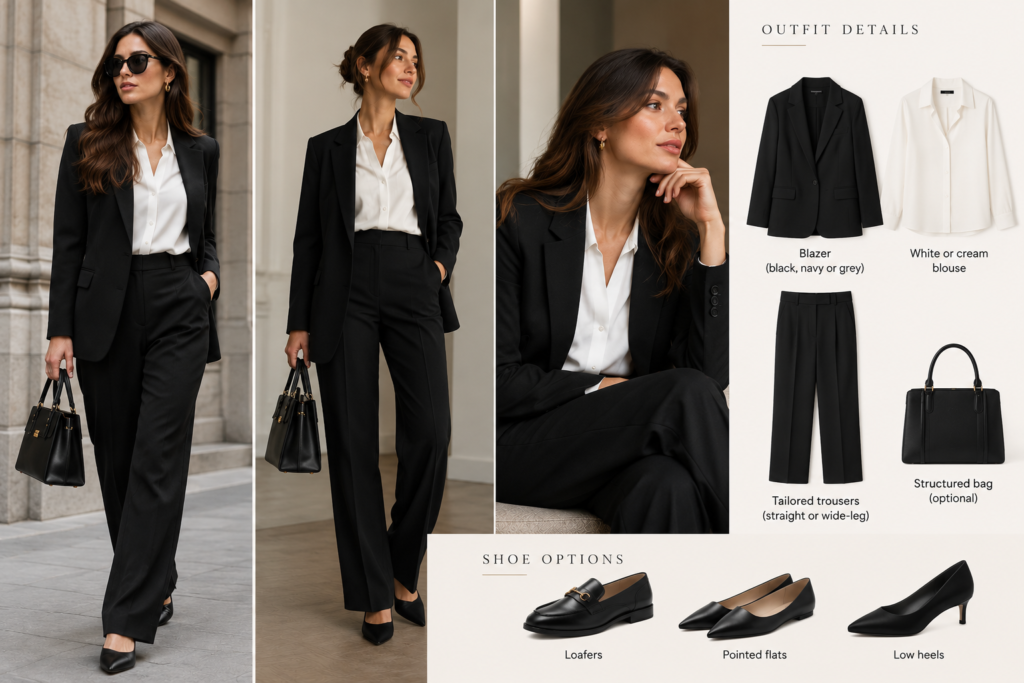
Best for: corporate offices, client-facing positions, sales, account management and traditional companies.
This is the safest option when you genuinely have no idea what the office dress code is. I would choose straight or slightly wide-leg black trousers, a white or cream blouse without complicated details, and a well-fitting black, navy or grey blazer.
The important part is the fit. Trousers dragging along the floor or a blazer that is obviously too tight will make an expensive outfit look worse than simple clothes that fit properly.
For shoes, I would wear loafers, pointed flats or low heels. You do not need high heels to make this outfit professional.
2. Navy Trouser Suit + Simple Top
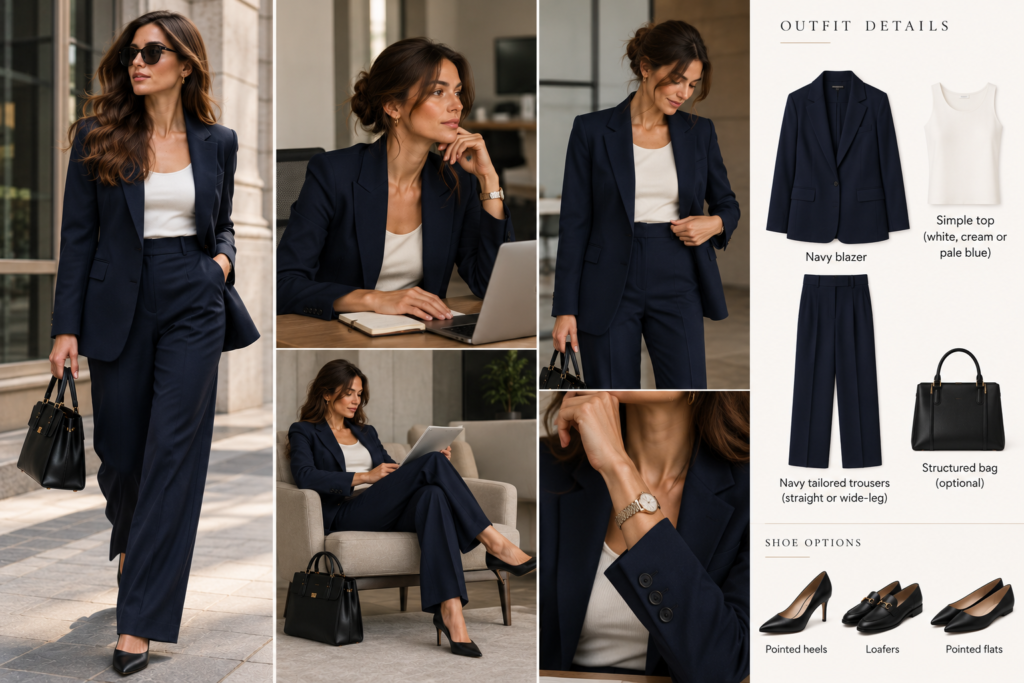
Best for: finance, banking, legal companies, senior corporate roles and formal interviews.
If I knew I was walking into a conservative corporate environment, this is where I would use an actual suit. Navy is slightly softer than black while still looking formal, and a plain cream, white or pale blue top underneath keeps the outfit from looking like a uniform.
I would keep jewellery minimal and use a structured handbag rather than an evening-style bag. This is also one of the few situations where I think being slightly overdressed is usually safer than arriving too casually.
3. Beige Wide-Leg Trousers + Fitted Knit Top
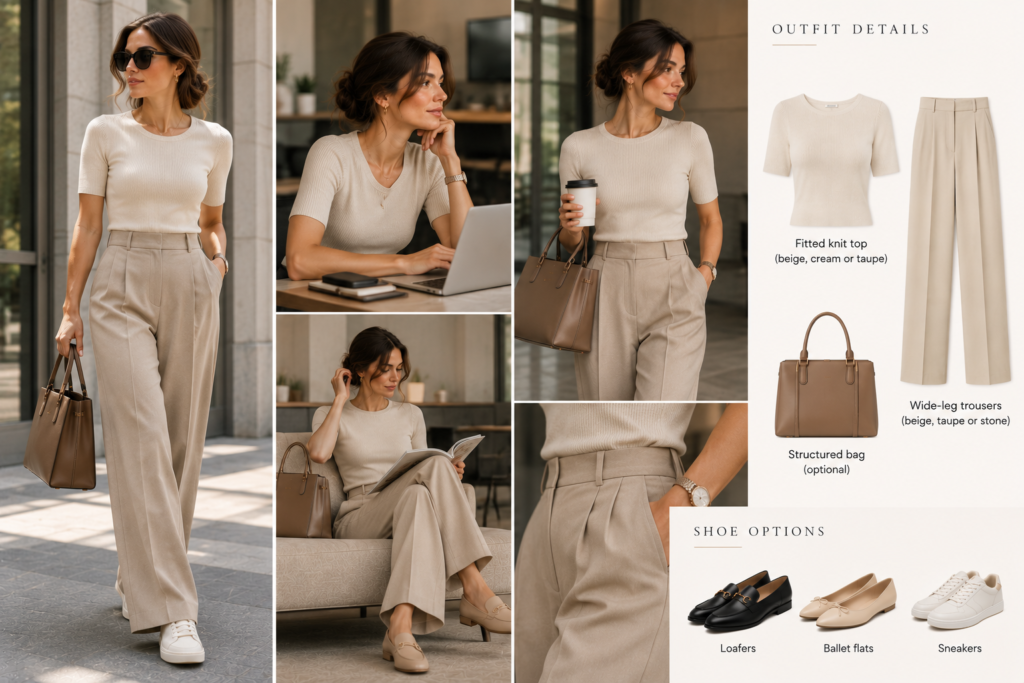
Best for: business casual offices, customer success, tech companies and modern corporate environments.
A business casual interview outfit for women does not have to include a blazer. Beige, taupe or stone wide-leg trousers with a fitted fine-knit top can look very put together without appearing overly formal.
The trick is to avoid making the outfit too relaxed. I would choose trousers with a proper waistband and tailoring rather than drawstring linen pants, then add loafers or simple flats.
This is also a useful combination if you are interviewing for a hybrid position. If flexibility is important to you and you eventually want to discuss a hybrid arrangement with an employer, dressing like someone who fits comfortably into both an office and a modern flexible workplace makes more sense than turning up in an unnecessarily formal suit.
4. Midi Skirt + Tucked-In Blouse + Loafers
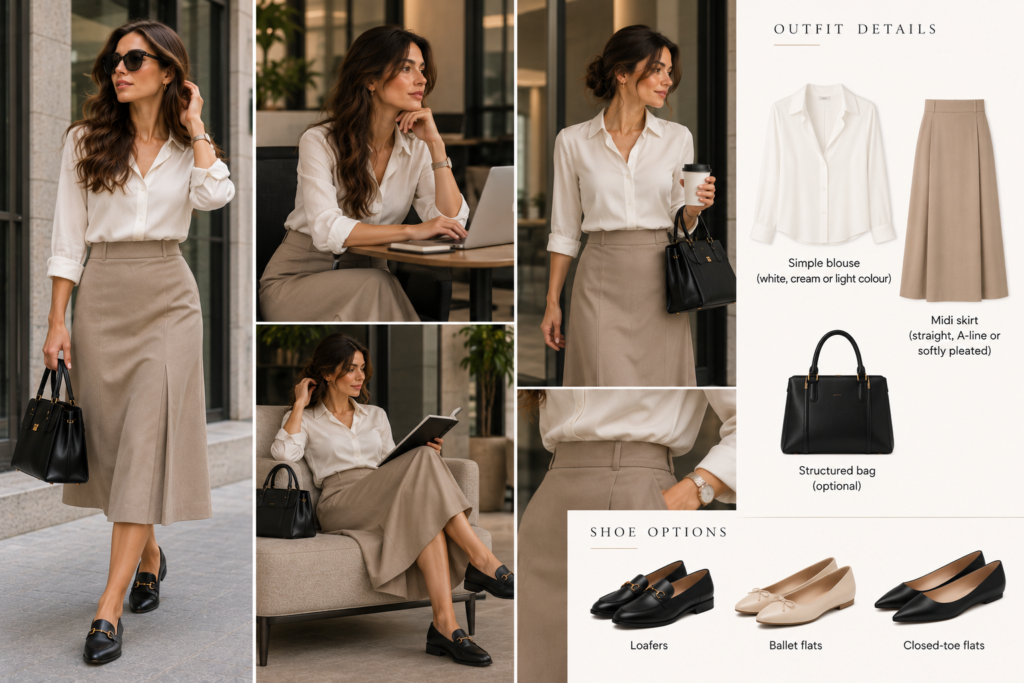
Best for: administrative roles, education, office positions and companies with a polished but not highly formal dress code.
I would choose a straight, A-line or softly pleated midi skirt rather than anything very tight. Pair it with a simple blouse tucked in and loafers or closed-toe flats.
The skirt should be something you can sit in comfortably. That sounds obvious, but an interview is a terrible time to discover that your skirt rides up every time you sit down.
I also wouldn’t combine a statement skirt, elaborate blouse, large jewellery and dramatic shoes. One interesting element is enough.
5. Structured Midi Dress + Low Heels
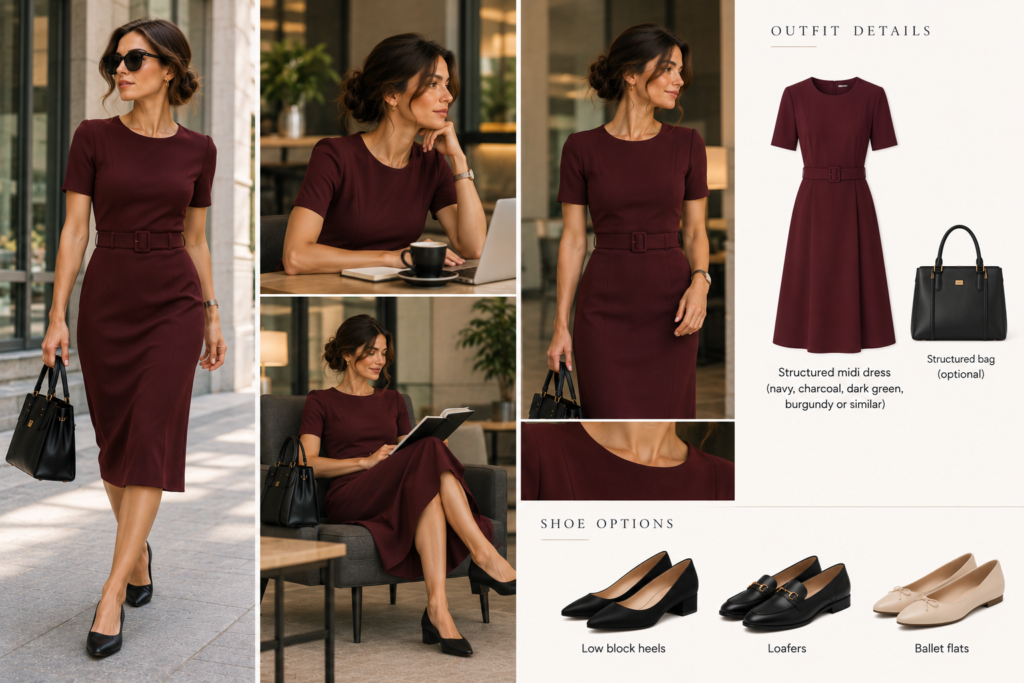
Best for: management positions, hospitality management, client-facing jobs and formal offices.
A dress can actually be one of the easiest female interview attire options because there is less to coordinate. I would choose a structured midi or knee-length dress in navy, charcoal, dark green, burgundy or another restrained colour.
Avoid anything that feels like an evening dress: shiny fabrics, very thin straps, dramatic cut-outs or a neckline that you will spend the interview adjusting.
A simple dress with low heels or polished flats can look more confident than an uncomfortable suit you would never normally wear.
6. Dark Trousers + Lightweight Blazer + Simple Top
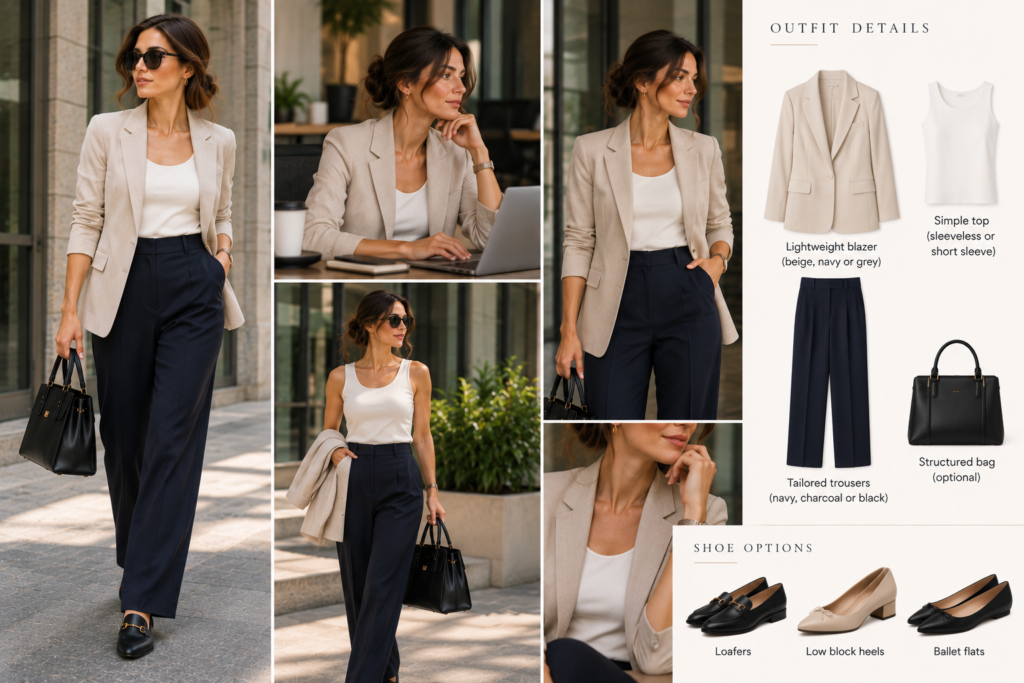
Best for: summer interviews and warm climates.
This is what I would choose when the weather makes a traditional suit miserable. The trousers can be navy, charcoal or black, while the blazer can be an unlined or lightweight version in a breathable fabric.
Underneath, I would wear a sleeveless shell or short-sleeve top that is professional enough that I can remove the blazer if necessary. That last point matters: don’t build an outfit where taking off the jacket suddenly leaves you wearing something that feels inappropriate for an office.
I’ll go into what to wear to a job interview for women in summer in more detail below, because dressing for 35°C weather requires a different strategy from dressing for an air-conditioned London office.
7. Tailored Trousers + Silk-Look Blouse
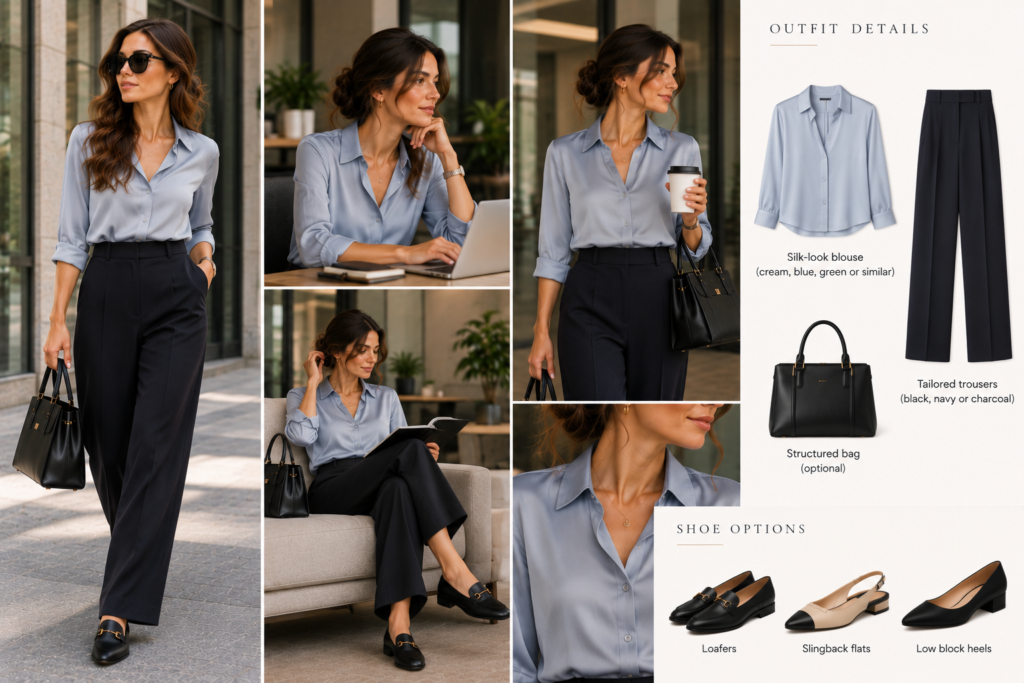
Best for: marketing, PR, media, partnerships and creative agencies.
If someone asked me what to wear to a marketing job interview female candidates don’t need to default to a full suit. Marketing offices often give you more room to look current and show some personality.
I like dark or neutral tailored trousers with a fluid blouse in cream, muted blue, soft green or another colour that suits you. Add loafers, slingback flats or simple low heels.
This combination feels professional without looking as though you dressed for a banking interview by mistake.
8. Dark Jeans + Blazer + Loafers
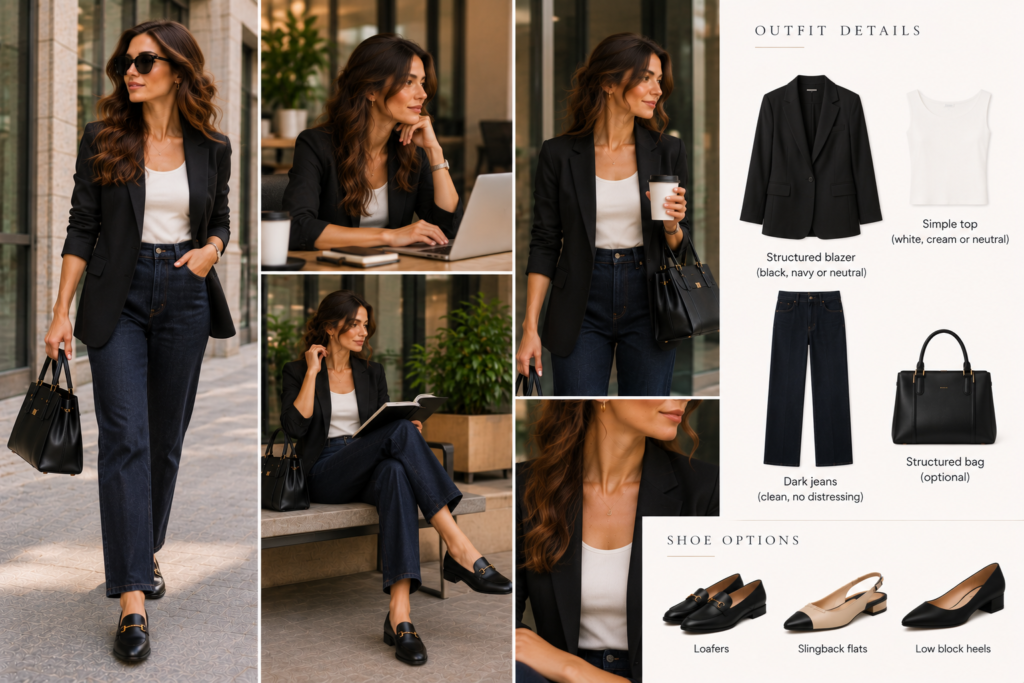
Best for: genuinely casual startups and some creative companies.
Yes, jeans can occasionally work for an interview, but I would only use them when I have already established that denim is completely normal at that company.
Choose dark, clean jeans without distressing, holes, fading or oversized details. Pair them with a good top, structured blazer and loafers.
If you are wondering what to wear to a startup interview female candidates should pay particular attention to the actual company rather than the word startup. A ten-person design company and a fintech startup handling institutional clients can have completely different expectations.
When in doubt, replace the jeans with tailored trousers.
9. Neutral Blouse + Tailored Trousers
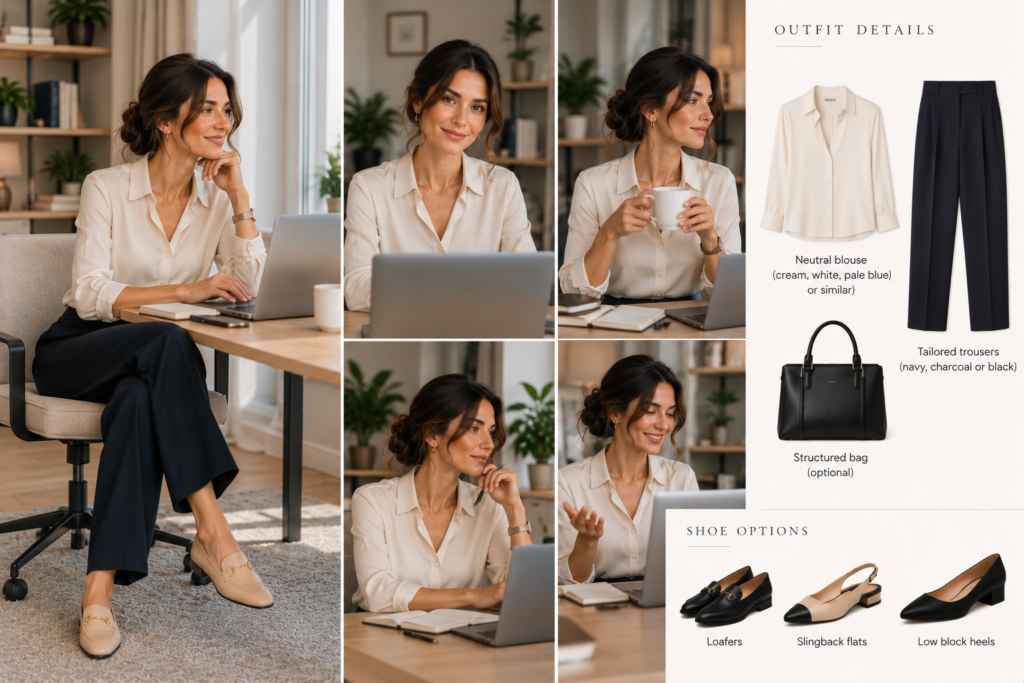
Best for: Zoom, Teams and other video interviews.
For a video interview, I don’t think you need to dress as though you are about to walk into a boardroom, but I still get properly dressed rather than putting a formal blouse over pyjama bottoms. Apart from the obvious risk of needing to stand up, getting dressed normally puts me in a different mindset.
A cream, navy, pale blue or muted-colour blouse works well on camera. Avoid tiny busy patterns that can look distracting on screen.
Remote work can eventually feel very different from the interview stage, particularly if you spend most of your week alone at home. I’ve written separately about the isolation that can come with working from home, which is worth considering when you are deciding whether a fully remote role actually suits you.
10. Matching Lightweight Separates + Flats
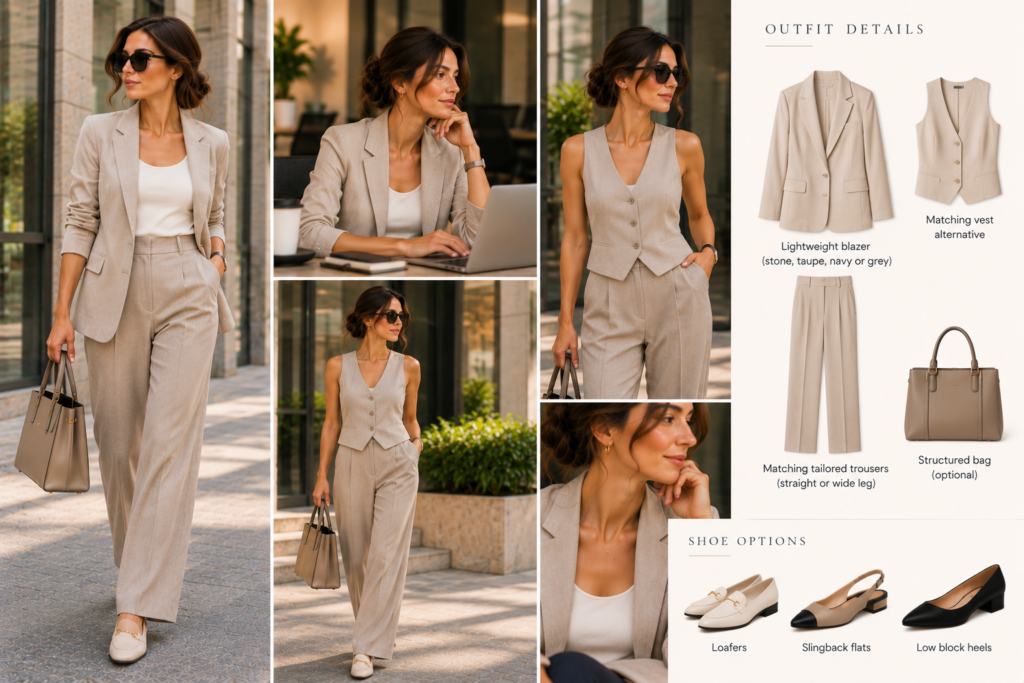
Best for: hot-weather interviews, summer offices and warm climates.
Matching separates are one of my favourite alternatives to a heavy suit. Think lightweight straight-leg trousers with a coordinating jacket or vest-style top, paired with closed flats or loafers.
Stone, navy, taupe and muted grey all work well. I would avoid very thin linen that becomes badly creased during the journey to the interview; a linen blend usually behaves better.
This is particularly useful when you are interviewing somewhere with intense outdoor heat but strong indoor air conditioning. You need an outfit that survives both.
| Tailored Blazer | View on Amazon |
| Women’s Classic Loafers | View on Amazon |
| Women’s Midi Office Dress | View on Amazon |
| Beige Wide-Leg Trousers | View on Amazon |
| Midi Skirt | View on Amazon |
| Low Heels | View on Amazon |
| Silk-Look Blouse | View on Amazon |
Business Formal vs Business Casual: Which One Do You Need?
The easiest way I distinguish them is by asking myself whether I would expect the people interviewing me to wear suits on an ordinary working day.
For business formal, think matching suit, structured dress, tailored trousers with a blazer, closed polished shoes and restrained accessories. Banking, law, some consulting firms, executive roles and conservative corporate environments are the obvious examples.
For business casual, the pieces do not need to match. Tailored trousers with a knit top, a midi skirt with a blouse or wide-leg trousers with loafers can all work.
Smart casual interview outfits for women give you slightly more freedom again, but smart casual does not mean whatever you normally wear to meet friends for coffee. The clothes should still look deliberate.
If I cannot work out the dress code, I move one level more formal rather than three levels more formal. There is no reason to arrive at a relaxed marketing agency dressed for court.
What to Wear to a Corporate Interview
For a corporate interview, I would keep the silhouette clean and the colours relatively restrained. Black or navy trousers, a cream blouse and a blazer are difficult to get wrong. A navy trouser suit is even safer for finance, banking or a senior management position.
For a client-facing role, I pay particular attention to shoes, bag and the overall condition of the clothes. They don’t have to be expensive. They simply shouldn’t look worn, badly creased or like something you pulled out of the wardrobe ten minutes before leaving.
This becomes even more important in highly competitive job markets, where getting to the interview stage can already be difficult. I have written about why finding work can become unexpectedly competitive even for experienced candidates, and once you finally have an interview, I wouldn’t create an unnecessary distraction with an outfit that clearly doesn’t fit the company.
What to Wear to a Casual Job Interview
When people search for what to wear to a casual job interview female candidates often make one of two mistakes: they either hear “casual” and dress as they would on a weekend, or they panic and wear a full corporate suit.
I would aim for the middle.
A practical combination is tailored trousers, a fitted knit top and loafers. Another is dark jeans, a simple blouse and a blazer, but only when you know jeans are accepted. A midi skirt with a plain top also works.
For a creative agency, you can usually show more personality through colour, jewellery or an interesting jacket. I would still keep the basic outfit simple enough that the interviewer remembers me rather than spending the meeting wondering about my clothes.
What to Wear to an Interview Without a Blazer or Suit
You absolutely do not need a blazer for every interview.
If I were deciding what to wear to an interview without a blazer, I would use the structure of the other pieces instead. Tailored trousers with a crisp blouse, a fitted knit top with a midi skirt, or a structured dress can all look professional on their own.
The same applies if you’re wondering what to wear to a job interview without a suit. A suit is one option, not the definition of professional clothing.
The key is avoiding an outfit where every piece is casual at once. If you skip the blazer, make the trousers more tailored. If you wear flats, choose a polished pair rather than running shoes. You are balancing the outfit rather than following a rigid formula.
What Shoes Should Women Wear to a Job Interview?
Shoes are one of the easiest parts of an interview outfit to overthink. I don’t believe women need heels to look professional, and I would never wear a pair that makes me uncomfortable just because they seem more “corporate.” If I am already thinking about my feet ten minutes into the interview, they were the wrong shoes.
For most office interviews, loafers, pointed or almond-toe flats, slingbacks, simple ankle boots in cooler weather, or low block heels all work. With a trouser suit, I like loafers or a low heel; with a midi dress, I would choose flats, slingbacks or a simple pump. For a business casual interview outfit, clean leather loafers are probably the easiest option because they work with trousers, skirts and dresses.
Whatever style I choose, I check the condition of the shoes. Scuffed toes, damaged heels and dirty soles are much more noticeable with polished interview clothes than they are with an everyday outfit.
If you are searching specifically for what shoes to wear to a job interview female candidates don’t need a special category of “interview shoes.” You need shoes that make sense with the outfit, the company and the amount of walking involved. If the interview requires crossing a huge office complex or walking from public transport, I would rather arrive comfortably in smart flats than struggle in heels I rarely wear.
What Colors Are Best for a Job Interview?
There is no magic interview colour that makes someone hire you. I choose colours based on how easy they are to combine and how formal I want the outfit to feel.
Navy, charcoal, black, cream, white, beige and taupe are useful because they don’t require much thought. If I want more colour, I would happily wear burgundy, dark green, dusty blue or another muted shade, especially for marketing, partnerships or creative roles.
Can you wear black to a job interview? Of course. An all-black outfit can look very polished, although I usually break it up with a cream blouse, different texture or understated jewellery so it doesn’t feel too severe.
I wouldn’t avoid red, pink or brighter colours simply because an old interview rule says they’re “wrong.” I would just use them deliberately. A burgundy blouse with navy trousers is very different from arriving in a bright red evening dress. The item and the overall outfit matter more than the colour by itself.
Patterns can work too, but I prefer simple ones. If the blouse has a strong print, I keep the trousers, jacket and accessories quiet.
What to Wear to a Job Interview for Women in Summer
Summer is where a lot of standard interview advice becomes impractical. Wearing a lined polyester suit in serious heat doesn’t make you look more professional once you arrive overheated and uncomfortable.
When deciding what to wear to a job interview in hot weather female candidates should think about fabric and layering before anything else. I would choose lightweight tailored trousers, a breathable blouse or shell top and a light blazer that can be removed. Cotton blends, lightweight wool, viscose blends and good linen blends can be much easier than thick synthetic fabrics.
One combination I would actually wear is beige tailored trousers, a cream sleeveless blouse with enough shoulder coverage for an office, a lightweight navy blazer and loafers. Another is a structured midi dress with flats and a light jacket carried separately.
I would also consider the journey. If I have to walk outside in very hot weather before entering an aggressively air-conditioned office, I want a layer I can put on when I arrive rather than wearing everything from the moment I leave home.
For women interviewing in hot climates, this is also where blindly copying Pinterest outfits from New York or London makes little sense. Professional clothing has to work in the place where you are actually wearing it.
What to Wear to a Video or Zoom Interview
For a video interview, I concentrate more on what appears in the frame. A plain blouse, fine-knit top or simple shirt in a colour that separates you from the background usually works better than a tiny print or extremely bright pattern.
I still wear proper trousers or a skirt even if nobody is expected to see them. It sounds unnecessary, but I feel much more like I’m actually attending an interview when I’m fully dressed.
I would also test the outfit on camera beforehand. A perfectly normal white blouse can become very bright under strong lighting, while black can lose detail in a dark room. Open the same app you will use for the interview, sit where you intend to sit and look at the actual picture rather than guessing.
For what to wear to a Zoom interview female candidates don’t need to become more formal simply because the meeting is online. Match the company. A corporate interview may still call for a blouse and blazer, while a tech company might be perfectly appropriate with a neat knit top.
What Not to Wear to a Job Interview
My rule for what not to wear to a job interview female candidates is less about banning individual items and more about avoiding anything that creates a problem during the meeting.
I also think fit matters much more than the price of your clothes. Indeed’s advice on what not to wear to a job interview makes a similar point: expensive clothing isn’t necessary, but uncomfortable, overly casual or poorly maintained clothes can create the wrong impression. I’d rather wear affordable trousers that fit properly than an expensive suit that makes me uncomfortable throughout the interview.
I wouldn’t wear something I constantly need to pull up, pull down, button, straighten or check. I wouldn’t wear new shoes for the first time that morning. I wouldn’t choose trousers that crease badly during the journey, a blouse that becomes transparent under office lighting, or jewellery that makes noise every time I move my hands.
I would also avoid strong perfume. Sitting across a table from someone in a small meeting room is very different from walking past them for thirty seconds.
Very casual sportswear, distressed jeans, beach sandals and obviously evening-style clothing are poor choices for most interviews. At the other extreme, being dramatically overdressed can also make you look as though you misunderstood the workplace.
The outfit should support the interview, not become an event of its own.
One Last Check Before You Leave
Before an in-person interview, I sit down in the complete outfit. Not stand in front of the mirror — actually sit.
That immediately shows whether the trousers dig in, the skirt moves too high, the blouse gaps between buttons or the blazer becomes uncomfortable when my arms are resting on a table. I also put my phone, keys and anything I need for the interview into the bag I’m taking, because a beautiful tiny handbag is useless if I end up carrying half my belongings separately.
I check the company again as well. If employee photos show almost everyone in casual clothes, I might remove the blazer. If the leadership team is consistently dressed formally, I keep it.
The best answer to what to wear to a job interview for women isn’t one universal outfit. I want to look prepared for that particular job, comfortable enough to concentrate on the conversation and polished enough that my clothes stop being something I have to think about once the interview begins.
FAQ
What should a woman wear to a job interview?
For most interviews, tailored trousers or a midi skirt with a blouse, knit top or simple shirt are a reliable starting point. Add a blazer for corporate or more formal companies. For business casual workplaces, loafers, tailored separates and a good-quality top are usually enough. I would always check how employees at the company actually dress before deciding.
Can a woman wear pants to a job interview?
Yes. Tailored trousers are one of the easiest options for almost any professional interview. Black, navy, charcoal, beige and other neutral shades are simple to combine with a blouse, knit top or blazer, and there is no reason women need to wear a skirt or dress to look professional.
Can you wear a dress to a job interview?
Yes. I would choose a structured dress that is comfortable when sitting, generally around knee or midi length, and appropriate for the company’s dress code. A simple navy midi dress with flats can work for an office interview, while a more formal corporate role might call for a blazer over it.
Can you wear jeans to a job interview?
Sometimes. I would only wear jeans when I already know the workplace is genuinely casual. Dark, clean, non-distressed jeans with a blouse, blazer and loafers can work at certain startups or creative companies. For finance, law, senior corporate roles or any company whose dress code I cannot establish, I would wear tailored trousers instead.
Can you wear sneakers to a job interview?
It depends heavily on the workplace. Minimal, spotless sneakers can work in some tech, startup and creative environments where employees regularly wear them. They would not be my first choice for a conservative corporate interview. When I am unsure, loafers or flats remove the question completely.
What shoes should a woman wear to a job interview?
Loafers, polished flats, slingbacks, simple pumps and low block heels are all reasonable options. I care more about whether the shoes are clean, comfortable and appropriate for the rest of the outfit than whether they have a heel.
What colors are best to wear to a job interview?
Navy, black, charcoal, cream, white, beige and taupe are easy choices, but they are not the only acceptable colours. Burgundy, dark green, muted blue and softer colours can also look professional. I prefer one stronger colour with otherwise simple pieces rather than making every part of the outfit compete for attention.
Do you need to wear a blazer to a job interview?
No. A structured dress, tailored trousers with a good blouse, or a midi skirt with a fine-knit top can look completely professional without one. I use a blazer when the company is more formal, when the role is senior or client-facing, or when the rest of the outfit needs more structure.
What should a woman wear to a casual job interview?
I would try tailored trousers with a knit top and loafers, or dark jeans with a blouse and blazer if denim is clearly part of the company’s normal dress code. Casual should mean less formal, not careless.
What should a woman wear to a job interview in summer?
Lightweight tailored trousers, a breathable blouse and an unlined blazer are an easy combination. A structured midi dress and flats also work. I would choose breathable fabrics and layers that can handle both outdoor heat and strong office air conditioning rather than forcing myself into a heavy suit.
What should a woman wear to a video or Zoom interview?
I would wear a simple blouse, shirt or knit top that looks clear on camera and matches the formality of the company. For corporate interviews, adding a blazer can make sense. Test the outfit with your actual camera and lighting before the interview because colours and patterns can look surprisingly different on screen.
What should you not wear to a job interview?
I avoid anything extremely casual, badly worn, uncomfortable, overly revealing or difficult to sit in. I also skip strong perfume, noisy jewellery and clothes that need constant adjusting. The goal isn’t to remove all personality from your outfit; it is to make sure your clothes don’t distract you or the interviewer from the conversation.
Explore the Remote Work & Careers Hub
Discover more practical guides about remote jobs, hybrid work, career growth, burnout and the realities of building a career outside the traditional office.
Explore the Remote Work & Careers Hub →This article combines personal experience of attending job interviews, navigating recruitment processes, and communicating with hiring managers, alongside independent editorial research into interview preparation and effective job-search strategies.
Research sources included:
- Personal experience of participating in job interviews, completing recruitment assessments, and progressing through different stages of the hiring process.
- Indeed Career Guide.
- Harvard FAS Mignone Center for Career Success.
The goal is to provide practical, experience-based advice that helps job seekers prepare for interviews, answer difficult questions, communicate their strengths, and approach the hiring process with greater confidence.

Founder & Editor
Founder of The City Theory, writing about digital nomad lifestyle, modern city culture, remote work, travel experiences, psychology and human behaviour around the world.