
Best Portable Blackout Curtains for Travel: Hotel Rooms, Airbnb & More
The best portable blackout curtains for travel are lightweight, easy to install without drilling, and large enough to block sunlight around hotel or Airbnb windows. Amazon Basics is a practical budget option, Tommee Tippee is designed for families travelling with babies, while Sleepout offers a more specialised solution for frequent travellers who need better light coverage.
The problem is that not every portable blackout curtain works on every window. Suction cups can lose their grip, fixed-size panels may leave gaps around the edges, and some temporary blinds are too bulky to justify packing for a weekend trip. A curtain that works perfectly in a small bedroom might be almost useless against the floor-to-ceiling windows of a modern hotel.
This comparison looks at five portable blackout options, their attachment methods, window compatibility and practical limitations, so you can choose something that actually suits the places you stay.
So which are the best portable blackout curtains for travel, and what should you check before buying one? The answer depends less on the brand name and more on where you’re staying, how much luggage space you have, and what kind of windows you’re likely to encounter.
Best Portable Blackout Curtains for Travel: What Actually Matters
Before comparing products, there’s one thing worth understanding: blackout fabric and a completely dark room are not the same thing.
There’s also a reason why even a small amount of unwanted light can be annoying when you’re trying to sleep. The Sleep Foundation explains how light affects sleep, including its role in regulating the body’s internal clock and sleep-wake cycle.
A curtain might be made from material that blocks light effectively, but sunlight can still enter around its edges, particularly when the fabric sits directly against the glass without covering the surrounding frame. This is why window coverage and attachment design matter just as much as the material itself.
For occasional hotel stays, I would pay attention to three things: how quickly the curtain goes up, whether it can be removed without leaving marks, and how much space it takes in a suitcase. A complicated installation might be manageable in an apartment you’re renting for a month, but it’s hardly worth the effort for a two-night city break.
Size is another consideration that people tend to underestimate. A curtain that measures 130 cm across might cover a standard bedroom window, but it won’t necessarily work on a wide hotel window or sliding balcony door. Some products allow you to gather or adjust the fabric, while others come in fixed dimensions.
If you’re putting together practical essentials for a week in Dubai, for example, a lightweight blackout curtain might be worth considering if you’re sensitive to early morning sunlight. Dubai hotels can have large windows, and sunrise comes early during the summer months, so checking the window arrangement before packing is more useful than assuming every hotel provides proper blackout blinds.
Best Portable Blackout Curtains for Travel: Quick Comparison
These five products approach temporary window coverage in slightly different ways. The comparison is based on their published product designs and general installation requirements rather than personal hands-on testing, and specifications may vary between versions.
| Product | Best For | Attachment | Main Consideration |
|---|---|---|---|
| Amazon Basics Portable Blackout Curtain | Budget travel | Suction cups | Check window coverage |
| Tommee Tippee Portable Blackout Blind | Families with babies | Suction cups | Adjustable fit |
| Sleepout Portable Blackout Curtain | Frequent travelers | Suction cups and edge fastening | Higher price |
| Sun Zero Portable Travel Curtain | Larger windows | Suction cups | Fixed panel dimensions |
| Easynight Portable Blackout Blind | Unusual window shapes | Adhesive / suction options | May require cutting |
None of these options is automatically the best choice for every traveller. A frequent business traveller might prefer something compact and reusable, while a family staying in the same holiday apartment for two weeks could be more concerned about covering every gap around the window.
Best Portable Blackout Curtains for Hotel Rooms
Amazon Basics Portable Blackout Curtain — A Practical Budget Option
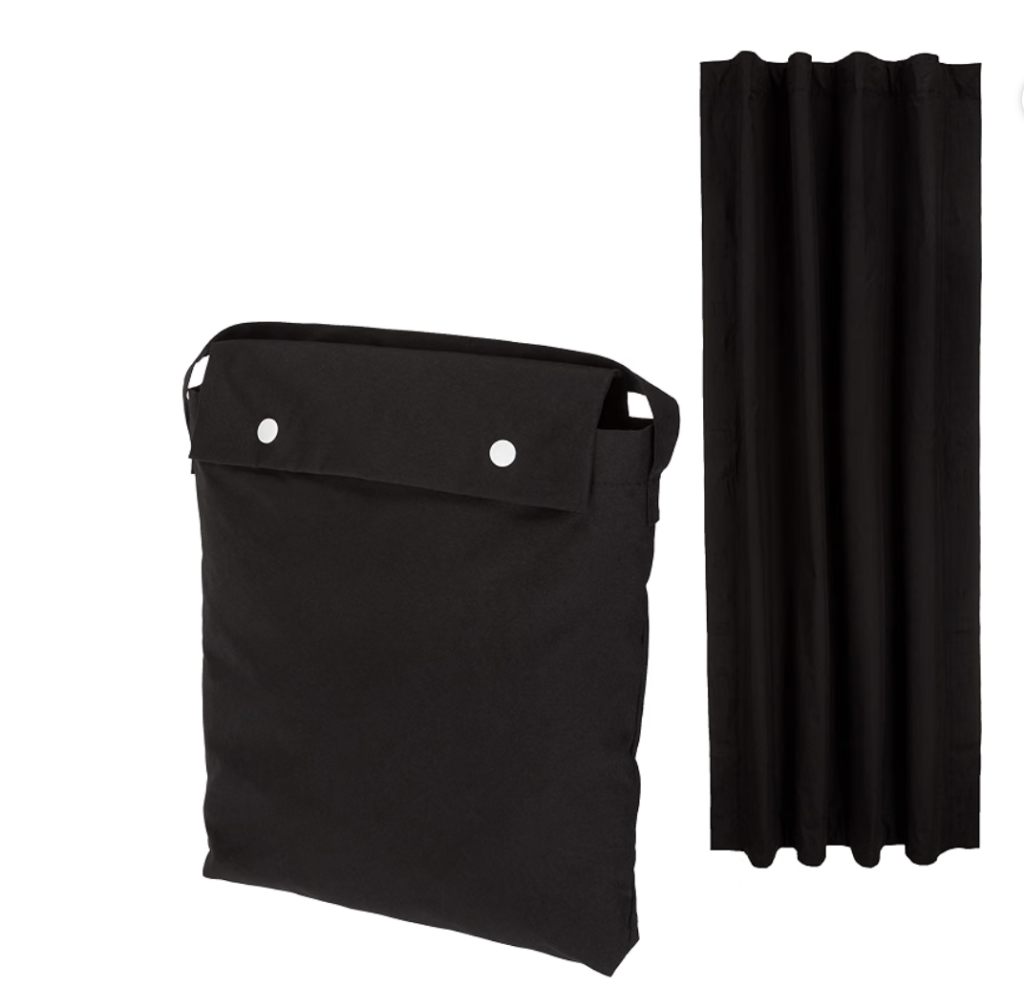
Amazon Basics is worth considering if you want a straightforward travel blackout curtain without investing in a more expensive system. The portable version uses suction cups to attach the fabric to a suitable window surface, avoiding the need for curtain rods, brackets or permanent installation.
ts main advantage is simplicity. For a short hotel stay, you can unpack the curtain, attach it to the glass and remove it when you check out. It’s particularly convenient when the existing hotel curtains almost do the job but leave an annoying strip of sunlight around the edges.
The limitation is coverage. Suction cups need a suitable smooth surface, and the curtain still needs to be large enough to cover the area where light enters. If your hotel has a wide window divided into several sections, one panel may not be sufficient.
Who should consider it: Occasional travellers looking for an affordable, reusable solution for relatively standard windows.
Tommee Tippee Portable Blackout Blind — Designed With Family Travel in Mind
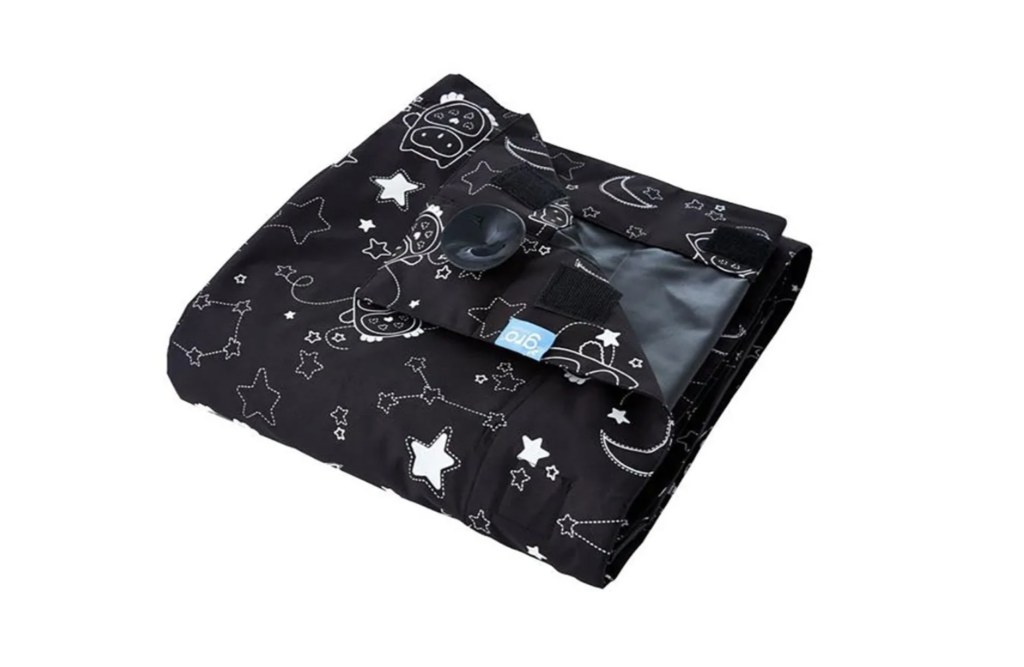
Tommee Tippee is particularly relevant to parents travelling with babies or toddlers who struggle to sleep in bright rooms. Its portable blackout blind uses suction cups and an adjustable design intended to fit different window dimensions.
Unlike a conventional curtain that hangs from a rail, this type of blind attaches directly to the window, which can be useful in holiday rentals where you have no control over the existing curtains.
The adjustable design is helpful, but it doesn’t mean the blind will fit every window. Large panes, unusual frames and windows with awkward handles can still cause problems. Parents should also make sure the blind and its attachments are installed securely and remain well away from a child’s reach.
Who should consider it: Families looking for portable blackout curtains for baby travel, particularly when staying in hotels or holiday apartments with unpredictable window coverings.
Sleepout Portable Blackout Curtain — For Frequent Travellers
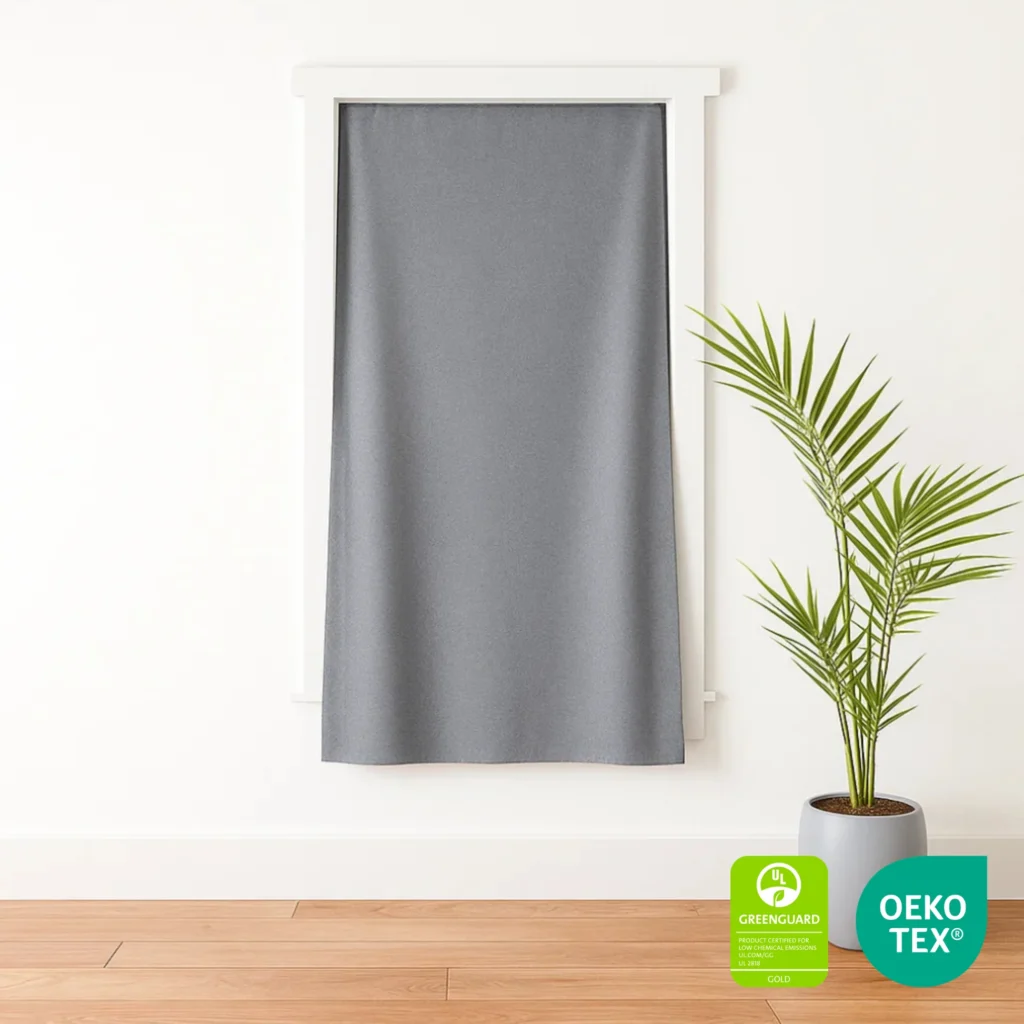
Sleepout takes a more specialised approach to temporary blackout coverage, with a portable curtain system designed around reusable mounting and reducing light around the window.
This type of product makes more sense for someone who travels regularly and has already discovered that ordinary hotel curtains rarely provide enough darkness. Rather than improvising with towels or rearranging the existing curtains, you have a dedicated product that can be packed and reused.
The main consideration is cost. A premium blackout system is harder to justify if you take one short holiday each year, particularly when a simple sleep mask might solve the same problem. It’s also important to check the dimensions and mounting requirements of the specific Sleepout version before ordering.
Who should consider it: Frequent travellers, light-sensitive sleepers and people who regularly work night shifts or sleep during daylight hours.
Sun Zero Portable Travel Curtain — Worth Checking for Taller Windows
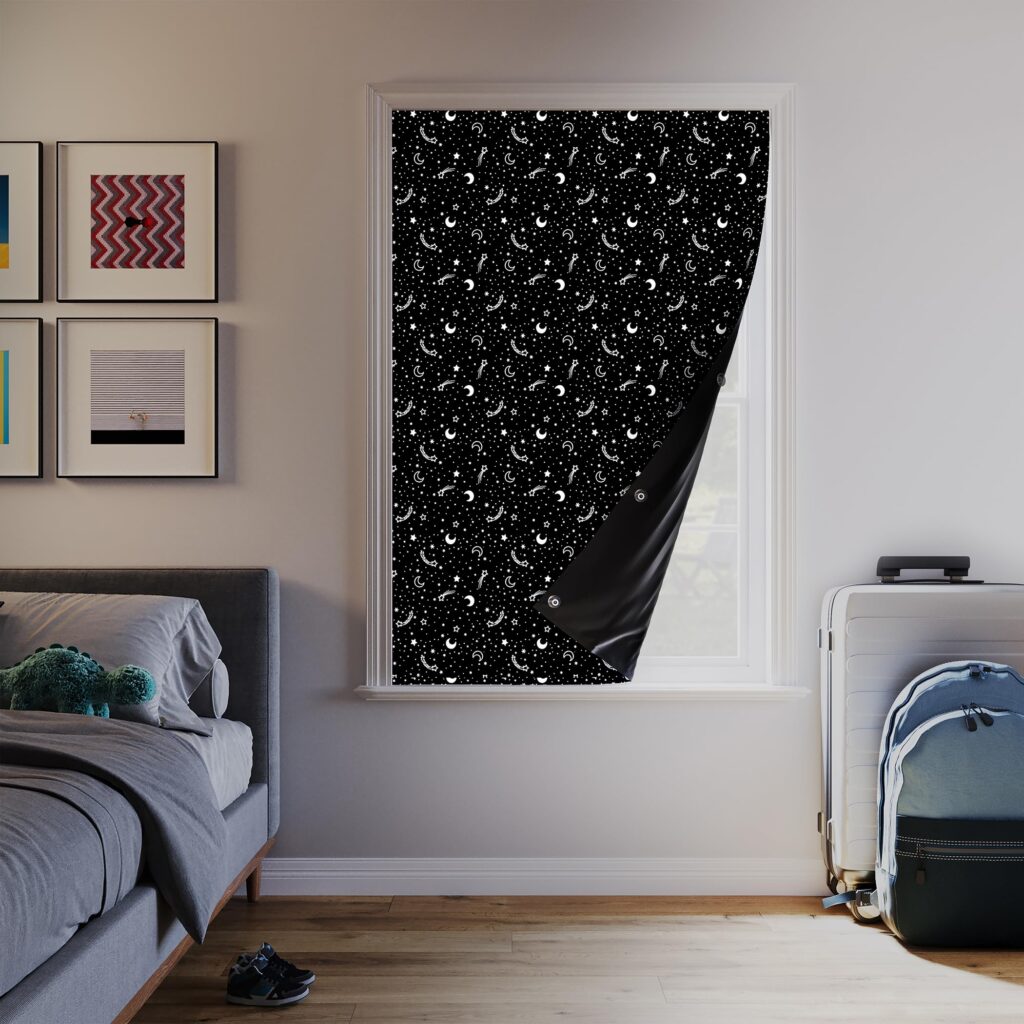
Sun Zero offers a portable travel curtain format with suction-cup installation. One version is sold as a 50-by-78-inch panel, which makes it worth comparing with smaller portable blinds when window height is a concern.
However, a taller curtain isn’t necessarily a better curtain. Width matters just as much, and a fixed-size panel may leave uncovered sections on a particularly wide window.
I would check the actual window dimensions, the placement of the suction cups and whether the fabric can be positioned without leaving large gaps. The product may be useful for certain hotel layouts, but don’t assume it will cover an entire balcony door simply because the panel is relatively long.
Who should consider it: Travellers who need a taller panel and prefer a straightforward suction-cup design.
Easynight Portable Blackout Blind — For Awkward Window Shapes
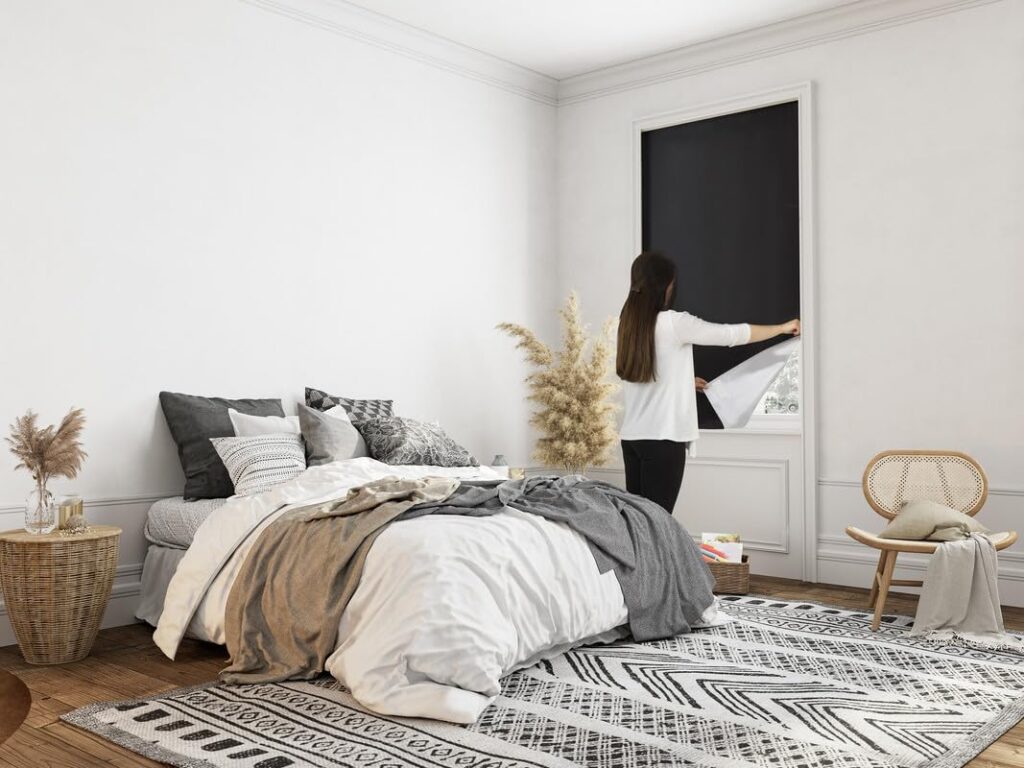
Easynight is an interesting alternative because its temporary blackout systems can be adapted to different window dimensions, depending on the version and mounting accessories.
This approach can be useful in older apartments, guesthouses and rental properties where the windows don’t match standard curtain sizes. Rather than relying on a fixed panel, you can fit the blackout material more closely to the area that needs covering.
The downside is that some configurations involve cutting the material to size. That might work beautifully for a rental apartment you’re staying in for several weeks, but it becomes less practical when every hotel has different windows.
Who should consider it: Travellers dealing with unusual window shapes or anyone needing temporary blackout coverage for a longer stay.
Portable Blackout Curtains With Suction Cups: Are They Actually Convenient?
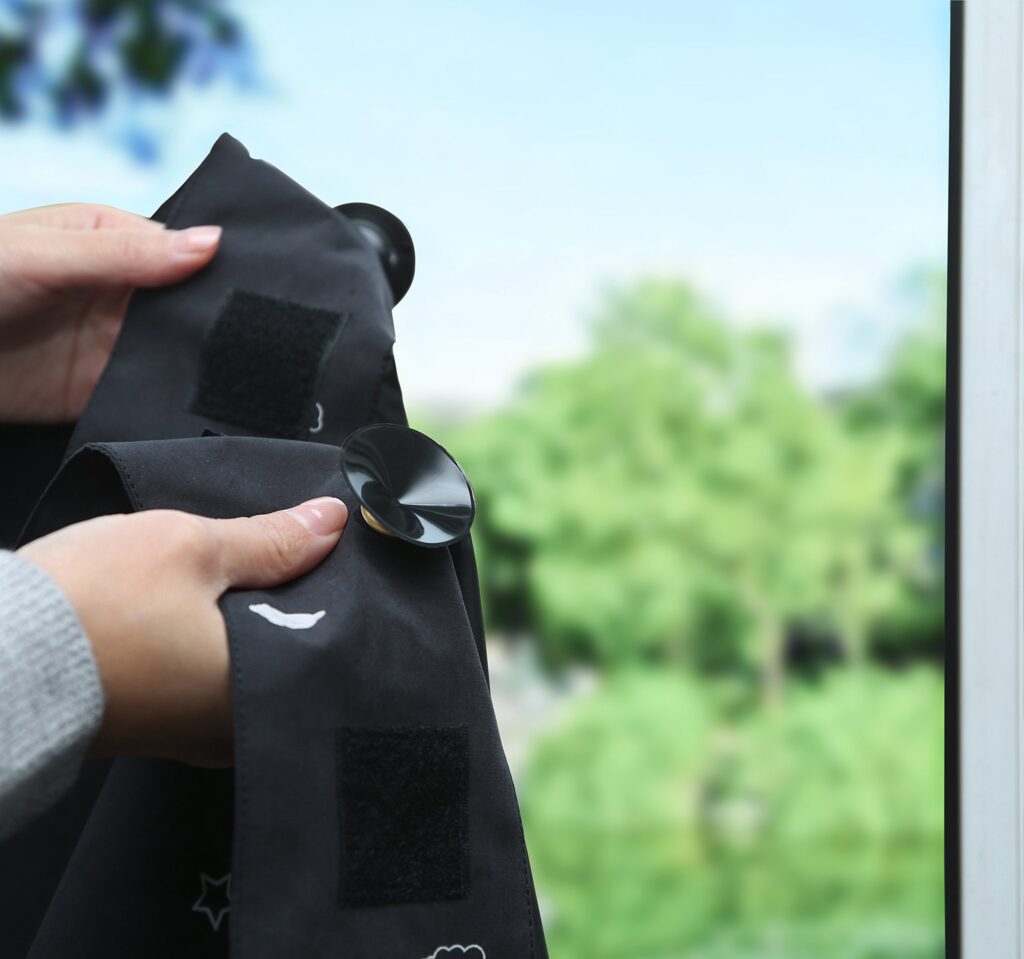
For short trips, suction cups are probably the first attachment method I would consider. They don’t require drilling, usually don’t need a separate curtain rod, and can be removed when you’re leaving.
But there’s a catch: suction cups work best on clean, smooth glass. They can struggle on textured surfaces, dusty windows or certain frame materials, and a curtain that keeps falling down at three in the morning isn’t much of an improvement over the hotel’s original blinds.
Before attaching one, wipe the glass where the cups will sit and make sure the surface is dry and free from dust. Follow the manufacturer’s installation instructions, because different suction-cup designs may have different requirements.
Another detail worth checking is whether the curtain attaches entirely within the glass area. If it does, you may still get light around the edges, especially when the window frame is wide or the glass is recessed.
Suction Cups vs Adhesive vs Magnetic Blackout Curtains
Magnetic attachments sound convenient, but they only work when the mounting surface is compatible or when the product includes its own magnetic fixing system. Many window frames are made from aluminium, uPVC or other materials that won’t hold an ordinary magnet.
Adhesive strips can be more flexible, although I would be cautious about using them in hotels or rented apartments without checking whether they’re safe for the surface. Removable doesn’t always mean residue-free, particularly on painted walls or delicate finishes.
Tension rods are useful for longer stays because they can support conventional curtains without drilling, provided the window recess is suitable. They’re less appealing for flights, though, because even compact rods add bulk to your luggage.
Temporary Blackout Curtains for Airbnb and Rentals
An Airbnb presents a slightly different problem from a hotel. In a hotel, you usually have a fairly predictable bedroom layout, while a holiday rental might have skylights, unusual windows, glass doors or no proper curtains at all.
I’ve seen rental listings where the bedroom looks lovely in photographs, with huge windows and plenty of natural light, but there’s almost no information about what happens when the sun comes up. That’s the sort of detail worth checking before booking, especially if you need to sleep during the day.
For short Airbnb stays, I would choose temporary blackout curtains that can be installed and removed without touching the walls. Suction cups are convenient when the windows have enough exposed glass, while adjustable fabric panels may be more useful for unusual shapes.
For longer stays, the calculation changes. People who spend weeks moving between hotels and serviced apartments often become more particular about their sleeping arrangements, especially when they’re also working remotely. If you’re considering making hotel accommodation your everyday home, reusable blackout curtains can become a practical household item rather than an occasional travel accessory.
Which Portable Blackout Curtains Work Best for Different Types of Travel?
| Travel Situation | What to Prioritize | Main Challenge |
|---|---|---|
| Weekend hotel stay | Lightweight, quick installation | Limited setup time |
| Airbnb apartment | Adjustable dimensions | Different window sizes |
| Business travel | Compact packing | Luggage space |
| Traveling with a baby | Maximum light coverage | Light leaking around edges |
| Long-term hotel stay | Durability and easy removal | Repeated daily use |
| Road trip | Reusability and flexible fit | Different accommodation types |
For business travel, I would prioritise something that takes only a few minutes to install. If you’re arriving at a hotel after a delayed flight, the last thing you want is to spend half an hour figuring out how to attach fabric to the window.
For a month-long rental, however, spending more time getting the coverage right can be worthwhile, particularly if you’re sleeping during daylight hours or using the bedroom as a temporary workspace.
How to Choose the Right Size for Different Windows
The biggest mistake when buying travel blackout curtains is checking the fabric dimensions without thinking about the window itself. A curtain measuring 130 × 180 cm might sound generous, but if the hotel window is 160 cm wide, you’ll still have uncovered glass no matter how carefully you attach it.
Ideally, the blackout material should extend beyond the visible glass on every side. When the mounting system allows it, an extra 10–15 cm of coverage around the window is a useful starting point, although the amount you actually need depends on the frame and where the curtain attaches.
The tricky part is that you rarely know the exact window dimensions before arriving at a hotel. That’s why adjustable designs are generally more practical for frequent travellers than curtains that only work with one particular window size.
Here are a few things I would check before buying:
- Maximum coverage: Look at the usable dimensions when the curtain is fully extended, not just the fabric size listed on the packaging.
- Attachment position: Check whether the suction cups or adhesive strips sit inside the fabric edges, because this affects how much glass the curtain can cover.
- Adjustability: Some portable blackout blinds for travel allow you to gather excess fabric or reposition attachment points, which is useful when moving between different properties.
- Packed dimensions: A large curtain might cover more glass, but it also needs to fit comfortably into your luggage.
- Window access: Consider whether you’ll need to open the window or balcony door while the curtain is installed.
For example, a compact blind might be perfectly adequate for a small bedroom window in a European guesthouse but struggle with the large glass panels commonly found in newer apartments. If you’re staying somewhere with unusually wide windows, asking the property about its existing blackout curtains before arrival could save you from packing something that won’t fit.
Do Portable Blackout Curtains Actually Block All Light?
Portable blackout curtains can make a room considerably darker, but even good blackout fabric won’t guarantee complete darkness if sunlight can enter around the edges. The material and the installation are two separate things, and both affect the result.
Even the CDC’s recommendations for creating a dark sleeping environment specifically mention blocking light around the edges of window coverings. It’s a small detail, but it explains why a well-fitted curtain can be more useful than expensive blackout fabric that leaves gaps.
A manufacturer might describe its fabric as 100% blackout, which generally refers to the material’s ability to prevent light from passing through it. That doesn’t mean the finished installation will block every bit of sunlight around the window.
Imagine a hotel room with a wide window and a curtain attached directly to the glass. The centre of the window may be completely covered, but sunlight can still enter along the sides, especially when the window sits inside a deep frame.
This becomes particularly noticeable in rooms facing east, where early morning sunlight hits the window directly. Even a relatively narrow gap can produce a bright strip across the bed.
If you want better coverage, look for curtains with enough extra fabric to extend beyond the glass and attachment systems that help secure the edges. Some designs are better suited to this than others, so it’s worth looking closely at installation photographs rather than relying on the blackout percentage alone.
For people who need to sleep during daylight hours, combining a portable curtain with a comfortable sleep mask may be more practical than trying to achieve perfect darkness with fabric alone.
How to Black Out Hotel Windows Without Drilling
If you’re wondering how to blackout hotel room windows without damaging anything, start by checking the curtains that are already there. Sometimes the problem isn’t the fabric but the way the curtains hang, particularly when two panels meet in the middle and leave a vertical gap.
Try closing the existing curtains fully and checking whether the panels overlap. If the room has a second layer of sheer curtains, moving those aside can sometimes help the heavier panels close properly.
Before buying extra window coverings, it’s worth checking whether the room has other sources of unwanted light. The Sleep Foundation outlines several ways to make a bedroom darker, including blocking light from windows, dealing with gaps around doors and reducing light from electronic devices.
When the existing curtains aren’t enough, a portable blackout panel offers another option.
A Simple Way to Block Sunlight in a Hotel Room
- Identify where the light enters. Close the existing curtains and check the top, sides and centre of the window rather than assuming the entire window needs additional coverage.
- Check the mounting surface. If you’re using suction cups, make sure the glass is accessible and suitable for the attachment system. Avoid attaching anything to delicate finishes or surfaces the manufacturer doesn’t recommend.
- Position the curtain before securing it. Hold the material against the window to see whether it covers the brightest gaps, then decide where the attachment points should go.
- Attach the curtain according to the manufacturer’s instructions. Make sure the fabric isn’t pulling excessively on the suction cups or other fittings, particularly when the panel is large.
- Check for remaining light gaps. If the edges are still bright, adjust the curtain where possible rather than stretching the material beyond its intended dimensions.
- Remove everything carefully when leaving. Don’t pull suction cups away by force or use adhesive products that could damage the hotel’s surfaces.
This is also a useful approach for people searching for no drill blackout curtains, since the aim is to create temporary coverage without changing the property.
How to Hang Blackout Curtains Without a Rod
The easiest method depends on the type of curtain you have. Portable models with suction cups attach directly to suitable glass, while adhesive-mounted systems can work on compatible surfaces if the property allows them.
A tension rod is another possibility when there’s a suitable window recess, although you’ll need a curtain designed to hang from it. It’s more practical for longer stays than for someone travelling with hand luggage.
If you’re specifically looking for blackout curtains that won’t damage walls, suction-cup designs are worth considering because they avoid wall attachments altogether. Just remember that a product being advertised as removable doesn’t automatically make every mounting method safe for every surface.
Common Problems With Portable Blackout Curtains and How to Avoid Them
Most complaints about travel blackout curtains come down to installation, window compatibility or unrealistic expectations. The fabric itself is often the least complicated part.
Common Problems With Portable Blackout Curtains: Quick Reference
| Problem | Why It Happens | What to Look For |
|---|---|---|
| Light leaking around edges | Curtain doesn’t cover the frame | Extra coverage or edge fastening |
| Suction cups falling off | Poor surface contact | Clean glass and reliable cups |
| Curtain too small | Window dimensions vary | Adjustable or oversized panels |
| Difficult installation | Too many attachment points | Simple reusable mounting |
| Takes too much luggage space | Bulky fabric or hardware | Compact folded dimensions |
| Leaves marks | Unsuitable adhesive | Removable, surface-safe attachment |
Suction Cups That Keep Falling Off
This is probably the most frustrating problem because it can happen after you’ve already gone to sleep. A curtain might stay in place for an hour and then suddenly detach when the fabric pulls against the mounting points.
Before blaming the product, check whether the glass is clean and whether the suction cups are properly positioned. Heavy fabric, uneven tension and unsuitable surfaces can all contribute to poor attachment.
If the curtain repeatedly falls despite correct installation, it’s probably not the right solution for that particular window. I wouldn’t try to compensate by attaching it to painted walls or furniture using improvised adhesives.
Blackout Fabric That Still Lets Light Into the Room
This usually happens because the curtain doesn’t extend far enough beyond the glass. A small panel may block direct sunlight through the centre of the window while leaving bright gaps around the frame.
For someone who only wants to reduce glare, that might be acceptable. For a light-sensitive sleeper, it can defeat the purpose of buying blackout curtains in the first place.
The better solution is usually a larger or more adjustable panel, provided the mounting system can support it.
Curtains That Are Too Bulky to Pack
Some temporary blackout curtains are designed primarily for home use, even when they’re described as portable. They might fold down, but that doesn’t necessarily mean they’re convenient for air travel.
If you’re travelling with a checked suitcase, a larger panel may be perfectly reasonable. For a weekend trip with only a backpack, however, I’d pay much closer attention to packed dimensions and weight.
The same principle applies when choosing equipment for a temporary workspace. If you’re putting together a comfortable work setup in a small space, items that are easy to move, store and reuse are often more useful than bulky solutions designed for permanent installation.
Adhesive That Leaves Marks
Temporary blackout curtains sometimes use adhesive strips or hook-and-loop fasteners, and the biggest concern in rented accommodation is whether they can be removed cleanly.
Painted walls, wallpaper and delicate window finishes can react differently to adhesive products. Even strips marketed as removable may leave residue or damage a surface when used incorrectly.
For hotels and Airbnb properties, I would avoid attaching anything to painted surfaces without permission. A suction-cup system on suitable glass is usually a more straightforward choice.
Are Portable Blackout Curtains Worth Packing?
Portable blackout curtains are worth considering if you regularly stay in unfamiliar accommodation, struggle to sleep in bright rooms or need darkness during the day. They’re less useful if you rarely travel, usually stay in hotels with good blackout curtains or don’t want to carry additional equipment.
For a two-night city break, I’d probably prioritise a lightweight, reusable curtain that takes only a few minutes to install. For a longer stay in a rented apartment, I’d be more concerned about getting the window coverage right, even if the installation takes a little longer.
The best option isn’t necessarily the most expensive one. It’s the curtain that fits the windows you’re likely to encounter, stays securely attached and doesn’t create more inconvenience than the sunlight you’re trying to block.
FAQ
Do portable blackout curtains really work?
Yes, portable blackout curtains can significantly reduce sunlight when the fabric blocks light effectively and the curtain covers the window properly. However, gaps around the edges can still let light into the room, so the mounting method and panel dimensions are just as important as the blackout material itself.
What are the best portable blackout curtains for hotel rooms?
The best portable blackout curtains for hotel rooms are generally lightweight models that attach without drilling and can be removed without damaging the property. Amazon Basics is worth considering for occasional travel, while Sleepout offers a more specialised option for frequent travellers. The right choice depends on the window dimensions, attachment surface and amount of light you need to block.
How do you blackout hotel room windows without drilling?
Start by checking whether the existing curtains can be adjusted to close any gaps. If they still let in too much sunlight, use a portable blackout panel with suction cups on suitable glass or another removable mounting system approved for the surface. Make sure the fabric covers the problem areas and that the attachments can be removed safely.
Do portable blackout curtains with suction cups stay in place?
They can stay securely attached when installed correctly on clean, smooth glass, but performance varies depending on the suction-cup design, curtain weight and mounting surface. Textured glass, dust and excessive tension can cause problems, so it’s worth checking the manufacturer’s installation instructions before relying on them overnight.
Can you use portable blackout curtains in Airbnb rentals?
Yes, portable blackout curtains can be useful in Airbnb rentals, particularly when the property has thin blinds or unusually bright bedrooms. Choose a removable system that doesn’t require drilling, and avoid adhesive attachments on painted walls or delicate finishes unless the host has approved them.
Are portable blackout curtains suitable for large windows?
Some portable blackout curtains can cover large windows, but you need to check the actual dimensions rather than relying on product descriptions. Adjustable or oversized panels may work better than compact travel blinds, although very wide windows and sliding glass doors can require more coverage than a single curtain provides.
What is the difference between portable blackout curtains and blackout blinds?
Portable blackout curtains generally use flexible fabric panels that can be folded and packed, while portable blackout blinds may use adjustable fabric with suction cups or other temporary fittings. The terminology often overlaps, so the more useful comparison is how each product attaches, how much window area it covers and how easily it can be reused.
Are portable blackout curtains worth packing for travel?
They’re worth packing if sunlight regularly interferes with your sleep or you often stay in hotels and rentals with unpredictable window coverings. For occasional travellers who sleep comfortably in bright rooms, a sleep mask may be simpler. Frequent travellers, families with young children and people working unusual hours are more likely to benefit from a reusable blackout curtain.
Explore the Smart Travel Hub
Discover more practical travel guides about cheaper destinations, flight hacks, long-term travel and smarter ways to explore the world without spending more than necessary.
Explore the Smart Travel Hub →This article is based on independent editorial research into portable blackout curtains for travel, with a focus on hotel rooms, Airbnb rentals, temporary accommodation, and practical ways to reduce unwanted light while sleeping. Products were compared using published specifications, attachment methods, window compatibility, portability, and potential limitations rather than hands-on testing.
Research sources included:
- Published product specifications and installation information for portable blackout curtains and temporary window coverings.
- Sleep research and expert guidance on light exposure, sleep quality, and bedroom darkness published by SleepFoundation.org.
- Recommendations on reducing light exposure and creating a suitable sleeping environment published by CDC.gov.
- Practical comparisons of suction cups, removable adhesives, and other non-permanent window attachment methods, including their limitations in hotels and rental properties.
The goal is to help travellers choose suitable blackout curtains, understand what different products can realistically achieve, and avoid common problems with sizing, installation, light leakage, and surface damage. Product specifications and availability may change over time.

Founder & Editor
Founder of The City Theory, writing about digital nomad lifestyle, modern city culture, remote work, travel experiences, psychology and human behaviour around the world.