
Is It Hard to Get a Job in Dubai? My Experience
Yes, it can be very hard to get a job in Dubai, even if you already have years of professional experience. I learned this after spending several months applying for office jobs in the UAE and getting almost no response to my applications. The problem was not that Dubai had no vacancies; it was the enormous competition, employers’ preference for UAE experience, very different salary expectations among candidates and the limited effectiveness of simply sending applications through LinkedIn. Eventually, I stopped relying on job boards alone and found work through a recruiter, which completely changed how I understood the Dubai job market.
Why is it so hard to get a job in Dubai?
In my experience, the biggest reasons are intense international competition, the preference for candidates with UAE experience, salary competition, overloaded online applications and the importance of recruiters, referrals and personal networks.
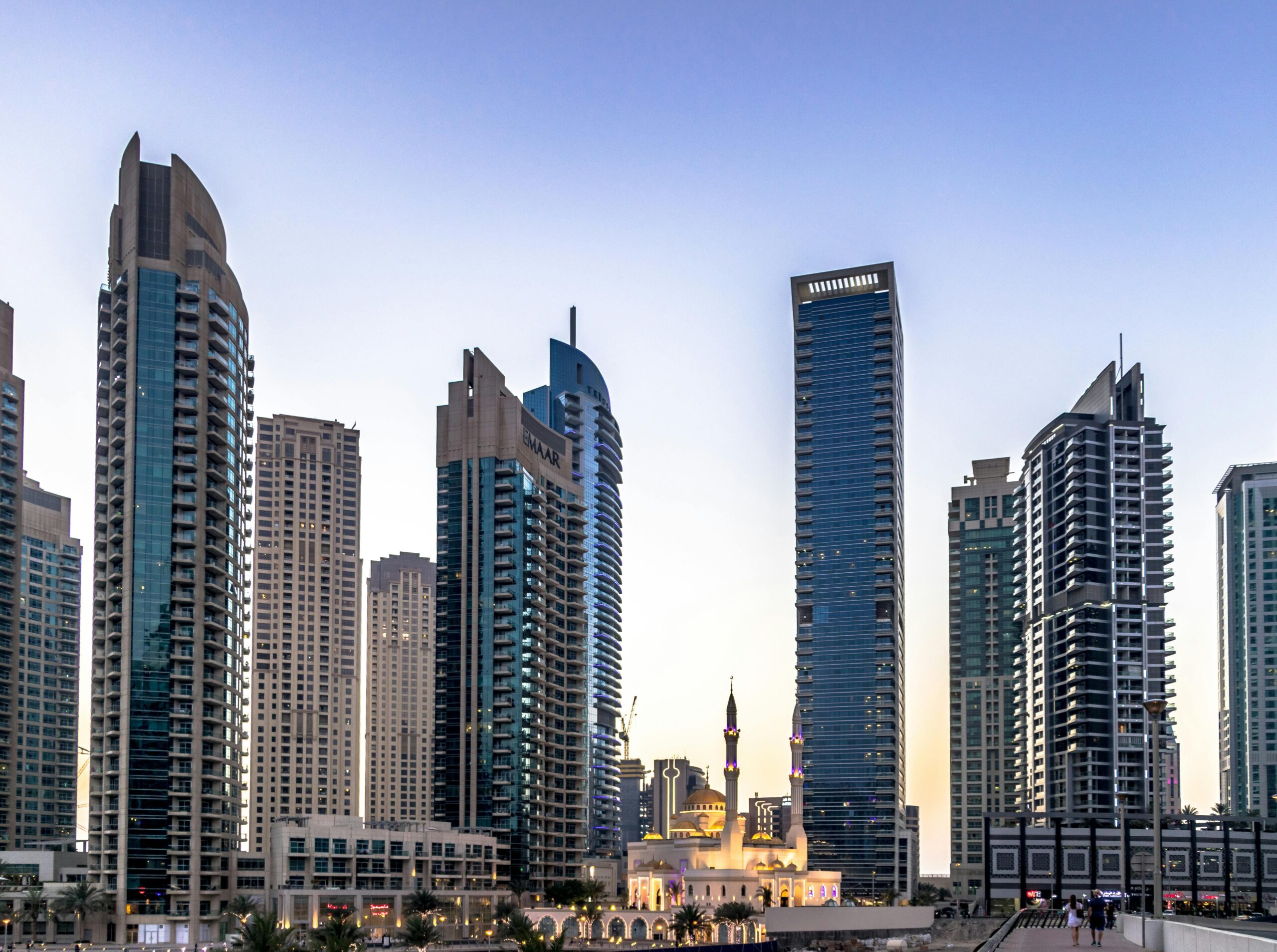
For years, Dubai was marketed globally as a city of opportunity. The image was simple and extremely powerful: modern skyscrapers, luxury lifestyles, tax-free salaries, international companies, ambitious growth, and endless professional possibilities. Millions of people moved to Dubai believing the city offered faster career growth than Europe, better weather than the UK, more safety than major Western capitals, and more financial opportunity than many struggling economies around the world. International business publications like Forbes Middle East have frequently highlighted Dubai as one of the fastest-growing global business hubs for expats and international professionals.
But behind the glamorous image of Dubai, another reality has slowly become impossible to ignore.
An increasing number of professionals now describe the Dubai job market as emotionally exhausting, psychologically draining, financially dangerous, and unexpectedly difficult to survive. Some spend months applying without hearing back from companies. Others receive interviews only to face extremely low salary offers far below international standards. Many discover that networking and personal connections matter more than qualifications. Others begin questioning their entire careers after experiencing constant silence from recruiters despite years of experience at respected global companies. To understand some of the wider forces that shaped this unusual business environment, it is also worth looking at books about Dubai’s economy, business culture and development, which give more context to how the city became the international employment market it is today.
The question many people eventually start asking themselves becomes painfully simple:
Is it hard to get a job in Dubai, or is something fundamentally broken inside the hiring culture itself?
Why Is It So Hard to Get a Job in Dubai?
The emotional difficulty of job hunting in Dubai comes from the fact that rejection here often feels invisible.
Location filters also require attention. Many people assume remote means global. Unfortunately, this isn’t always true. Some companies advertise remote positions but require candidates to live in specific countries for tax, legal, or payroll reasons. Understanding how employers approach hiring in different regions can save a lot of frustration, especially when navigating competitive job markets where thousands of candidates may be applying for the same roles.
Over time, people stop feeling rejected by companies and start feeling erased by algorithms.
This is one of the main reasons why searching a job in Dubai is so painful psychologically. The process rarely feels human. It feels automated, saturated, and emotionally disconnected. Many candidates spend entire days refreshing inboxes, rewriting and tailoring their CV with ChatGPT, optimising LinkedIn profiles, messaging hiring managers, adjusting keywords, and applying through every possible platform without seeing any visible progress.
And because Dubai itself is expensive, unemployment quickly becomes emotionally dangerous.
People often relocate before securing work because they believe being physically present in Dubai increases hiring chances. Once they arrive, they suddenly face rent, visa deadlines, transportation costs, social pressure, and rapidly disappearing savings while hearing almost nothing back from employers. The stress becomes constant because every passing week starts carrying financial consequences. Over time, that emotional pressure can slowly develop into symptoms similar to job burnout and emotional exhaustion, especially when months of rejection and uncertainty begin affecting mental health.
That pressure changes people psychologically.
Professionals who previously felt confident and successful begin doubting their qualifications, appearance, communication style, nationality, experience level, salary expectations, and even personal worth.
My Experience Trying to Find a Job in Dubai for Months
My view of the Dubai job market comes from going through the process myself. I arrived with eight years of experience at a well-known international company and assumed that this background would at least help me get interviews. Instead, I spent months applying for office jobs in Dubai and received almost no response, which was very different from what I had expected before entering the UAE job market.
In my home country, I worked for a well-known international company for eight years. I had stable experience, a good salary, and I genuinely believed that finding a job in Dubai would happen relatively quickly once I arrived. Dubai constantly presents itself as a global business hub full of international companies, ambitious projects, and endless opportunities for skilled professionals, especially in technology and digital industries.
The reality turned out to be completely different.
I spent several months searching for work without success. Every day I opened LinkedIn and saw endless vacancies with extremely long lists of requirements. Many companies expected candidates to have years of experience, multiple technical skills, strong communication abilities, and sometimes even knowledge of several markets simultaneously. But despite those expectations, the salaries often looked surprisingly low compared to international standards. This disconnect makes more sense when you look at what is happening in the Dubai job market right now, where intense competition gives employers far more choice while putting additional pressure on candidates.
Another factor I noticed was the enormous variation in salary expectations among candidates coming from different labour markets. Dubai recruits globally, which means people applying for the same position may arrive with completely different ideas about what counts as an acceptable salary. For employers, that creates an unusually large candidate pool and makes salary competition much more intense than I had experienced in other markets. The city has a very large Indian diaspora, especially in IT and technology sectors, and many professionals are willing to work for significantly lower salaries compared to European standards or salaries in some other countries. As I explain in my article about Dubai’s large Indian community, this is partly the result of decades of migration and well-established professional networks rather than a recent trend. That creates intense downward pressure across the entire market. Companies become accustomed to lower salary expectations because there will almost always be somebody willing to accept less.
In my own search, I also developed the impression that some employers valued particular international backgrounds differently, especially for higher-paid corporate roles. However, this varied enormously by company and industry, so I would not treat nationality alone as a reliable predictor of who gets hired.
What shocked me most was that none of my LinkedIn applications worked.
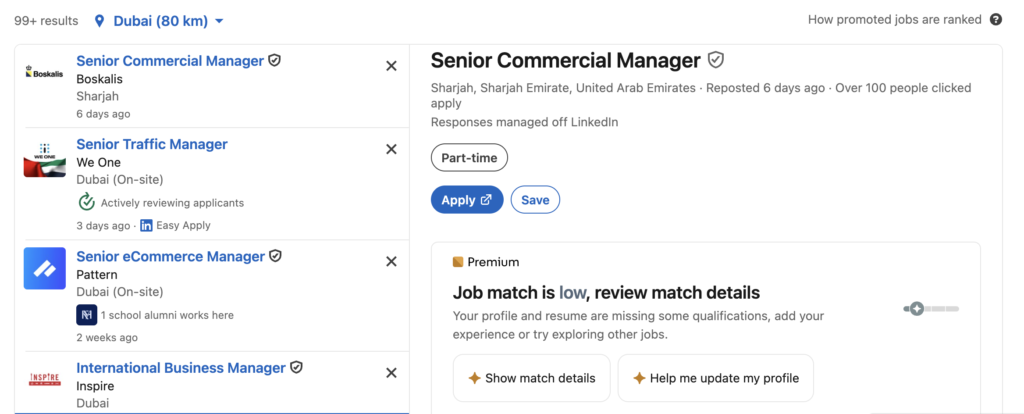
I sent enormous numbers of CVs through LinkedIn and received almost no responses at all. After months of silence, in my own search, repeatedly using LinkedIn Easy Apply produced almost no results, even though new vacancies appeared constantly.The platform creates the illusion of opportunity because vacancies appear constantly, but in reality thousands of candidates compete for the exact same roles.
At some point, I understood that sending applications through LinkedIn alone simply does not work effectively in Dubai anymore.
What Finally Worked for Me
The only strategies that started producing real results were contacting recruiters directly, building personal connections, and applying through official company websites instead of relying entirely on job platforms.
Eventually, I managed to find work in IT through a recruiter.
But even then, the salary level was significantly lower than what I previously earned in my home country despite my years of experience. Still, I accepted the offer because I understood something important about Dubai’s job market: local experience changes everything.
Once you enter the system and gain UAE experience, future opportunities become easier. But reaching that first opportunity is often the hardest psychological part of the entire process.
And that may explain why so many expats eventually describe job searching in Dubai not simply as difficult, but emotionally exhausting.
Why It Is So Difficult to Find a Job in Dubai Even With Experience
One of the biggest shocks for newcomers is discovering that experience alone often does not guarantee opportunities in Dubai.
Many industries inside the UAE are now heavily oversaturated. Dubai attracts candidates from Europe, Asia, Africa, the Middle East, Russia, Eastern Europe, and North America simultaneously. Companies receive enormous numbers of applications for almost every position, especially in fields like marketing, sales, HR, administration, customer service, project management, account management, and technology.
In this environment, employers become extremely selective because they can afford to be selective.
A company hiring for one position may receive thousands of applications within days. That level of competition changes hiring behaviour completely. Employers increasingly search for candidates who already have UAE experience, existing networks, local market understanding, immediate visa availability, lower salary expectations, and exact technical matches for specific roles. This is one reason why many job seekers begin researching where to find remote jobs with no experience as an alternative way to build experience and income before competing in highly saturated local job markets.
The result is a hiring culture where many professionals feel trapped in a paradox:
you need UAE experience to get hired,
but you need to get hired first in order to gain UAE experience.
This becomes especially frustrating for highly skilled foreigners arriving from countries where recruitment systems operate differently. Many professionals from the UK, Europe, or North America are used to being hired based on long-term potential, transferable skills, leadership ability, or professional reputation. In Dubai, hiring often becomes much more immediate and transactional. Employers frequently prefer candidates who can produce results instantly with minimal onboarding or training.
That creates an atmosphere where people feel easily replaceable.
The Hidden Role of Networking and “Wasta”
Another uncomfortable reality many expats slowly discover is the importance of personal connections inside the UAE job market.
Officially, recruitment appears structured and merit-based. In reality, many vacancies move through networks long before they appear publicly online. Referrals, recommendations, internal connections, and social circles often influence hiring decisions far more than people initially expect.
This is where the word “wasta” repeatedly enters conversations about Dubai employment culture.
Wasta does not simply mean corruption in the simplistic sense people often imagine. In practice, it usually refers to relationship-driven hiring, personal trust, internal recommendations, and network-based opportunities. Many companies prefer hiring candidates connected through employees, friends, managers, or business circles because referrals reduce hiring risk.
For newcomers without existing networks, this creates an enormous disadvantage.
People arrive believing online applications alone will be enough, only to realise later that visibility inside Dubai’s social and professional ecosystem matters just as much as qualifications themselves. Networking events, LinkedIn visibility, referrals, introductions, WhatsApp groups, alumni circles, and industry communities often become more effective than traditional applications. Career experts from GulfTalent have repeatedly emphasised the importance of networking and personal connections within the UAE job market.
That reality frustrates many professionals because it makes the system feel unpredictable. Two candidates with similar qualifications may receive completely different outcomes depending on who they know.
Is It Really That Hard to Find a Job in Dubai?
Dubai is not a closed job market, but it is an extremely competitive one. Companies are still hiring, particularly in areas such as technology, finance, healthcare, logistics and professional services, but employers have become increasingly selective about skills and experience.
At some point, many people begin emotionally exaggerating the situation and convincing themselves it is impossible to find a job in Dubai at all.
Technically, that is not true.
People do get hired every day. Companies continue growing. Entire industries continue expanding across finance, tourism, technology, real estate, AI, logistics, healthcare, education, cybersecurity, media, hospitality, and consulting.
But what changed dramatically is the ratio between opportunity and competition.
Dubai has become one of the world’s most globally accessible labour markets. People from dozens of countries compete for the same positions simultaneously, often with vastly different salary expectations. That creates intense downward pressure on wages while increasing competition at every level of employment.
As a result, many professionals experience a level of career instability they were never psychologically prepared for.
Some eventually leave Dubai entirely. Others move into freelance work. Many shift careers. Some accept lower salaries temporarily just to remain in the country. Others spend years rebuilding networks before finally finding stability.
And yet despite everything, millions of people still continue trying.
Because Dubai also offers something many other cities increasingly struggle to provide: safety, ambition, infrastructure, international diversity, and the belief that life can still improve if the right opportunity finally appears.
That hope is what keeps many job seekers going even after months of rejection.
How to Increase Your Chances of Finding a Job in Dubai
If I had to start my Dubai job search again, I would spend much less time sending hundreds of generic applications and much more time identifying relevant recruiters, contacting hiring managers directly, applying through company career pages, building local professional connections and tailoring applications to a smaller number of genuinely suitable roles. I would also prepare more carefully for the interview stage, including researching the company, practising the questions I was likely to be asked and knowing what to wear to a job interview as a woman depending on the company and its dress code. I would start networking before moving to Dubai rather than waiting until I was already paying Dubai rent while unemployed. None of these strategies guarantees a job, but they would have made my own search considerably more focused.
The Emotional Cost Nobody Talks About
What makes this entire situation more complicated is that unemployment in Dubai often becomes socially isolating.
Many people relocate alone or with partners, leaving behind family support systems, friendships, familiar routines, and professional networks. When job searching stretches into months, social confidence begins disappearing alongside financial stability. People stop enjoying the city. Simple activities begin feeling expensive or emotionally difficult. Confidence slowly turns into survival mode.
The emotional exhaustion becomes invisible because unemployment in Dubai is often hidden behind carefully curated social media lives.
People continue posting beach photos, brunches, gyms, sunsets, luxury hotels, and smiling networking events while privately dealing with anxiety, panic, loneliness, visa pressure, and financial fear.
That contradiction may be one of the most psychologically difficult parts of life in Dubai itself.
The city constantly projects success, even when many people living inside it are quietly struggling.
And maybe that explains why discussions about Dubai’s job market often feel so emotionally intense. The issue is not simply employment. It is identity, ambition, migration, survival, self-worth, and the uncomfortable gap between expectation and reality.
Dubai still attracts dreamers from all over the world.
But for many professionals arriving today, the hardest part is discovering that ambition alone is no longer enough.
FAQ
Why is it hard to find a job in Dubai?
Dubai attracts professionals from all over the world, creating intense competition for many positions. Thousands of applicants often compete for the same role, especially in industries such as marketing, administration, customer service, and business development. Employers can also be highly selective because of the large talent pool available.
Why is it so difficult to get hired in Dubai as an expat?
Many expats arrive in Dubai expecting a fast job search, but the reality is often different. Employers frequently prefer candidates with UAE experience, local industry knowledge, or existing professional networks. This can make it challenging for newcomers to secure interviews during their first months in the country.
How long does it take to find a job in Dubai?
The timeline varies significantly depending on industry, experience, and market conditions. Some professionals receive offers within a few weeks, while others spend several months searching. For many expats, finding the right opportunity in Dubai takes longer than expected.
Why do companies in Dubai ask for UAE experience?
UAE experience is often viewed as proof that a candidate understands local business culture, regulations, workplace expectations, and client relationships. While this requirement can be frustrating for newcomers, it remains one of the most common barriers in the Dubai job market.
Is the Dubai job market saturated?
In some sectors, yes. Popular industries such as marketing, HR, administration, customer service, and project management receive a large number of applications from both local and international candidates. This increased competition can make job hunting significantly more difficult.
Why am I not getting interviews in Dubai?
A lack of interviews may be caused by several factors, including an ineffective CV, applying for highly competitive positions, insufficient networking, lack of UAE experience, or targeting roles that do not match your background. Many successful candidates find that networking generates more opportunities than online applications alone.
Is networking important for finding a job in Dubai?
Yes. Networking plays a major role in the UAE job market. Many positions are filled through referrals, industry connections, professional events, LinkedIn outreach, and personal recommendations before they are widely advertised.
Why do recruiters in Dubai not respond?
Recruiters often receive hundreds of applications for a single vacancy. In highly competitive sectors, many candidates never receive a response simply because of the volume of applications. This is one reason job seekers are encouraged to combine online applications with networking and direct outreach.
Can you find a job in Dubai before moving there?
Yes, but it can be more challenging. Some employers prefer candidates who are already in the UAE and available for interviews. However, professionals with highly sought-after skills or significant experience can still secure positions from abroad.
Is Dubai still a good place to find a job in 2026?
Dubai remains one of the largest employment hubs in the Middle East and continues to attract international talent. However, the market has become more competitive, meaning job seekers often need stronger skills, better networking strategies, and more realistic expectations than in previous years.
What are the biggest mistakes people make when job hunting in Dubai?
Common mistakes include relying only on job boards, applying for hundreds of unrelated roles, ignoring networking opportunities, using generic CVs, expecting immediate results, and underestimating the level of competition in the market.
Which industries are hiring in Dubai in 2026?
Hiring demand continues in areas such as technology, AI, cybersecurity, fintech, digital marketing, healthcare, sales, hospitality, logistics, and renewable energy. However, demand varies depending on economic conditions and individual company growth.
Explore the Remote Work & Careers Hub
Discover more practical guides about remote jobs, hybrid work, career growth, burnout and the realities of building a career outside the traditional office.
Explore the Remote Work & Careers Hub →This article combines personal job search experience in Dubai, conversations with professionals who have looked for work in the UAE, and independent editorial research on the local employment market.
Research sources included:
- Personal experience searching for employment opportunities in Dubai.
- Experiences shared by friends, expats, and professionals who have navigated the Dubai job market.
- Business and labour market insights published by Forbes Middle East.
- Employment trends, hiring data, and recruitment insights published by GulfTalent.
The goal is to provide realistic insights into the challenges of finding a job in Dubai, including competition, employer expectations, recruitment practices, networking, and the realities many job seekers face after arriving in the UAE.

Founder & Editor
Founder of The City Theory, writing about digital nomad lifestyle, modern city culture, remote work, travel experiences, psychology and human behaviour around the world.