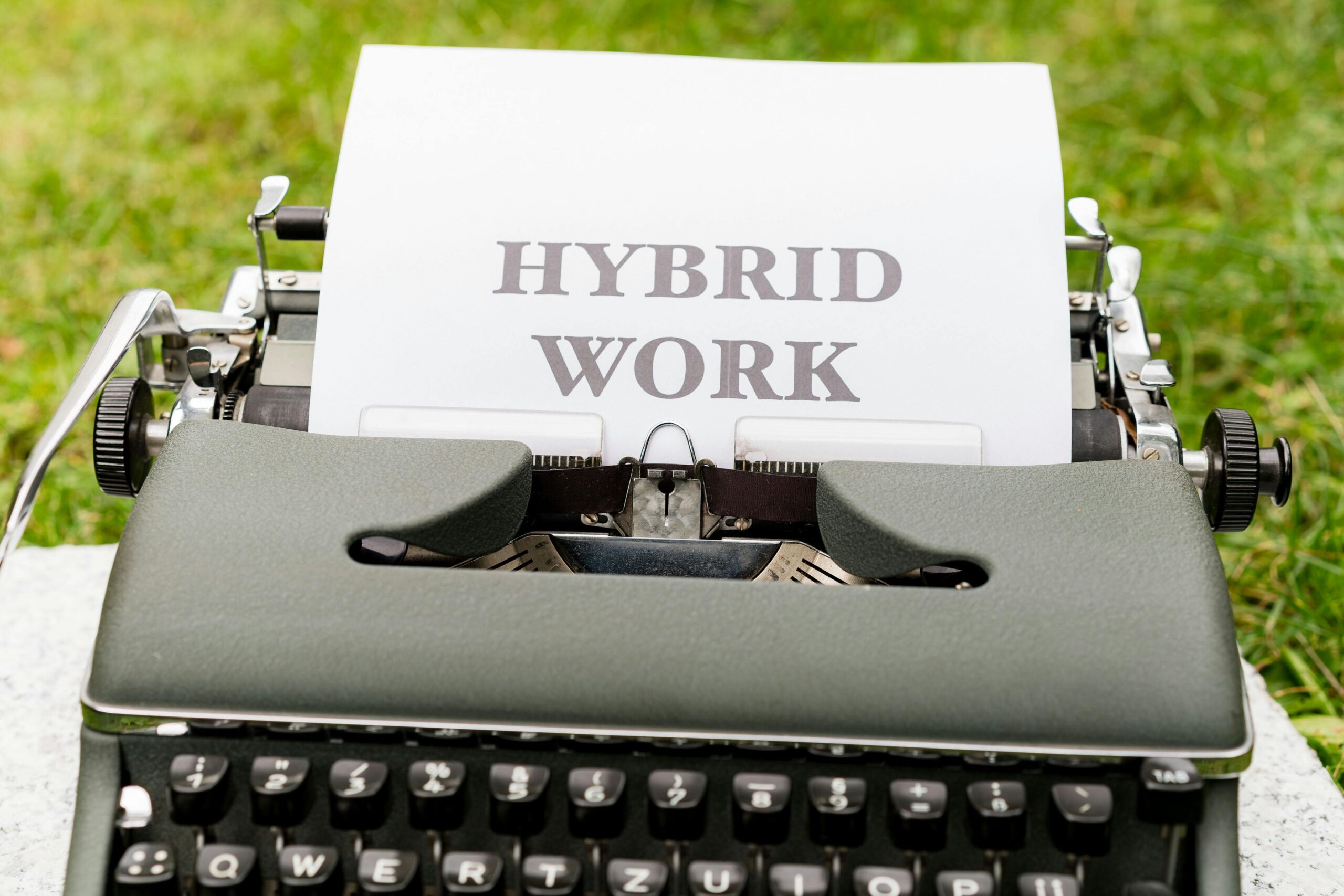
How to Ask for Hybrid Work Without Sounding Lazy or Uncommitted
The best way to ask for hybrid work is to make the request about business results rather than personal convenience. Instead of saying that you hate commuting or prefer being at home, explain how a hybrid schedule would help you maintain productivity, focus, communication and long-term performance. A proposal with specific office days, clear availability and a short trial period usually sounds much stronger than a vague request to “work from home more.”
I would also avoid framing hybrid work as a reward you deserve. Managers are more likely to consider the idea when they can see exactly how the arrangement will work, what will stay unchanged and how they can measure whether it is successful.
For years, office culture was treated almost like a symbol of ambition. Employees were expected to prove loyalty through physical presence, long commutes, visible exhaustion, and the ability to survive endless hours under fluorescent lights inside open-plan offices. But the modern workforce no longer sees productivity and presence as the same thing, and that shift is quietly changing how people think about careers, work-life balance, and even personal identity.
How to convince company for hybrid work has become one of the biggest professional questions of the post-pandemic era, especially for employees whose jobs are already almost entirely digital. According to research from McKinsey on flexible work, millions of people now work through Slack, Zoom, Google Meet, email, cloud platforms, project management systems, and messaging apps, even while sitting inside the same office building. In many industries, employees spend entire days communicating through screens despite physically commuting to an office where very little actually requires their presence.
At the same time, companies remain deeply divided on the idea of hybrid working. Some organisations fully embraced remote flexibility and saw increases in productivity, employee satisfaction, and retention. Others became obsessed with return-to-office policies, often arguing that collaboration, culture, and accountability suffer when employees are not physically visible. The result is a strange corporate standoff where workers increasingly value flexibility as much as salary, while many employers still associate office attendance with professionalism and commitment.
The modern debate around hybrid work is no longer simply about convenience. It is about psychology, trust, control, modern workplace burnout, emotional energy, and the future of work itself.
How to Ask for Hybrid Work: The Short Version
If I Were Asking for a Hybrid Schedule
I would keep the proposal specific and easy for a manager to evaluate rather than simply asking for “more flexibility.”
Why Employees Want Hybrid Work
One of the biggest misconceptions about hybrid work is the assumption that employees simply want to “work less.” In reality, most workers asking for a hybrid working format are not trying to escape responsibility. What they are trying to escape is constant emotional exhaustion.

Modern office culture has become mentally draining for many people, especially in industries where the majority of work already happens online. Long commutes, crowded public transport, office noise, constant interruptions, forced socialisation, expensive lunches, and the pressure of performative productivity slowly wear people down over time. Employees are increasingly realising that much of office life is not actually productive — it is symbolic.
Many professionals discover that they work more efficiently from home because they can focus better, structure their day more naturally, avoid unnecessary interruptions, and regain hours previously lost to commuting. Hybrid work also reduces emotional fatigue in ways companies often underestimate. People sleep more, eat healthier, spend less money, and feel more in control of their lives. Of course, working from home becomes much easier when there is somewhere comfortable to actually work. Even without a separate room, a few practical changes can turn a corner of a bedroom or living room into a functional workspace. Knowing what you actually need for a comfortable home workspace can also prevent you from filling a small apartment with expensive office equipment you rarely use.
That emotional control matters far more than many executives realise. Workers today are no longer only chasing promotions or titles. Increasingly, they are chasing sustainability. A growing number of employees would rather accept slightly lower salaries than return to five-day office routines that leave them mentally exhausted every week.
The Real Reason Many Companies Resist Hybrid Work
One of the most interesting aspects of the hybrid work debate is that productivity is often not the real issue. Employees usually approach the conversation believing that if they can prove they are productive from home, management will logically support flexibility. But companies rarely operate emotionally through logic alone. There is also a difference between being capable of staying productive while working from home and actually thriving in that environment long term, especially when the lack of routine, social interaction and separation between work and home starts affecting motivation.
For many employers, office attendance represents structure, control, predictability, and visible accountability. Some managers still feel deeply uncomfortable supervising people they cannot physically see, even if the actual results remain strong. In many cases, hybrid resistance comes less from operational concerns and more from management psychology. This focus on visibility is one reason why some remote employees become preoccupied with indicators such as response times, online presence, and even staying active on Slack throughout the day.
There is also another uncomfortable truth behind return-to-office culture: some companies worry that once employees experience flexibility, they become harder to control through traditional corporate systems. Workers with more autonomy often become less emotionally dependent on office culture itself. They begin prioritising personal wellbeing, location freedom, and work-life balance instead of corporate identity.
That is why many employers become suspicious when employees ask for hybrid schedules. In some organisations, simply asking about remote flexibility immediately labels a worker as a potential “flight risk.” Managers may quietly assume the employee is already searching for another job or becoming less committed long term.
Ironically, this mindset often pushes employees toward leaving even faster.
How to Ask Your Boss for a Hybrid Schedule
One of the biggest mistakes employees make when learning how to ask your boss for a hybrid schedule is focusing only on personal benefits. Saving money on fuel, reducing commute time, or wanting more comfort at home may be emotionally valid reasons, but companies rarely make decisions based purely on employee convenience.
A simple way to phrase the request could be:
“I’d like to discuss whether a hybrid schedule could work for my role. I’ve found that I can handle focused work very efficiently outside the office while still being available for meetings and collaboration. I’d like to propose working remotely two days a week for a six-week trial period, with the same deadlines, availability and performance expectations. We could review the arrangement afterward based on results.”
The strongest hybrid work conversations are framed around mutual benefit.
Employees who successfully negotiate hybrid schedules usually focus on:
• productivity
• efficiency
• communication
• retention
• flexibility during high-focus tasks
• measurable work output
Timing also matters enormously. Requesting hybrid work too early after joining a company can make employers defensive, especially if the role was originally advertised as fully in-office. Many managers interpret early flexibility requests as signs that the employee misunderstood the job or may not stay long term.
The most effective approach is gradual negotiation. Instead of immediately asking for permanent remote flexibility, many professionals succeed by proposing a trial period. A two-day hybrid schedule tested over one or two months feels psychologically safer for employers because it sounds reversible rather than permanent.
Another critical factor is trust. Employees who respond quickly, communicate clearly, consistently deliver results, and maintain strong visibility inside the company are far more likely to receive flexibility than workers who disappear, miss deadlines, or create uncertainty.
Hybrid work is rarely granted because someone “deserves” it. It is usually granted because management feels emotionally safe allowing it.
How to Write a Hybrid Work Request
A written hybrid work request should include four things: the schedule you are proposing, how you will remain available, how your work will be measured and why the arrangement benefits the company as well as you. Keep it short and practical rather than turning it into a long explanation of why office life is frustrating.
How to Ask About Hybrid Work in an Interview
The question of how to ask about hybrid work in an interview has become increasingly sensitive in today’s job market. Many candidates fear sounding demanding, lazy, or uncommitted if they bring up flexibility too early.
In reality, the issue is not whether candidates ask about hybrid work. It is how they ask.
Strong candidates usually avoid framing hybrid work as a non-negotiable demand during first-round interviews. Instead, they approach it as part of a broader conversation about company culture, workflow, and long-term productivity.
Rather than immediately asking:
“Can I work from home?”
Experienced professionals often ask:
• “How does the team typically collaborate?”
• “What does the company’s hybrid working format look like?”
• “How flexible is the role after onboarding?”
• “How does the company approach remote productivity?”
This creates a much more professional dynamic because it sounds strategic rather than transactional.
Most importantly, candidates should avoid sounding as though hybrid work is their only priority. Employers still want to feel that applicants are interested in the role itself, the company, and long-term contribution. According to Harvard Business Review, companies increasingly evaluate employees not only on skills, but also on long-term engagement and organisational commitment. When flexibility becomes the entire focus too early, companies may assume the candidate is unlikely to stay engaged long term.
How to Ask About Hybrid Working Without Damaging Your Position
Understanding how to ask about hybrid working is ultimately about understanding corporate psychology. Companies do not only evaluate the request itself. They evaluate what the request emotionally signals.
Employees who present hybrid work as:
• a productivity strategy
• a sustainability solution
• a long-term retention factor
• a structured professional arrangement
usually perform far better than those who frame it emotionally or defensively.
The strongest negotiators avoid ultimatums. They do not threaten resignation or compare their employer to competitors immediately. Instead, they position flexibility as something that could strengthen performance and improve long-term stability.
What many workers fail to realise is that hybrid work negotiations are rarely won through one perfect conversation. They are won gradually through consistency, visibility, trust, and demonstrated value over time.
What If Your Company Says No?
A rejection does not necessarily mean the company will never agree. Ask what specific concern is preventing approval: productivity, team coverage, policy, fairness or manager preference. If the objection is practical, you may be able to return with a smaller proposal, such as one remote day per week or a temporary trial.
The Future of Hybrid Work Is Bigger Than Remote Offices
The modern conversation around hybrid work reflects something much larger happening inside global work culture. Employees are no longer measuring career success only through salary, job titles, or office prestige. Increasingly, people are evaluating work based on emotional sustainability.
That shift is changing everything.
Workers today want careers that fit into their lives rather than consume them completely. They are questioning whether productivity should really be measured by hours spent inside buildings instead of actual results. They are rethinking the emotional cost of commuting, overstimulation, and permanent availability.
Hybrid work became symbolic of that wider cultural transformation.
And despite resistance from some companies, the demand for flexibility is unlikely to disappear. The organisations that adapt intelligently will probably retain stronger talent long term, while companies obsessed with outdated visibility culture may increasingly struggle with retention, morale, and burnout.
Because at the centre of this debate is a simple question many employees are now asking themselves:
If modern work can be done from anywhere, why are so many people still being forced to organise their entire lives around proving they are physically sitting at a desk?
FAQ
How do you convince your company to allow hybrid work?
The most effective approach is to focus on productivity, performance, and business benefits rather than personal convenience. Employers are more likely to support hybrid work when employees demonstrate how the arrangement can improve efficiency, reduce burnout, and maintain strong communication and accountability.
How can I ask for hybrid work without sounding lazy?
Avoid framing the conversation around avoiding the office or working less. Instead, explain how a hybrid schedule can help you stay productive, focused, and engaged while continuing to meet or exceed expectations. Emphasizing results rather than comfort usually creates a stronger case.
What is the best reason to request hybrid work?
Some of the strongest reasons include improved productivity, reduced commuting time, better work-life balance, fewer workplace distractions, increased focus, and improved mental wellbeing. The best argument is one that clearly benefits both the employee and the company.
Why do companies resist hybrid work?
Many employers worry about communication challenges, collaboration, team culture, productivity, management visibility, and maintaining company culture. Some organizations also prefer traditional workplace structures and are cautious about changing established routines.
How do I write a hybrid work request to my manager?
A successful request should be professional, solution-oriented, and focused on outcomes. Explain your proposed schedule, describe how you will maintain productivity and communication, and provide examples of your performance when working remotely or independently.
What if my company says no to hybrid work?
A rejection does not always mean the conversation is over. Some employees successfully revisit the discussion after demonstrating strong performance, proposing a trial period, or offering a more flexible compromise such as one or two remote days per week.
What should I say when asking for hybrid work?
Keep the request specific and business-focused. Explain the schedule you want, how you will remain available, how you will maintain performance and suggest a trial period so the company can evaluate the arrangement without committing permanently.
Can hybrid work improve mental health?
Many employees report that hybrid work provides a healthier balance between flexibility and social interaction. Having occasional office days can help reduce feelings of isolation while preserving many of the benefits associated with remote work.
Is hybrid work better than fully remote work?
The answer depends on the individual. Some people thrive in fully remote environments, while others struggle with loneliness, isolation, or a lack of structure. Hybrid work is often viewed as a middle ground that combines flexibility with regular in-person interaction.
How many remote days should I ask for?
The ideal schedule depends on your role, company culture, and responsibilities. Many hybrid arrangements involve one to three remote days per week, allowing employees to maintain visibility while benefiting from greater flexibility.
Can hybrid work increase productivity?
Research and employee surveys frequently show that many professionals are just as productive—or even more productive—when given flexibility over where they work. Reduced commuting, fewer interruptions, and better control over the work environment often contribute to higher focus and efficiency.
What mistakes should I avoid when asking for hybrid work?
Common mistakes include focusing only on personal convenience, criticizing office culture, presenting the request emotionally, or failing to explain how work quality will be maintained. Employers are more receptive when employees present a clear business case rather than a personal preference.
Is hybrid work becoming more common in 2026?
Yes. Many organizations have adopted hybrid work models as a long-term solution, recognizing that employees increasingly value flexibility while still benefiting from occasional in-person collaboration and team interaction.
Explore the Remote Work & Careers Hub
Discover more practical guides about remote jobs, hybrid work, career growth, burnout and the realities of building a career outside the traditional office.
Explore the Remote Work & Careers Hub →This article combines personal experience with remote and hybrid work, independent editorial research, and insights gathered from conversations with professionals working across different industries.
Research sources included:
- Personal observations related to remote work, office culture, and workplace flexibility.
- Interviews and informal conversations with employees and managers who have experience with hybrid work arrangements.
- Workplace research, productivity studies, and organisational insights published by McKinsey & Company.
- Research and management perspectives published by Harvard Business Review.
- Career advice and workplace communication guidance shared by Professor Heather Austin.
The goal is to provide practical strategies for employees who want to discuss hybrid work with their employer while understanding both employee and management perspectives.

Founder & Editor
Founder of The City Theory, writing about digital nomad lifestyle, modern city culture, remote work, travel experiences, psychology and human behaviour around the world.